2026 Best Most Affordable Compact Tractor Options for Your Needs?
Finding the most affordable compact tractor to meet your needs can be daunting. Many options flood the market, each with unique features. It’s important to assess what suits your specific requirements best.
Factors like horsepower, weight, and attachments can influence your decision. A lightweight tractor may be suitable for small gardens, while a more powerful option can handle larger tasks. However, it’s easy to overlook maintenance costs and resale value.
Evaluating the best options requires research and reflection. Some models are cheaper upfront but may lead to higher expenses later. The world of compact tractors is intricate, but understanding it brings you closer to a wise choice. By focusing on the most affordable compact tractor, you can create a balance between budget and functionality.
2026 Overview of Affordable Compact Tractors
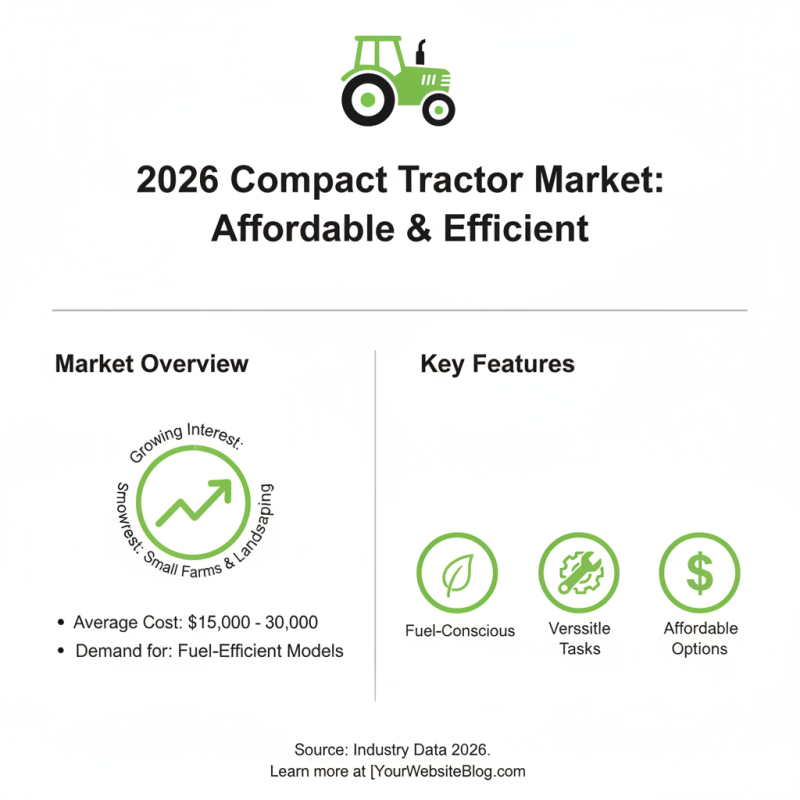
In 2026, the compact tractor market offers several affordable options. Industry data shows a growing interest in these machines for small farms and landscaping. The average cost for a compact tractor ranges from $15,000 to $30,000. Many buyers seek efficient, fuel-conscious models that can handle diverse tasks.
Consider your needs carefully. A compact tractor must be versatile enough for mowing, tilling, and hauling. The engine horsepower often varies; options between 25 and 60 HP are common. Fuel efficiency is paramount, as some models consume less than 3 gallons per hour under load.
Tips: Always test drive before purchasing. Understanding the weight and size is essential to ensure it fits your property. Measure your storage space. Reflect on maintenance costs, as lower initial costs may lead to higher long-term costs. Don’t rush the buying process; explore various financing options available. Selecting the right compact tractor requires careful thought and planning.
Key Features to Consider When Choosing a Compact Tractor
When selecting a compact tractor, several key features can significantly impact your decision. One crucial aspect is the engine power. Compact tractors typically range from 15 to 50 horsepower. According to industry reports, tractors with 25 to 30 horsepower are often ideal for light to moderate agricultural tasks. This power level provides ample performance without overwhelming costs.
Another important consideration is the type of transmission. Compact tractors generally feature gear or hydrostatic transmissions. Hydrostatic options allow for smoother operation, especially for beginners. However, gear-driven tractors offer better fuel efficiency, making them suitable for longer tasks. Industry data suggests that approximately 60% of users prefer hydrostatic models due to their ease of use, but this can lead to higher maintenance.
Comfort features also play a vital role. Adjustable seats and ergonomically designed controls improve user experience. Reports indicate that operators who prioritize comfort report higher productivity levels. Compact tractors’ weight distribution impacts stability and ease of use. A well-balanced model can operate efficiently on slopes or uneven ground. However, it's essential to assess your specific needs since an overly heavy tractor can be cumbersome for small properties, leading to potential operational challenges.
Top 5 Budget-Friendly Compact Tractor Brands for 2026
When looking for a budget-friendly compact tractor, several factors come into play. You want efficiency, reliability, and performance. Many people often overlook the importance of fuel efficiency. Some tractors gulp down fuel quickly. This can lead to rising costs over time. Prioritize models that offer impressive fuel economy to save money.
Another aspect worth considering is the ease of maintenance. A reliable tractor should not only have good machinery but also be easy to service. Complicated machines can cause delays and added expenses. Simple maintenance practices can save you headaches and unexpected bills. Look for tractors with readily available parts to minimize downtime.
Brand reputation is critical too. While some brands may not have mainstream recognition, they often deliver exceptional value. Researching customer reviews can provide insights. However, personal experiences with certain models can differ. It’s essential to balance professional opinions with what users say. Each model will have its pros and cons. Reflecting on your unique needs will guide you to the right choice.
2026 Best Most Affordable Compact Tractor Options
This chart displays the average price (in USD) and horsepower of various compact tractors in 2026, highlighting budget-friendly options for potential buyers.
Comparing Performance and Efficiency of Compact Tractors
When considering a compact tractor, performance and efficiency are key factors. These machines are built for varied tasks like landscaping, farming, and property maintenance. You want reliable power without sacrificing fuel economy. Look for models with optimal horsepower and torque to effectively handle different attachments.
Tips: Always assess your fuel consumption rate. Sometimes, a slightly pricier model offers significant savings in fuel efficiency over time. Consider the type of work you will do. Some tractors excel in specific tasks, while others are more versatile.
Selecting the right compact tractor also involves understanding your operational needs. Test the machine before you buy. Feel how it handles with attachments—does it maintain power? Is maneuverability an issue? Not every tractor will fit your requirements perfectly.
Tips: Research and read user reviews to gauge real-world performance. This can help identify any potential issues or benefits. Be realistic about your needs versus your budget; often, cheaper options lack the necessary features.
2026 Best Most Affordable Compact Tractor Options for Your Needs
| Model |
Horsepower |
Weight (lbs) |
Fuel Efficiency (mpg) |
Price ($) |
| Compact Model A |
25 HP |
1500 |
30 |
12,000 |
| Compact Model B |
30 HP |
1700 |
28 |
13,500 |
| Compact Model C |
22 HP |
1400 |
32 |
11,500 |
| Compact Model D |
28 HP |
1600 |
29 |
12,800 |
| Compact Model E |
26 HP |
1550 |
31 |
11,000 |
Maintenance Tips for Keeping Your Compact Tractor Cost-Effective
When it comes to maintaining a compact tractor, cost-effectiveness is key. Regular maintenance can save you money in the long run. According to industry reports, neglecting maintenance can lead to repair costs exceeding 30% of the tractor’s value over its lifespan. Keeping your equipment in good shape is vital for longevity.
One practical tip: check oil levels regularly. Low oil can cause engine damage. It's a simple task that can be done monthly. Additionally, cleaning air filters improves engine performance. A clean filter can increase efficiency by up to 10%. Remember to replace filters as needed to maintain optimal operation.
Don't overlook tire pressure either. Under-inflated tires not only reduce fuel efficiency but also wear out faster. A study showed that proper inflation could enhance fuel economy by 3%. Keep an eye on tread depth too. It’s a sign of whether replacements are needed. Keeping a maintenance log helps track these tasks and can prevent costly oversights.