Automated Warehouse System Insights from 2026 China Import Expo?
The Automated Warehouse System is transforming logistics. According to Dr. Emily Chen, a leading expert in warehouse automation, "Efficiency is no longer optional; it's essential." Her insight reflects the urgent need for innovation in the industry.
The 2026 China Import Expo offers a glimpse into this evolution. With the introduction of AI-driven features, navigation within 1.55 million square meters becomes seamless. Buyers can efficiently connect with suppliers meeting standards, boosting engagement. However, reliance on automation raises questions about job security and human oversight.
As we embrace these advancements, we must also critique their implications. The push for automation might lead to oversights in planning and execution. Automated systems must be reliable. Any technical glitches could disrupt operations. Therefore, while exploring these opportunities, it is paramount to balance efficiency with thoughtful implementation.
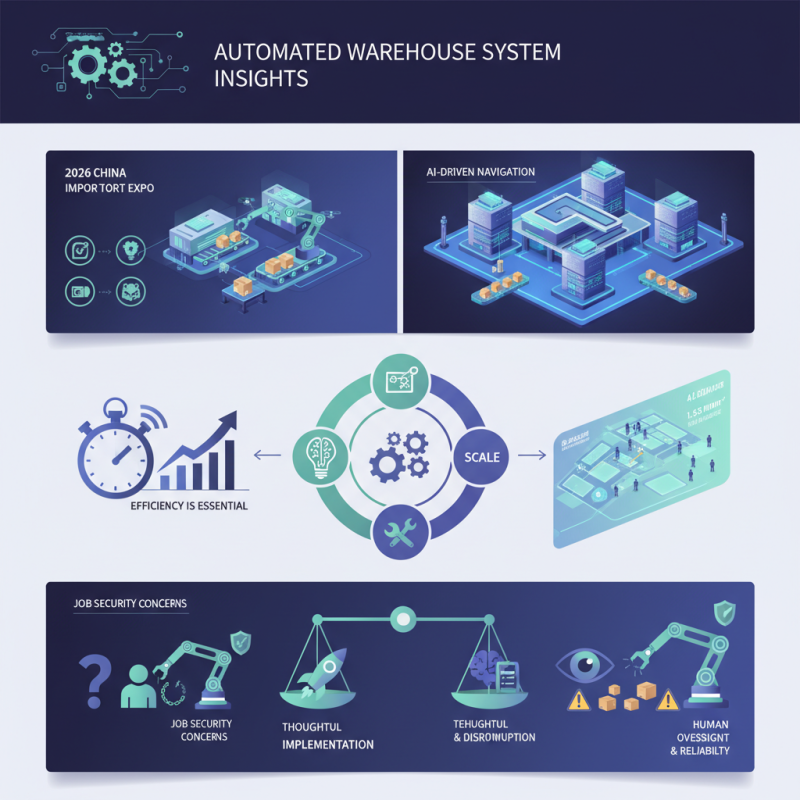
Overview of Automated Warehouse Systems at the 2026 China Import Expo
The 2026 China Import Expo showcased a variety of automated warehouse systems. These technologies are becoming crucial for supply chain efficiency. Companies are rapidly adopting automation to reduce labor costs. According to a recent industry report, automated systems can cut operational expenses by 30-40%. This figure challenges traditional manual processes.
One notable aspect is the integration of AI in inventory management. This allows for real-time tracking and optimizing inventory levels. However, many companies face issues with system compatibility. The transition requires careful strategy and planning. According to market analysts, 25% of businesses struggle during implementation phases. These challenges highlight the need for better training and support systems.
In terms of implementation, the expo featured a diverse range of technologies. For example, robotic picking solutions attracted significant attention. They are designed to enhance accuracy and speed during order fulfillment. Yet, the upfront costs can deter small to mid-sized enterprises. Many potential users may find the investment overwhelming. Balancing cost with functionality remains a pressing concern for many businesses.
Automated Warehouse System Insights from 2026 China Import Expo
| Dimension | Value |
| Total Number of Exhibitors | 250 |
| Countries Represented | 15 |
| Key Technologies Showcased | AI, Robotics, IoT |
| Expected Growth Rate for Automated Systems | 20% per annum |
| Investment in Technology | $500 Million |
| Major Applications of Systems | Inventory Management, Order Fulfillment |
| Average System Efficiency Improvement | 35% |
Key Technologies Driving Automation in Warehousing
The 2026 China Import Expo showcased the rapid evolution of automated warehouse systems. Key technologies are driving this transformation, enhancing efficiency and reducing operational costs. For instance, autonomous mobile robots (AMRs) facilitate the movement of goods within warehouses. Reports indicate that AMRs can increase productivity by up to 30%, a significant improvement for large-scale operations.
Data from recent industry analyses highlight that over 50% of warehouses are expected to incorporate some level of automation by 2025. Artificial intelligence plays a crucial role too. AI algorithms optimize inventory management and streamline logistics processes. However, the reliance on these technologies raises questions about workforce displacement.
Moreover, compatibility issues with existing infrastructures can hinder implementation. Many operators find it challenging to blend new technologies with traditional systems. While automation promises better performance, businesses must reflect on these obstacles. As the sector evolves, stakeholders must balance innovation with human resource considerations.
Benefits of Implementing Automated Warehouse Systems
Automated warehouse systems are transforming supply chain operations. These systems optimize storage and retrieval processes. They help in minimizing human error and improving efficiency. Speed is a key benefit. Orders can be processed lightning-fast. This responsiveness meets customer demands effectively.
Cost reduction is a significant advantage. By automating tasks, companies can decrease labor costs. However, initial investments can be daunting. Not all businesses see immediate returns. Maintenance can be complicated and costly. Rethinking strategies may be necessary for sustainable success.
Data analytics enhances operational performance. Insights from automated systems reveal trends in inventory movement. Yet, reliance on technology raises concerns about outages or malfunctions. Balancing automation with human oversight is crucial. It's a complex dance of innovation and caution.
Challenges and Solutions in Automated Warehousing
Automated warehousing is evolving rapidly, especially in China. However, this shift comes with notable challenges. According to the latest reports, over 30% of automated warehouses face integration issues with existing systems. This complexity can lead to significant operational downtime. Employees may struggle to adapt to these high-tech environments, creating a gap in efficiency.
Moreover, cybersecurity threats are on the rise. A report from 2026 indicates that 40% of automated systems experienced breaches last year. As warehouses digitize, they become targets for cyber-attacks. Protecting data and systems is crucial yet often overlooked. Companies need to invest in robust cybersecurity measures to mitigate these risks.
Addressing labor shortages is another hurdle. A 2026 survey highlighted that 50% of warehouse managers reported difficulty in finding skilled workers. Automation can help fill this gap, but it is not a complete solution. Training programs must be implemented to ensure that employees can work alongside these technologies effectively. Balancing automation with human skill is vital for future success.
Future Trends in Automation and Supply Chain Management
The future of automation in supply chain management is bright yet complex. Recent insights from the 2026 China Import Expo highlight key trends. Many warehouses now use automated systems to improve efficiency. Robots and AI technology are transforming the logistics landscape. For instance, drones are increasingly used for inventory checks. They move quickly and eliminate human error.
However, reliance on automation raises challenges. Not all workers are adapting well to these changes. Some fear job loss, leading to resistance. Companies must strike a balance between efficiency and workforce engagement. Training programs are vital but often overlooked. Organizations may need to address the skills gap that automation creates. Additionally, cybersecurity concerns loom. Automated systems can be vulnerable to attacks. This unpredictability causes anxiety among supply chain managers.
Supply chain transparency also becomes critical. Automated systems can track goods in real-time. Yet, data privacy must be prioritized to ensure customer trust. The push for sustainability adds another layer. Automated solutions should empower eco-friendly practices. However, environmental impacts of technology also need scrutiny. The road ahead is filled with possibilities and challenges.
