Bone Gelatin Trends at 2026 Canton Fair What to Expect?
The upcoming 2026 Canton Fair will highlight significant industry trends, particularly in Bone Gelatin. This unique product, derived from animal bones, holds vast potential across various applications, including food, pharmaceuticals, and cosmetics. Industry expert Dr. Jane Smith states, "Bone Gelatin is becoming increasingly vital as consumers demand cleaner labels and healthier alternatives."
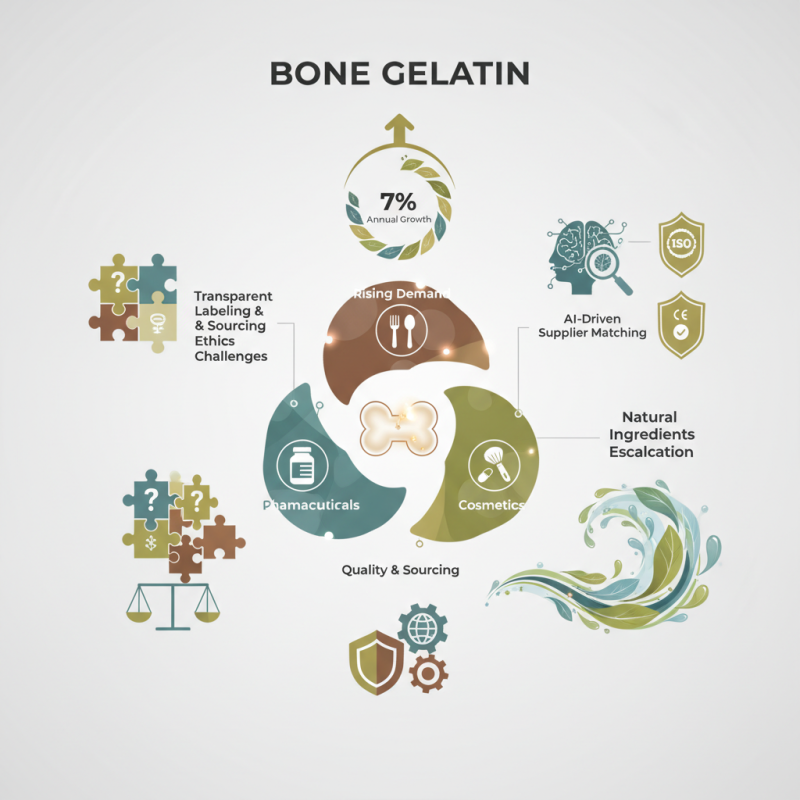
Market research indicates a rising demand for Bone Gelatin, with a projected growth rate of 7% annually. Manufacturers are focusing on quality, sourcing, and sustainable practices. At the fair, AI-driven features will aid buyers in efficiently locating suppliers with necessary certifications, such as ISO and CE. This technological advancement promotes not only efficiency but also quality assurance in a crowded marketplace.
The array of exhibitors will present innovative uses of Bone Gelatin, alongside traditional offerings. Yet, challenges remain in transparent labeling and sourcing ethics. The industry must reflect on these issues to foster trust and integrity. As the demand for natural ingredients escalates, the spotlight will be on how producers navigate these complexities at the Fair.
Trends in Bone Gelatin Demand: A 2026 Market Overview
The bone gelatin market is set to see significant shifts by 2026. Recent reports suggest a growing demand, driven primarily by the food and pharmaceutical sectors. According to a 2023 market analysis, the global bone gelatin market is projected to grow at a CAGR of 5.2% over the next few years. This growth reflects consumer awareness about the health benefits of bone gelatin, particularly in joint and skin health.
In addition, the rise of plant-based diets raises questions about the future of animal-derived products like bone gelatin. Some consumers prioritize plant alternatives. However, studies show that natural gelatin still holds a critical place in culinary applications, offering unique textures impossible to replicate with plant-based options. The contrast between tradition and innovation creates a complex landscape for producers. Data indicates that about 70% of chefs still prefer animal-based gelatin for its functional properties.
As the 2026 Canton Fair approaches, it will be crucial for stakeholders to adapt to these evolving preferences. While bone gelatin remains popular, manufacturers must consider sustainability practices. This includes sourcing raw materials responsibly. Concerns around animal welfare and environmental impact are increasing. Balancing demand with ethical considerations may challenge traditional production methods. The market landscape will undoubtedly require reflection and adaptation in the coming years.
Innovative Applications of Bone Gelatin in Food and Pharmaceuticals
Bone gelatin is gaining traction in diverse industries like food and pharmaceuticals. As we look forward to the 2026 Canton Fair, we will likely see innovative applications emerging. Manufacturers are exploring new ways to incorporate bone gelatin, enhancing product quality and sustainability.
In the food sector, bone gelatin is valuable for plant-based products. It aids in texture and stability, making alternatives more appealing. This shift reflects the growing demand for healthier foods. The pharmaceutical industry benefits, too. Bone gelatin is used in capsules and drug formulations. Its biocompatibility makes it a popular choice.
Tips: Always verify the source of your gelatin. Sustainability matters. Check for certifications. Researching the production process can prevent potential ethical issues.
The growing interest in bone gelatin prompts manufacturers to experiment. This exploration can lead to breakthroughs but raises questions. Are these new methods truly beneficial? Continuous evaluation is essential. Balancing innovation with ethics is key in these developments.
Bone Gelatin Trends at 2026 Canton Fair - Innovative Applications of Bone Gelatin in Food and Pharmaceuticals
| Application | Industry | Estimated Market Growth (%) | Key Benefits |
| Gelatin Desserts | Food | 5.5% | Low calorie, easy to digest |
| Capsules | Pharmaceuticals | 6.8% | Vegetarian-friendly, bioactive |
| Nutritional Supplements | Health | 7.2% | Rich in collagen, supports skin and joints |
| Food Coating | Food | 4.0% | Enhances texture, preserves moisture |
| Wound Dressings | Medical | 8.5% | Biocompatible, promotes healing |
Sustainability and Sourcing: The Future of Bone Gelatin Production
The global demand for bone gelatin is shifting towards sustainability. As consumers become more eco-conscious, manufacturers face pressure to adapt. The 2026 Canton Fair will showcase innovative solutions for sustainable sourcing. Expect to see raw materials sourced from ethical suppliers. Transparency in sourcing is becoming a priority.
However, challenges remain. Not all suppliers prioritize sustainability in their practices. Some may cut corners to reduce costs, which can compromise product quality and integrity. The need for stringent standards is critical. Buyers will want to ensure compliance and traceability in their sourcing decisions.
Emerging technologies may play a role in overcoming these hurdles. For instance, advancements in production methods could reduce waste. Techniques that enhance yield from raw materials can be revolutionary. Meanwhile, consumer education on sustainable practices is essential. A more informed public can drive demand for responsibly sourced products.
Impact of Regulatory Changes on Bone Gelatin Industry by 2026
The bone gelatin industry faces significant changes by 2026. Regulatory shifts aim to enhance safety and quality. These changes will redefine production standards. Manufacturers must adapt quickly. The goal is to protect consumers and promote sustainable practices.
As regulations tighten, sourcing high-quality raw materials becomes crucial. Companies will need to invest in better supply chains. This may increase production costs. Smaller players might struggle to keep up with compliance demands. They should assess their operations and seek efficient methods.
Tips: Engage your team in brainstorming sessions. Consider setting up a feedback loop for continuous improvement. It is essential to stay informed about regulatory updates. Connect with industry experts to gain insights. This information will be valuable for planning.
Overall, the industry landscape is evolving. Companies must remain proactive. Adapting to these changes can lead to long-term success. Balancing compliance and efficiency will be key to navigating the future.
Bone Gelatin Market Trends at 2026 Canton Fair
This chart displays the projected growth of the bone gelatin market from 2018 to 2026, showcasing a steady increase in market size influenced by various regulatory changes and consumer trends.
Emerging Competitors in the Bone Gelatin Market: A 2026 Forecast
As the 2026 Canton Fair approaches, the bone gelatin market is seeing notable shifts. In recent years, the demand for bone gelatin has been fueled by its multifunctional properties. According to a report by Market Research Future, the global bone gelatin market is expected to grow at a CAGR of 8.5% from 2021 to 2026. This indicates a strong interest in bone-derived products.
Emerging competitors are reshaping the landscape. New players are entering the market, creating challenges for established suppliers. These newcomers often focus on sustainability and ethical sourcing. Their innovative approaches may resonate more with eco-conscious consumers. Additionally, the increasing popularity of plant-based alternatives could pose a threat. This trend suggests a shift in consumer preference that should not be ignored.
Data from Grand View Research highlights that the food industry represents the largest segment for bone gelatin usage. However, the rise in veganism may dilute this demand. Companies must adapt quickly. Market dynamics are changing, and traditional methods may not suffice. Innovating in formulation and marketing strategies could be crucial to remain competitive in the evolving market landscape. The upcoming Canton Fair will serve as a critical platform for these emerging competitors to showcase their innovations and capture market share.
