
Choosing among China’s Beverage Matcha Powder suppliers takes more than comparing prices or product photos. Buyers need to understand how the powder will perform in their actual recipes, from bottled drinks to milk-based beverages. Color, aroma, bitterness, solubility, and consistency can all affect the finished product. Small differences matter.
A reliable supplier should be able to explain its sourcing, processing, quality checks, and available specifications in clear terms. Ask for a current product sheet, a representative sample, and details about batch traceability. If certifications or test reports are important to your business, confirm their scope and validity directly rather than relying on a logo or brief sales claim. Requesting samples for a real production trial is useful. A vivid green sample alone proves little.
This guide looks at practical ways to assess potential suppliers in China, including communication, customization, packaging, lead times, and quality documentation. It also considers questions worth asking before placing a larger order. Supplier listings can help build a shortlist, but they do not replace careful verification. Still, no checklist is perfect. Results may vary between batches, and a supplier that fits one recipe may not suit another. The goal is not to identify a universal “best” supplier, but to help buyers make a more informed comparison and choose a partner whose capabilities match their product, volume, and quality requirements.
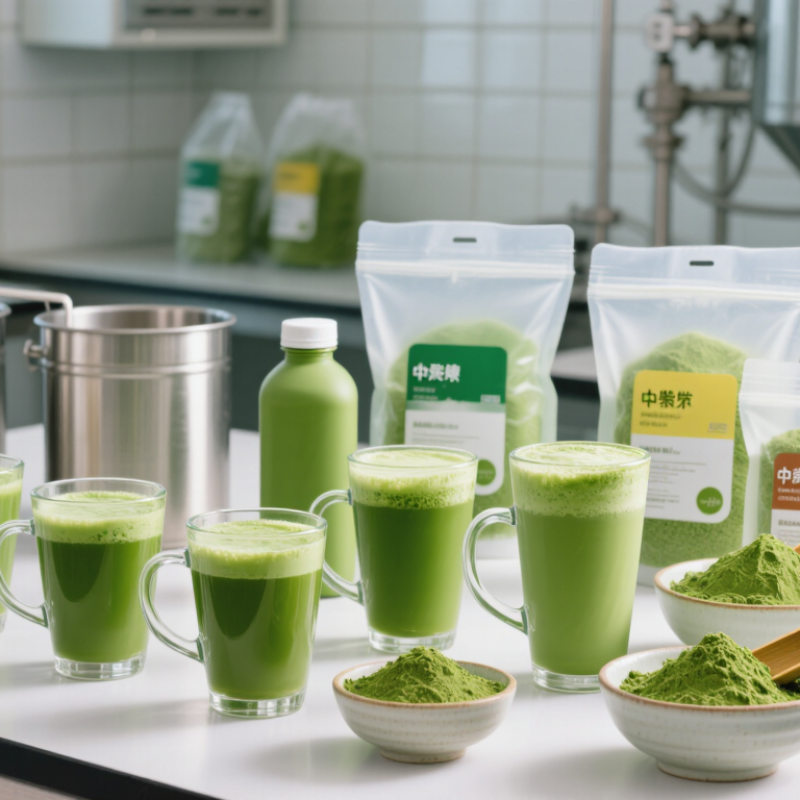
Beverage-grade matcha is finely milled green tea powder intended for drinks such as lattes, iced teas, and smoothies. The term is not a universal quality standard, so buyers should look beyond the label. Check the powder’s origin, harvest details, ingredient list, and quality specifications. A clean product should list matcha as its sole ingredient.
In a cup, useful signs include a vivid green color, a fresh grassy aroma, and a smooth texture. The powder does not truly dissolve; it remains suspended in liquid. A fine grind helps it disperse, but whisking or blending still matters. Try a small sample in both hot water and milk. Notice any bitterness, lingering dryness, or dull color. These details can reveal how the powder performs in real drinks.
Ask suppliers how they control moisture, particle size, and batch consistency. Request recent test documentation, and confirm that it relates to the specific lot being offered. Storage matters, too: matcha is sensitive to air, light, heat, and moisture. Good packaging helps preserve its character. Still, “beverage grade” can mean different things to different sellers. I would not rely on the phrase alone.
China Best Beverage Matcha Powder Suppliers?
How Is Matcha Powder Produced and Classified in China?
Chinese matcha begins with tea plants shaded before harvest, which helps preserve a vivid green color and softer, less bitter notes. Fresh leaves are steamed to stop oxidation, then dried and sorted to remove stems and coarse veins. The cleaned leaf material is milled into a fine powder. Small details matter. Shade duration, leaf maturity, and milling temperature can all change the cup’s color and texture.
China’s GB/T 34778-2017 standard sets quality requirements for matcha, including sensory and physical indicators. In practical purchasing, buyers often compare color, aroma, taste, particle fineness, and consistency between batches. These qualities support grade comparisons, but labels alone may not tell the whole story. Not every powder tells the same story.
For context, the China Tea Marketing Association’s 2023 tea production and sales report recorded national tea output at about 3.55 million tonnes. That figure covers tea broadly, not matcha specifically, so it should not be read as matcha supply data. A useful supplier check is to request the stated grade, origin, harvest period, and a batch specification sheet. Powder that looks bright in a sample can still vary after storage; this is one area where I would want clearer, batch-level evidence.
| Category | Dimension | Factual Overview | What Buyers Can Check |
|---|---|---|---|
| Production | Tea-leaf selection | Matcha is made from tea leaves processed into tencha before fine milling. Leaf variety, harvest timing, and growing conditions can affect color, aroma, bitterness, and flavor. | Ask for the tea origin, harvest period, leaf-material specification, and whether the product is made from tencha or another processed tea. |
| Production | Shading and cultivation | For matcha-style tencha, tea plants are commonly shaded for a period before harvest. Shading can influence leaf color and flavor, but practices and duration vary by producer and product. | Request a description of cultivation and shading practices rather than assuming every product uses the same method. |
| Production | Steaming and drying | Fresh leaves are typically heat-treated to limit oxidation, then dried. Tencha is dried without the rolling step used for many other green teas, and stems or veins may be removed during processing. | Check the processing description, ingredient specification, and batch documentation for the product being offered. |
| Production | Fine milling | Dried tencha is milled into a fine powder. Milling equipment and operating conditions affect particle size, heat exposure, throughput, and powder characteristics. | Request a particle-size specification and ask how the supplier manages heat and consistency during milling. |
| Classification | Grade terminology | Terms such as “ceremonial,” “premium,” and “culinary” are widely used in the market, but they are not a single globally uniform grading system. Specifications and meanings can differ among suppliers. | Compare measurable specifications and intended use instead of relying on grade names alone. |
| Classification | Beverage suitability | Powder for straight whisked tea is generally selected for a balanced taste, fine texture, and attractive color. Beverage blends may use powder chosen for compatibility with milk, sweeteners, or other ingredients. | Evaluate a sample in the actual recipe, including the intended liquid, serving temperature, and preparation method. |
| Classification | Food-service and ingredient use | Powder intended for lattes, baking, or other formulated foods may be selected for flavor strength, dispersion, color, and cost-in-use. These are application choices, not universal grades. | Check performance in the target application and review the ingredient and allergen information for the finished product. |
| China supply | Tea-growing regions | Tea is cultivated in multiple Chinese provinces, including Zhejiang, Guizhou, Hubei, and Shaanxi. Origin alone does not establish a powder’s grade or suitability for a particular beverage. | Ask for traceable origin information and confirm that it corresponds to the specific production lot. |
| Quality checks | Freshness and storage | Light, oxygen, heat, and moisture can reduce the quality of green tea powder over time. Packaging and storage conditions therefore matter for color, aroma, and flavor retention. | Review packaging barrier details, storage instructions, production date, shelf life, and lot coding. |
| Supplier evaluation | Documentation and consistency | Specifications and food-safety documentation should be assessed for the product and production site being considered. Requirements depend on the destination market and intended use. | Request a current specification sheet, relevant test reports, food-safety documentation, and samples from representative production lots. |
Chinese beverage matcha buyers usually encounter four supplier types: tea-garden processors, specialist matcha mills, export trading companies, and beverage-ingredient manufacturers. Each solves a different sourcing problem. Tea-garden processors can offer traceable leaf origins and harvest details. Specialist mills handle steaming, drying, and stone or ball milling, then adjust particle size and color for lattes, bakery mixes, or ready-to-drink products. Their powder may behave differently in cold water. Test it.
Export traders can combine lots and manage documents, which helps buyers placing smaller orders. However, buyers should ask who actually mills the tea and how batch consistency is checked. Beverage-ingredient manufacturers may supply blended powders with sugar or milk ingredients, saving formulation time but reducing control over the recipe. Grand View Research estimated the global matcha market at USD 3.6 billion in 2023 and projected a 7.9% compound annual growth rate from 2024 to 2030. This commercial market report signals growing demand, but it does not prove that every supplier can meet beverage-grade specifications.
Before choosing a supplier, request a recent specification sheet, batch test results, and samples from the same production lot. Check color, aroma, sediment, and dispersion in your actual drink base. A bright green sample can still taste harsh. Ask about harvest season, storage conditions, and minimum order quantities; answers may vary across factories, even within one region.
Typical core services across supplier categories—not market share or a ranking of individual suppliers.
A value of 1 marks a service that defines the supplier category; 0 means it is not the category’s defining role. Capabilities vary by supplier, and categories can overlap.
China’s tea sector is large, but scale alone cannot prove matcha quality. The China Tea Marketing Association reported roughly 3.55 million tonnes of total tea output in 2023. That figure covers all tea, not matcha specifically. Ask suppliers to identify the province, harvest season, and leaf material used. Matcha is made from tencha, so request details on shading, steaming, drying, and milling. A vivid green sample matters, but color alone is not evidence of consistent quality.
Review a current certificate of analysis for each production lot. Check whether it covers pesticide residues, heavy metals, microbiological limits, moisture, and particle size. Confirm the testing laboratory and methods, then compare results with your destination market’s requirements. Ask for traceability records linking the finished powder to its farm or raw-leaf batch. A polished sample can still hide lot variation; one tasting is not proof. Request samples from more than one batch and note aroma, bitterness, texture, and color under consistent lighting.
Tips: Request a factory audit or a live production walkthrough. Ask how the supplier prevents cross-contamination and stores sealed powder away from heat, light, and moisture. Check whether production capacity and lead times match your order. If answers stay vague, pause before paying a deposit.
When comparing China-based beverage matcha suppliers, assess the powder beyond its bright green appearance. A fresh sample should smell grassy and clean, not stale or strongly bitter. Ask for particle-size information, moisture limits, and batch-specific test reports. These can cover pesticide residues and microbiological quality. Small details matter. A vivid color alone proves little.
Request samples from the actual production lot, not only a specially prepared sales sample. Check how the powder disperses in cold water and whether its flavor stays balanced in milk-based drinks. Ask for harvest and processing traceability, plus clear grading criteria. Some buyers focus heavily on color; I would not. It can hide a rough taste, and my own first impression is not a quality test.
Packaging and transport affect quality too. Matcha is sensitive to oxygen, light, heat, and moisture, so confirm the inner liner, seal, and carton protection. Ask about storage conditions, typical lead times, shipment temperature exposure, and how delayed orders are handled. Request lot numbers and export documents before production begins. Delivery estimates can change, so build a buffer into launch plans. It is easy to overlook. A small sample may arrive well while a larger shipment experiences different handling; ask how the supplier checks consistency across both.