
China Best Compact Transformer Substation for Global Buyers

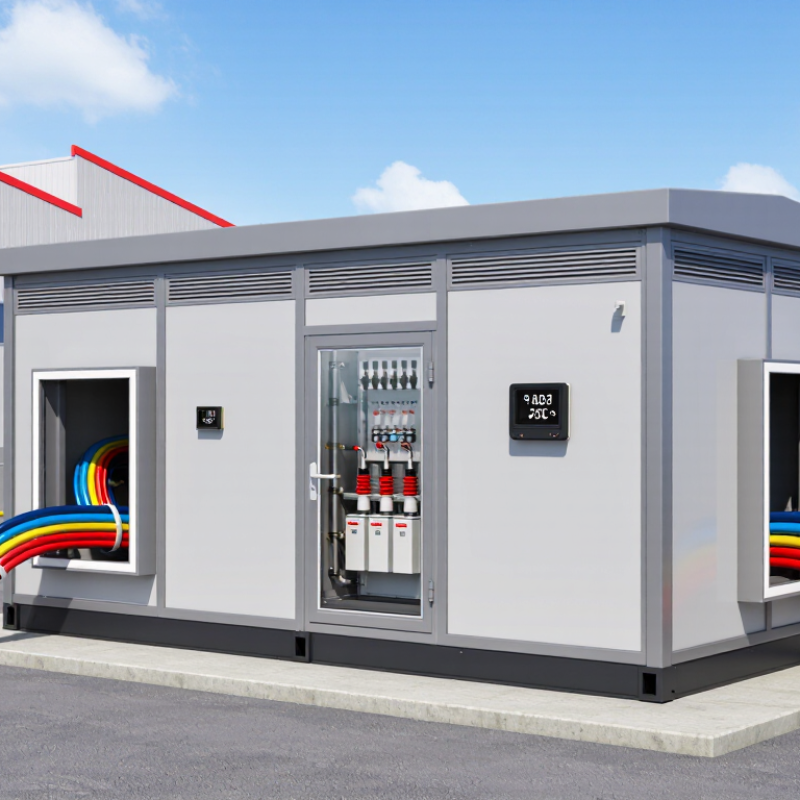
Choosing the China Best Compact Transformer Substation for Global Buyers requires more than comparing prices. It demands technical judgment, documented experience, and careful attention to local grid conditions. A reliable Compact Transformer Substation can combine a transformer, medium-voltage switchgear, protection devices, and low-voltage distribution equipment inside one weather-resistant enclosure. Its footprint may fit beside a factory wall, a solar farm, or a remote construction site.

Power-system engineer John J. Grainger wrote, “The transformer is one of the most important components in a power system.” This principle still matters today. A compact design must manage heat, short-circuit forces, insulation stress, and safe access. Buyers should examine rated capacity, voltage ratio, cooling method, enclosure protection, earthing design, and factory test reports. IEC compliance is valuable, but the correct standard depends on the destination market. Local certification cannot be treated as an afterthought.

Details reveal quality. Look for clean cable compartments, sealed doors, clear warning labels, and temperature monitoring that operators can actually read. Ask how the supplier tests partial discharge, dielectric strength, temperature rise, and mechanical endurance. A serious manufacturer should explain these results without hiding behind technical language. No supplier is perfect. Even a well-designed unit may need stronger corrosion protection near a coastline or extra ventilation in a hot region. That is where many buying guides become too simple. Global buyers should compare lifecycle performance, installation time, spare-parts access, and after-sales support—not only the initial quotation. The best choice is practical, verifiable, and suitable for the site.
China Best Compact Transformer Substation for Global Buyers

Definition and IEC 62271-202 Classification of Compact Transformer Substations

China Best Compact Transformer Substation for Global Buyers

Definition and IEC 62271-202 Classification of Compact Transformer Substations

A compact transformer substation is a factory-assembled unit that combines high-voltage switchgear, a transformer, low-voltage equipment, and an enclosure. It arrives as a coordinated assembly, reducing site wiring and installation time. Typical applications include industrial parks, commercial buildings, renewable energy sites, and urban distribution networks. The enclosure may be steel or concrete, depending on ventilation, corrosion exposure, fire separation, and local planning requirements. Space is limited.

IEC 62271-202 evaluates the prefabricated substation as one integrated product. Its requirements cover insulation, temperature rise, mechanical strength, earthing, transformer operation, and short-circuit performance. Internal arc classification is especially important. It identifies whether tested protection is intended for authorized personnel, the public, or both. The classification also states the tested fault current and arc duration. These values must match the project risk assessment, not merely the catalog description.

A common mistake is treating “compact” as a safety classification. It is not. Buyers should check the rated voltage, frequency, transformer capacity, enclosure access, ventilation path, and installation environment. Ask for type-test evidence and clear test conditions. Details matter.

A substation placed beside a public walkway needs different protection considerations from one inside a fenced utility area. In practice, drawings may look complete while drainage, cable bending space, or maintenance access remains unresolved. That gap deserves careful review before approval.

Key Ratings: 6–35 kV Medium Voltage and Up to 2,500 kVA Capacity

China Best Compact Transformer Substation for Global Buyers

Key Ratings: 6–35 kV Medium Voltage and Up to 2,500 kVA Capacity

Medium-voltage networks need compact equipment with predictable performance. The 6–35 kV range suits industrial parks, commercial buildings, renewable plants, and urban feeders. Up to 2,500 kVA supports substantial loads without requiring a large electrical room. Space matters.

The IEA’s Electricity 2024 report forecasts global electricity demand growth of about 4% annually through 2026. That growth increases pressure on substations, especially where land and installation time are limited. IEC 62271-202 provides a useful reference for prefabricated high-voltage substations, including enclosure, safety, and operational requirements. Buyers should also verify IEC 60076 transformer requirements, not just rely on a rating plate.

A 2,500 kVA label proves little alone. Check impedance, vector group, temperature rise, cooling method, short-circuit withstand, altitude correction, and enclosure protection. For coastal sites, salt resistance deserves specific testing. For dusty sites, ventilation filters need practical maintenance access. A compact design can still create heat problems. This is easy to underestimate. Factory test records, routine test certificates, and clear protection settings improve confidence. Yet specifications can remain incomplete when local harmonics, humidity, or future load growth are ignored. A careful buyer leaves room for those uncertainties.

Core Components: Transformers, RMUs, LV Switchboards, and Protection Relays

China Best Compact Transformer Substation for Global Buyers

A compact transformer substation combines several critical systems in one controlled enclosure. The transformer reduces medium voltage for safe distribution. Its cooling design, insulation level, and impedance affect daily reliability. For global projects, buyers should verify frequency, voltage, climate, and local grid requirements. A small mismatch can create expensive redesign work.

The RMU manages medium-voltage switching and isolation. It improves safety during inspection and fault handling. LV switchboards distribute power to feeders, motors, lighting, and auxiliary equipment. Clear busbar layouts and accessible cable terminals simplify maintenance. Protection relays detect overloads, short circuits, earth faults, and abnormal voltage. Correct settings matter more than impressive specifications. Field experience shows that coordination studies are often underestimated. That is a weakness worth correcting.

Tips: Ask for complete test records, wiring diagrams, relay setting files, and routine inspection procedures. Check enclosure protection, corrosion resistance, ventilation, and cable entry positions. Confirm that components can be serviced with common tools. Request simulations for expected load changes. Do not assume one configuration suits every country. Local engineers should review protection coordination before commissioning.

China Best Compact Transformer Substation for Global Buyers - Core Components: Transformers, RMUs, LV Switchboards, and Protection Relays

Core Component Typical Configuration Common Ratings and Parameters Main Functions Applicable Standards Key Selection Considerations
Compact Transformer Substation Factory-assembled enclosure containing a medium-voltage unit, transformer, low-voltage switchboard, protection devices, and auxiliary systems. 6–36 kV MV side 0.4 kV LV side 50 or 60 Hz 100–2,500 kVA Indoor or outdoor installation Steps down medium voltage for commercial, industrial, infrastructure, renewable-energy, and utility distribution applications. IEC 62271 series; IEC 60076 series; IEC 61439 series; IEC 60529 where enclosure protection is specified. Available space, local grid voltage, transformer capacity, ambient temperature, altitude, ventilation, corrosion conditions, and required ingress protection.
Distribution Transformer Oil-immersed or dry-type transformer with a three-phase core-and-coil assembly, tap changer, temperature monitoring, and neutral connection. Rated voltage: 6–36 kV / 0.4 kV Capacity: 100–2,500 kVA Vector group: commonly Dyn11 Off-circuit tap range: commonly ±2 × 2.5% Converts medium voltage to utilization voltage while maintaining the required insulation level, efficiency, and voltage regulation. IEC 60076 series; IEC 60076-1 for general requirements; IEC 60076-11 for dry-type transformers. Load profile, harmonics, fire-safety requirements, cooling method, energy-efficiency targets, noise limits, environmental conditions, and maintenance access.
Ring Main Unit (RMU) Sealed or air-insulated medium-voltage switchgear using load-break switches, circuit breakers, earthing switches, and cable compartments. Rated voltage: 6–36 kV Rated current: commonly 200–630 A Short-time withstand: commonly 12.5–25 kA 2–6 functional ways Provides ring-network switching, transformer protection, feeder isolation, earthing, and safe maintenance access. IEC 62271-1; IEC 62271-103 for switches; IEC 62271-105 for switch-fuse combinations; IEC 62271-200 for metal-enclosed switchgear. Network topology, fault level, switching frequency, cable arrangement, internal arc classification, remote-control requirements, and gas or air insulation technology.
LV Switchboard Low-voltage assembly with an incomer, busbars, outgoing feeders, molded-case or air circuit breakers, metering, and auxiliary control circuits. Rated insulation voltage: up to 1,000 V AC Rated current: commonly 250–4,000 A Busbar short-circuit rating: project-specific Form 2, 3, or 4 separation Distributes transformer output to downstream loads and provides overload, short-circuit, isolation, metering, and load-management functions. IEC 61439-1 and IEC 61439-2; IEC 60947 series for low-voltage switching and protective devices. Maximum demand, diversity factor, fault current, feeder quantity, cable entry direction, compartmentation, heat dissipation, and future expansion capacity.
Protection Relay Digital or electromechanical relay installed on the medium-voltage feeder, transformer incomer, or low-voltage protection circuit. Overcurrent: 50/51 Earth fault: 50N/51N Undervoltage: 27 Overvoltage: 59 Transformer differential: 87T Detects abnormal electrical conditions and issues trip signals to circuit breakers to limit equipment damage and improve system selectivity. IEC 60255 series for measuring relays and protection equipment; IEC 61850 may be applied for digital substation communication. Protection coordination, CT and VT ratios, trip response time, communication protocol, event recording, disturbance recording, and auxiliary power supply.
Medium-Voltage Cable Compartment Screened or separable cable termination compartment with cable supports, stress-control components, earthing points, and test access. Cable voltage: 6–36 kV Copper or aluminum conductors Single-core or three-core cables Bottom or side entry Connects incoming and outgoing medium-voltage cables while providing insulation, mechanical support, phase separation, and safe earthing. IEC 60502-2 for power cables; IEC 60840 for certain higher-voltage cable systems; local utility connection rules. Cable size, bending radius, termination type, installation method, soil or ambient temperature, shielding, and available cable trench space.
Busbar and Earthing System Copper or aluminum busbars with insulated supports, protective earth conductors, neutral bars, and accessible earthing terminals. Continuous current matched to design load Short-circuit withstand verified by design Separate protective earth and neutral where required Carries load current, maintains electrical continuity between compartments, and provides a low-impedance path for fault current. IEC 61439 series; IEC 60364-5-54 for earthing arrangements where applicable; local electrical installation regulations. Continuous and short-circuit current, temperature rise, material conductivity, enclosure arrangement, earth-fault level, and site grounding resistance.
Enclosure and Environmental Protection Steel or corrosion-protected enclosure with separate MV, transformer, LV, and control areas; optional anti-condensation heaters and ventilation. Typical protection: IP23–IP54 Ambient range commonly −25°C to +40°C Optional coastal or high-corrosion finish Indoor or outdoor construction Protects electrical equipment from accidental contact, dust, water, weather, mechanical impact, and unauthorized access. IEC 60529 for IP ratings; IEC 62271 and IEC 61439 for relevant enclosure and assembly requirements. Climate zone, solar radiation, wind and snow loads, salt exposure, flooding risk, ventilation, fire separation, and local civil works.
Measurement and Communication Multifunction power meter, current and voltage transformers, temperature sensors, status indicators, remote terminal unit, and communication gateway. Voltage, current, power, energy, frequency Power factor and demand monitoring RS-485, Modbus, Ethernet, or IEC 61850 options Supports operational monitoring, energy management, alarm reporting, remote switching, fault analysis, and maintenance planning. IEC 61557-12 for power measurement and monitoring devices; IEC 61850 for applicable substation communication systems. Required data points, cybersecurity policy, SCADA compatibility, communication distance, time synchronization, and remote-control authorization.
Factory Testing and Documentation Routine inspection and testing of wiring, insulation, dielectric strength, mechanical operation, protection settings, and functional interlocks. Insulation resistance Power-frequency withstand Transformer ratio and winding resistance Relay injection and trip testing Functional and interlock checks Confirms that the assembled substation meets approved design parameters before shipment, installation, and energization. Applicable IEC product standards, approved technical drawings, project specifications, and local inspection requirements. Request test certificates, wiring diagrams, protection settings, equipment schedules, operating manuals, spare-parts lists, and installation instructions.

Note: Ratings shown are typical project ranges and must be finalized through load calculations, utility requirements, fault-level studies, environmental assessment, and applicable local regulations.

Efficiency, Safety, and IP Ratings for Global Industrial Applications

China Best Compact Transformer Substation for Global Buyers

Efficiency, Safety, and IP Ratings for Global Industrial Applications

A compact transformer substation can reduce cable length, installation space, and energy losses. For global projects, efficiency begins with the load profile, not a catalogue rating. Engineers should match transformer capacity to real operating demand, including motors, seasonal peaks, and future expansion. Low-loss cores, balanced loading, and effective ventilation support stable performance. Small details matter. During commissioning, checking temperature rise and connection torque can prevent costly faults later.

Safety depends on more than an enclosure. Reliable designs include clear isolation points, protective relays, secure earthing, door interlocks, and properly rated switchgear. Factory testing should cover insulation, wiring, mechanical operation, and protection settings. Site testing remains essential because transport, moisture, and installation errors can change results. A useful design also allows technicians to inspect components without standing near energized parts.

IP ratings help buyers compare protection against dust and water. IP54 may suit sheltered industrial areas, while exposed or dusty sites may require a higher rating after environmental review. However, an IP rating does not prove corrosion resistance, thermal efficiency, or complete safety. Salt air, high humidity, and intense heat still need separate consideration. No design is perfect. Sometimes, a highly sealed cabinet traps heat and reduces component life. Engineers should balance sealing, ventilation, maintenance access, and local electrical requirements before approval.

China Best Compact Transformer Substation for Global Buyers: Efficiency, Safety, and IP Ratings

IEC 60529 IP ratings use the first digit to define protection against solid objects and the second digit to define protection against water. Higher values indicate a higher protection level within each category.

For compact transformer substations, IP23 is commonly associated with indoor or sheltered installations, while IP44, IP54, IP55, and IP65 provide progressively stronger enclosure protection for outdoor, dusty, or water-exposed industrial environments. IP ratings describe enclosure protection only; transformer efficiency and electrical safety must also be verified against the applicable IEC requirements, rated load, cooling method, insulation system, and installation conditions.

Selection Criteria: IEC Compliance, Climate Design, Cost, and Lifecycle Support

China Best Compact Transformer Substation for Global Buyers

For global buyers, a compact transformer substation should be judged beyond its footprint. IEC compliance is the starting point, not a marketing label. Request test reports, routine-test records, protection settings, and clear enclosure ratings. Check that the transformer, switchgear, cables, and monitoring devices work as one tested system. A low price can hide missing documentation or costly site modifications. I have seen projects delayed because drawings ignored local cable entry requirements. Small details matter.

Climate design must match the installation, not the brochure. In humid coastal areas, specify corrosion-resistant coatings, sealed compartments, and anti-condensation heaters. For dusty or hot sites, review ventilation, derating curves, and temperature-rise data. Cold regions may need heaters and low-temperature materials. Ask how noise, altitude, flooding, and solar exposure affect performance. Cost should include transport, commissioning, spare parts, energy losses, and scheduled maintenance. A cheaper unit may consume more power for twenty years. That calculation is easy to miss.

Tips: Compare offers using one detailed specification sheet. Confirm IEC references and certification scope with an independent engineer. Request a climate assumption table. Include warranty response times, remote diagnostics, training, and replacement-part availability. Keep inspection access practical. If a technician cannot reach a fuse safely, the design is incomplete. Lifecycle support often sounds vague. Ask for measurable response times, not promises.