
How to Choose the Right Electric Hoist Winch?

Choosing the right Electric Hoist Winch is not a simple capacity decision. It is a lifting-system decision.

Recent market research shows continuing demand for electric lifting equipment. Grand View Research reported that the global material-handling equipment market was valued at approximately USD 216 billion in 2023. Fortune Business Insights also identified automation and safer material movement as major growth drivers in the global hoist market. These figures matter, but market growth does not guarantee a suitable purchase.

Real conditions matter more.

A warehouse may need frequent vertical lifting, precise positioning, and low noise. A fabrication workshop may require heavier duty cycles, longer lifts, and better heat resistance. Outdoor sites add rain, dust, and unstable power supplies. Each detail changes the specification.

Ross Moloney, chief executive of the Lifting Equipment Engineers Association, has stated, “Competence is the foundation of safe lifting.” That principle should guide every Electric Hoist Winch selection. Rated capacity, duty class, lifting speed, voltage, braking performance, control method, and maintenance access require careful comparison.

Standards provide a useful framework. ASME B30.16 addresses overhead hoists, while ISO 4301 helps classify crane and hoist mechanisms by duty. OSHA guidance also emphasizes rated-load limits, inspections, and trained operators.

A larger hoist is not automatically safer. It may increase cost, energy use, and structural demands. I have seen specifications fail because the buyer measured the load, but ignored its lifting frequency. That mistake is easy to repeat. This guide examines the practical questions behind a dependable choice.
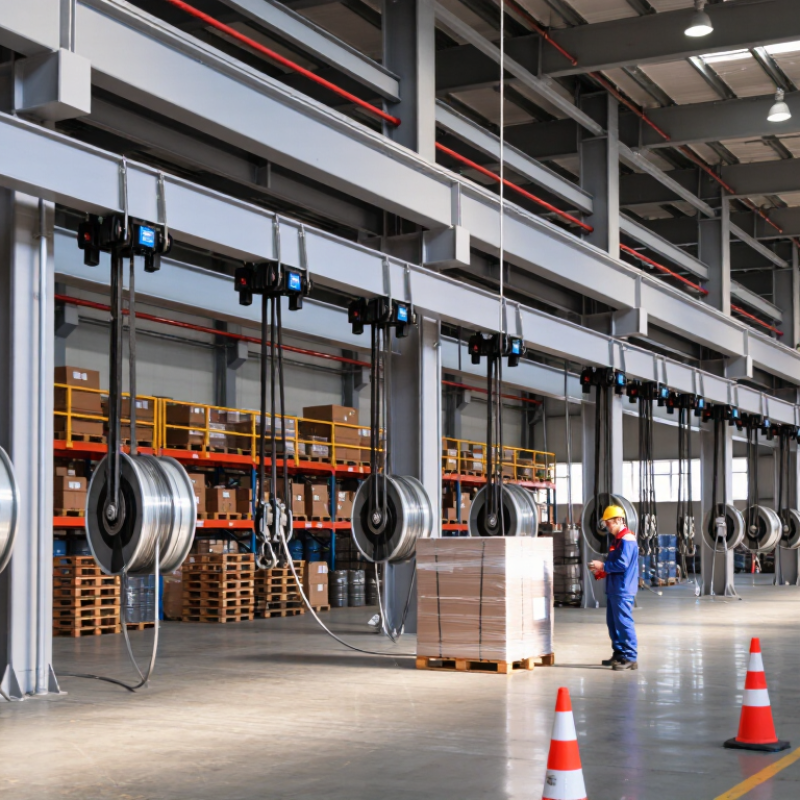
How to Choose the Right Electric Hoist Winch?

Define the Load: Choose WLL Above the Maximum Weight and Dynamic Force

How to Choose the Right Electric Hoist Winch?

Define the load before comparing motors, chains, or lifting speed. The working load limit, or WLL, must exceed the maximum lifted weight. Include hooks, slings, spreader bars, containers, and trapped material. Then assess dynamic force from starting, stopping, swinging, snagging, and uneven loading. A 500-kilogram load may create much higher forces during sudden movement. ASME B30.16 requires hoists to be selected and operated within their rated capacity. OSHA also requires rated loads to be clearly identified and never exceeded. A neat calculation can still be wrong.

Use the highest credible load, not the average load. Add a competent engineer’s dynamic assessment when acceleration, impact, or side loading is possible. In field inspections, unclear load records often cause more trouble than motor failure. The U.S. Bureau of Labor Statistics recorded 1,069 fatal work injuries in transportation and material-moving occupations during 2023. This broad category is not hoist-specific, but it shows why lifting assumptions deserve scrutiny. HSE guidance also stresses checking the total load and preventing overload conditions.

Tips: Record the load path and accessories. Confirm each component’s WLL. Check the hoist’s inspection history. Do not treat a larger motor as extra capacity. Leave margin for movement, but do not invent a safety factor without engineering support. Recheck the calculation when the load, angle, or lifting method changes.

How to Choose the Right Electric Hoist Winch? - Define the Load: Choose WLL Above the Maximum Weight and Dynamic Force

Load Scenario Maximum Suspended Load Estimated Dynamic Allowance Calculated Design Load Recommended Minimum WLL Selection Margin Key Operating Considerations
Controlled lifting of a static machine component 800 kg 10%
(80 kg)
880 kg 120 kg
(13.6%)
Use smooth starts and stops. Confirm that the lifting points, sling angle, hooks and supporting structure are also rated for the intended load.
Routine workshop handling with frequent starts and stops 1,200 kg 15%
(180 kg)
1,380 kg 120 kg
(8.7%)
Choose a hoist with suitable duty classification, brake capacity and control response for the expected lifting cycle.
Outdoor lifting with possible wind movement 2,000 kg 20%
(400 kg)
2,400 kg 600 kg
(25.0%)
Control the load with tag lines where appropriate. Stop operation when wind or weather conditions could cause uncontrolled movement.
Long or flexible load with swing potential 2,500 kg 25%
(625 kg)
3,125 kg 875 kg
(28.0%)
Use balanced rigging, prevent side loading and verify that the load will not rotate, snag or strike nearby structures.
Loading or positioning where impact may occur 3,000 kg 30%
(900 kg)
3,900 kg 1,100 kg
(28.2%)
Do not intentionally shock-load a hoist. If impact cannot be excluded, obtain an engineered lifting assessment and use equipment approved for that service.
Maintenance lifting with uncertain load data Unknown Not calculable Not calculable Do not select by estimate Requires verification Identify the actual mass, center of gravity, lifting points and rigging configuration before selecting or operating the electric hoist winch.
Selection method: Design load = maximum suspended load × (1 + dynamic allowance). Select a hoist with a rated Working Load Limit (WLL) above the calculated design load; the examples use the next practical WLL rating. Dynamic allowances shown are planning values, not universal legal requirements. The final selection must consider applicable regulations, manufacturer instructions, duty cycle, lift height, reeving, speed, environment, rigging configuration and the capacity of every component in the load path.

Match Lift Height, Speed, and Duty Cycle to FEM 1Am–5m Class Ratings

Choosing an electric hoist winch starts with the real lifting pattern, not the maximum load on a brochure. Record load weight, lift height, daily cycles, and average operating minutes. A 500 kg load lifted twice per hour needs a different hoist from the same load moved every three minutes.

FEM 9.511 and ISO 4301-1 classify equipment by total running time and load spectrum. Common FEM reference values place 1Am near 1,600 operating hours, 2m near 3,200 hours, 3m near 6,300 hours, 4m near 12,500 hours, and 5m near 25,000 hours. These figures are planning references, not permission to exceed rated capacity.

A warehouse hoist may suit 1Am or 2m. Continuous production often demands 3m to 5m. Check the manufacturer’s duty table carefully.

Speed must match the work zone. A 6-meter lift at 8 meters per minute takes 45 seconds, excluding hook positioning. Faster lifting can improve output, but it may increase sway, braking stress, and heat. Lift height also affects rope length, drum capacity, and control accuracy.

Field inspections often reveal a mismatch: the hoist has enough capacity, but its duty rating is too low. That mistake is expensive. I would also question optimistic cycle estimates. Operators rarely follow ideal schedules, and occasional overloads are easy to underestimate. A practical selection adds measured usage data, maintenance records, and a realistic load spectrum before choosing the FEM class.

Verify Motor Power with P = Fv and 380–480 V Three-Phase Options

How to Choose the Right Electric Hoist Winch?

Motor selection should begin with force, speed, and duty cycle. Use P = Fv: power in watts equals lifting force in newtons multiplied by lifting speed in metres per second. For a 1,000 kg load rising at 0.08 m/s, gravity creates about 9,810 N. Ideal mechanical power is approximately 785 W. Real systems need more. Include gearbox losses, rope friction, acceleration, and a safety margin. A neat calculation can still mislead.

The IEA reports that electric motor systems consume roughly half of global electricity. Efficiency therefore matters during every lifting cycle. A 380–480 V three-phase motor can reduce current for the same output, but voltage alone does not confirm suitability. Check the motor nameplate, rated frequency, full-load current, insulation class, enclosure, and compatibility with the local supply. Confirm phase balance before commissioning. Poor balance quietly increases heating.

Tips: Measure the actual load path, not only the rated load. Check starting torque and short lifting cycles. Compare calculated power with the manufacturer’s duty classification. I would also record motor temperature after repeated lifts; this practical check often reveals assumptions that paperwork misses. Reference points include IEA energy-efficiency reporting and IEC 60034 motor-rating guidance. Never ignore brake capacity, overload protection, or emergency stopping distance.

Check Wire-Rope Safety Using a Minimum 5:1 Design Factor and Proper Drum

Choosing an electric hoist winch starts with the wire rope, not the motor rating. The rope’s minimum breaking strength should be at least five times the intended working load. This 5:1 design factor provides a safety margin for normal lifting forces, shock loading, and gradual wear. It does not make overloading acceptable.

Check the rope certificate, diameter, construction, and condition. A qualified inspector should look for broken wires, crushed sections, corrosion, birdcaging, and flattened strands. Small defects matter. A quick visual check can miss internal damage.

I have found that dirty ropes often hide serious wear, so cleaning before inspection is worthwhile. The required design factor may vary with the application and applicable safety standard. Confirm it with the manufacturer’s technical data.

The drum must match the rope. Its diameter-to-rope ratio should follow the rope manufacturer’s specification, because a small drum bends wire repeatedly and accelerates fatigue. Grooves should fit the rope size and remain smooth, without sharp edges or damaged sections. Keep the rope tightly and evenly spooled, with the correct fleet angle and enough wraps remaining on the drum. Poor winding can create side pressure, loose coils, and sudden rope movement. It is easy to overlook this detail. Select a winch with suitable rope capacity, controlled line speed, and a rated load that matches the complete lifting system—not only the winch itself.

Confirm IP54–IP65 Protection, Limit Switches, Brakes, and Emergency Controls

How to Choose the Right Electric Hoist Winch?

Confirm IP54–IP65 Protection, Limit Switches, Brakes, and Emergency Controls

Choosing an electric hoist winch starts with its working environment. IP54 protects against dust that may interfere with operation and water splashes from all directions. IP65 offers stronger dust protection and resistance to water jets. However, IP65 is not waterproof. That assumption fails in outdoor or washdown areas. IEC 60529 defines these ratings, but actual performance still depends on seals, cable glands, and maintenance.

Limit switches should stop the hook before over-travel, not after impact. A mechanical brake must hold the rated load during power loss. Check its holding capacity, stopping distance, and adjustment records. ASME B30.16 provides widely used inspection guidance for overhead hoists. The U.S. Bureau of Labor Statistics recorded 5,283 fatal work injuries in 2023. This figure does not isolate hoists, but it shows why protective controls deserve serious attention.

Tips: Test the upper and lower limit switches without a load first. Press the emergency stop and confirm motion stops immediately. ISO 13850 addresses emergency-stop design, but it does not replace routine inspection. I would also verify the control pendant’s IP rating. Small gaps matter. A higher rating cannot correct poor installation, overloaded lifting, or worn brake linings. Leave room for doubt, and record every test.