How to Choose the Right Skid Steer for Your Needs?
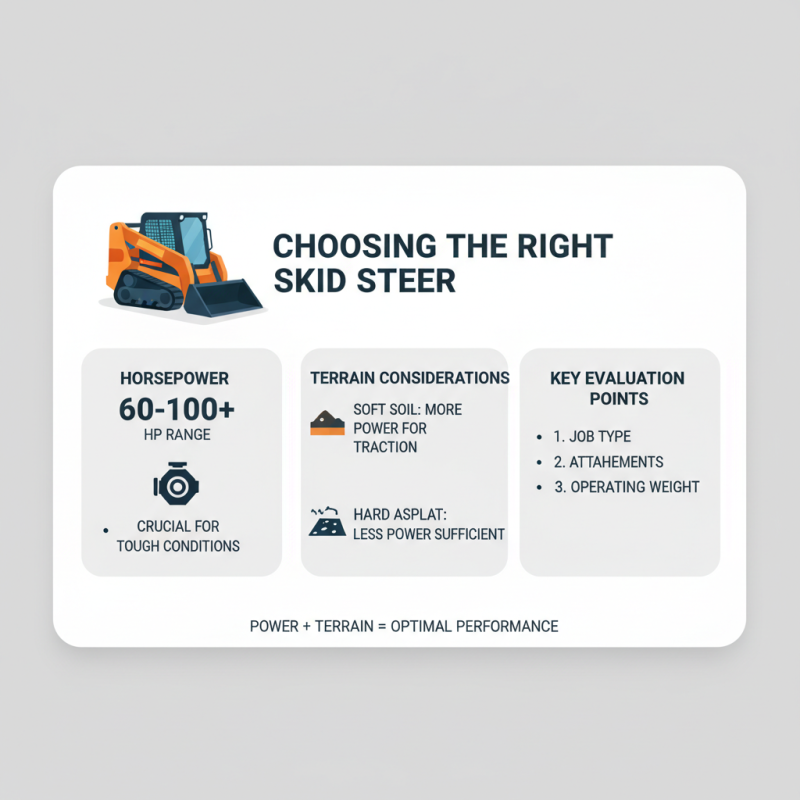
Choosing the right skid steer for your needs can be a daunting task. Mark Johnson, a skilled operator and industry expert, once said, "The right skid steer can make all the difference on the job site." Understanding the features and capabilities of different models is crucial for optimal performance.
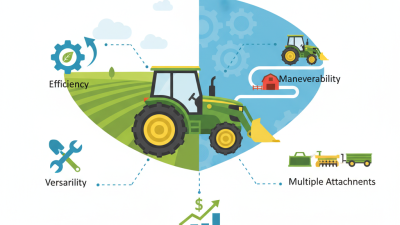
In today’s construction and farming sectors, skid steers have become essential tools. They offer versatility, efficiency, and maneuverability. However, not every skid steer is suitable for every job. It’s important to consider your specific requirements. What is your primary application? Will you need attachments for various tasks?
Each job presents unique challenges. A compact model may excel in tight spaces while a larger one may handle heavier loads better. Reflecting on your needs will guide you to the right choice. Don’t rush the decision. Think it through to avoid costly mistakes down the line.
Understanding the Different Types of Skid Steers and Their Applications
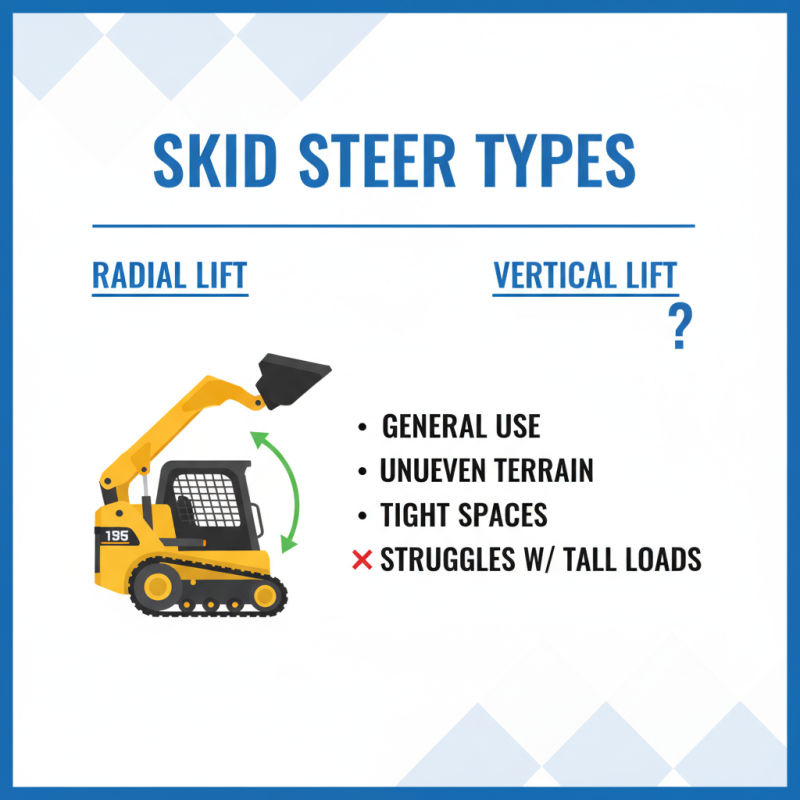
When choosing a skid steer, it’s important to understand the various types available. Skid steers come in radial lift and vertical lift models. Radial lift skid steers are great for general use on uneven terrain. They can easily maneuver in tight spaces, but they might struggle with taller loads.
Vertical lift skid steers are designed for lifting higher. They can handle heavier loads and are excellent for loading trucks or containers. However, they can be bulky. Think about your application. Will you be doing more digging or lifting? This choice affects the efficiency of your work.
Consider the attachments you may need. Some skid steers work well with various attachments, while others are more limited. Another point to ponder is maintenance. Some models require more upkeep than others, which can add costs. Taking time to reflect on these details will lead you to the right choice for your needs.
Assessing Attachment Compatibility for Various Skid Steer Models
When choosing a skid steer, one crucial aspect is attachment compatibility. Different tasks require different attachments, so understanding which ones fit your model is vital. Common attachments include buckets, forks, and grapples. However, not all models accept the same attachments. Some units limit your options. Checking specifications is essential.
Many might overlook the significance of hydraulic flow and pressure. An attachment may physically fit but perform poorly if the hydraulic system isn’t compatible. It’s wise to evaluate the flow requirements of any attachment. Also, weight considerations play a role. A heavier attachment can affect machine performance. Be mindful of this aspect.
Users often feel overwhelmed by the number of choices available. It’s easy to focus solely on machine power or brand reputation. But compatibility issues may arise later. Testing attachments before purchase can prevent costly mistakes. Take time to reflect on specific needs. Ultimately, the right match enhances productivity and safety.
Analyzing Cost vs. Performance: Choosing the Right Skid Steer for Your Budget
When selecting a skid steer, cost and performance often clash, making it crucial to analyze both aspects cleverly. According to the Equipment Leasing & Finance Foundation, about 57% of small businesses consider total cost of ownership crucial when choosing machinery. This includes purchase price, maintenance, and fuel efficiency. A skid steer that seems cheaper initially might incur higher long-term costs if it’s inefficient or not durable.
Performance metrics vary greatly. Machines with higher lift capacities generally cost more. However, models with lower capacities can sometimes meet your needs as effectively, depending on the tasks. A 2022 report from the Association of Equipment Manufacturers highlighted that over 40% of buyers failed to consider the machine’s specific task capabilities. This oversight can lead to purchasing a model that’s not optimal for your projects, increasing operational costs.
Finding a balance demands careful thought. Sometimes, spending more upfront on a better-performing machine pays off. Yet, it’s easy to fall into the trap of overestimating short-term needs. An overly powerful skid steer could sit idle for months, leading to wasted funds. Reflecting on actual requirements before deciding might reveal a different picture. Always align your choice with both immediate requirements and future growth potential.
Considering Maintenance and Support Services When Selecting a Skid Steer
When choosing a skid steer, maintenance and support services are crucial. Regular maintenance ensures durability and efficiency. However, many overlook this aspect. It is easy to focus solely on price and features, but long-term care can save money and time. Some models have complicated maintenance schedules. This can lead to frustrations down the road.
Support services also play a vital role. Access to parts and knowledgeable personnel can make a big difference. In remote areas, limited service options are a challenge. Finding a model that has strong local support is essential yet often ignored. It’s rare for buyers to consider how intuitive a maintenance process is. Easy access to maintenance manuals can be a game changer. Do not underestimate the importance of a good support network.
Reflect on your specific needs. Consider factors like job site demands and the machine’s uptime. Think about how often you’ll need assistance. A skid steer that seems perfect might not be so great without good service. Every choice has its pros and cons. Don’t rush this decision. Taking the time to evaluate your maintenance and support needs can lead to a wiser investment.
Maintenance and Support Services Consideration for Skid Steer Buyers