How to Choose the Right Towable Boom Lift for Your Needs?
When considering a Towable Boom Lift, it's crucial to select the right one for your specific needs. Industry expert John Smith, known for his experience in equipment rentals, emphasizes, "Choosing the proper Towable Boom Lift can significantly impact your project's success." His insight reflects the importance of making informed decisions.
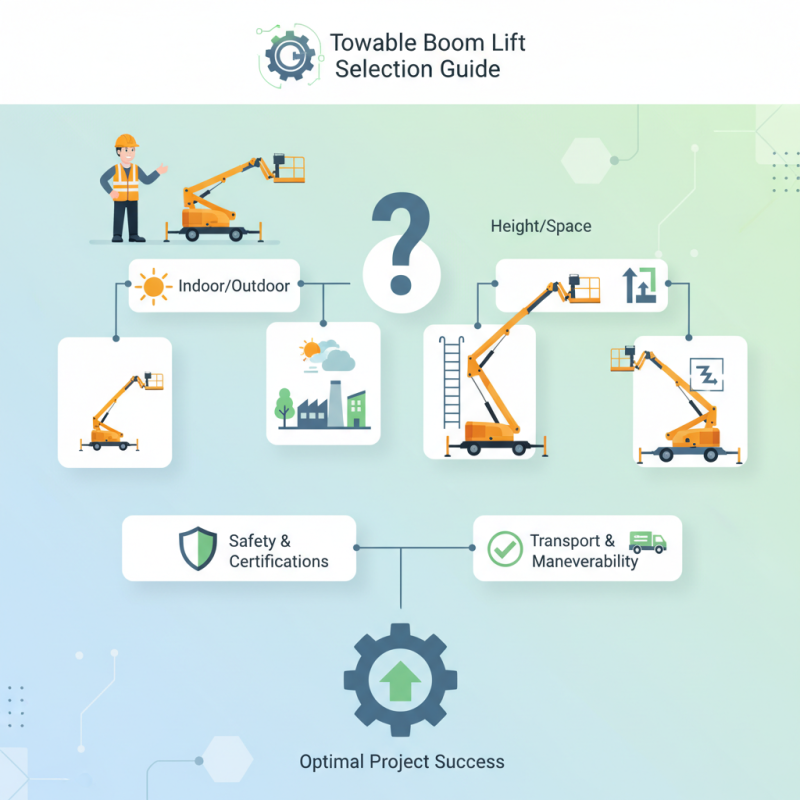
Selecting a Towable Boom Lift involves understanding your project requirements. Are you working indoors or outdoors? Will you need to reach high places or navigate tight spaces? These details will influence your choice. Additionally, safety must be a priority. Ensure the equipment has proper certifications and features that comply with safety standards.
It’s also essential to reflect on the operational aspects. Consider ease of transport and maneuverability. Yet, some may overlook these factors. A mistaken choice could lead to delays or accidents. By taking the time to evaluate these elements, you ensure optimal results for your project, maximizing the efficiency of your Towable Boom Lift.
Understanding Towable Boom Lifts: Types and Applications
Towable boom lifts come in various types, each suited for different tasks. Articulating booms allow access to hard-to-reach areas. They navigate obstacles easily, making them ideal for work in urban environments. These lifts can extend both vertically and horizontally. That flexibility enables workers to get closer to their desired height and angle.
On the other hand, straight boom lifts are perfect for reaching elevated spaces directly. They provide a stable platform for high-reaching jobs, such as building maintenance or tree trimming. These lifts can support heavier loads, which might benefit contractors dealing with heavy equipment. Users should also consider the terrain. Some models perform better on rough surfaces compared to others.
Selecting the right boom lift can be challenging. If the wrong type is chosen, it may lead to frustration and wasted time. It's essential to evaluate the specific requirements of the job. Take into account the lift's reach, weight capacity, and mobility. An unsuitable choice can hinder work efficiency. Thought should also be given to operator training. Proper safety measures are critical for all users. Without training, accidents can happen.
Assessing Your Project Requirements for Boom Lift Selection
Assessing project requirements is crucial when selecting a towable boom lift. Start by evaluating the height you need to reach. Most projects require lifts that go between 30 and 60 feet. However, some tasks may need lifts that reach 80 feet or more. Data shows that about 40% of projects underestimate height requirements, leading to costly delays.
Consider the weight capacity of the boom lift as well. Typical models can handle loads between 300 and 1,000 pounds. Choosing a lift with insufficient capacity can result in equipment failure. According to industry reports, 15% of accidents occur due to overloaded lifts. Ensure you factor in both personnel and equipment weight when making your selection.
Site conditions also play a critical role. Assess the terrain of your worksite. Many lifts are not suitable for rough or uneven ground. A smooth surface is ideal. In fact, about 30% of boom lift incidents are related to unstable ground. It’s vital to reflect on these factors fully. Proper assessment leads to better efficiency and safety on the job.
How to Choose the Right Towable Boom Lift for Your Needs?
| Feature | Considerations | Recommended Specifications |
| Working Height | Determine the height you need to reach for your project. | 45 to 60 feet for most construction tasks. |
| Platform Capacity | Consider the weight of the personnel and equipment. | 500 to 1,000 lbs for light to medium applications. |
| Terrain Type | Identify if you need it for rough or smooth ground. | All-terrain capabilities for uneven surfaces. |
| Power Source | Choose between diesel, electric, or hybrid options. | Electric for indoor projects; Diesel for outdoor use. |
| Maneuverability | Assess the size of the work site and access points. | Compact models for tight spaces; longer boom for outreach. |
| Safety Features | Look for added safety measures like guardrails and alarms. | Emergency stop buttons and non-slip surfaces. |
Key Specifications to Consider When Choosing a Towable Boom Lift
When choosing a towable boom lift, several key specifications warrant consideration. Payload capacity is crucial; it determines how much weight the lift can safely carry. Typically, this ranges from 200 to 600 pounds. Make sure you account for the operators and their tools. A lift with a higher capacity may better suit job sites with heavy equipment.
Next, examine the platform height. This specification impacts how high you can work. Common heights are between 30 and 60 feet. Think about the tasks at hand. If you're frequently working at greater heights, opt for a lift that can meet those demands. Remember, safety features matter too. Look for models with outriggers and stabilizers. These add stability and prevent tipping, which is a crucial factor during operation.
You might find yourself mixing different specifications. It’s easy to overlook the dimensions of the lift when folded. A compact model may fit in tight spots or be easier to tow. However, a larger lift might present better reach. Consider these factors carefully, as balancing between them can be tricky. Always envision how each specification aligns with your actual needs.
Evaluating Lift Capacity and Height Requirements
Choosing the right towable boom lift requires a careful evaluation of lift capacity and height requirements. According to industry reports, the average working height for boom lifts ranges from 30 to 70 feet. This variation impacts your project's efficiency. Understanding these heights is crucial when determining what equipment meets your needs.
Consider your workspace and tasks. If you need to reach a height of 40 feet, a lift with a capacity of at least 500 pounds is often necessary. Not all lifts can manage heavy loads at max height. A report from the American Rental Association reveals that nearly 20% of users underestimate their weight needs. This can lead to operational delays or equipment failure. Shortcomings like improper capacity assessment can create risk on-site.
Evaluate your specific needs. Are you working on a roof or in tight corners? Each scenario may require different specifications. Inspect the terrain as well. If you are on uneven ground, you might need additional stability features. Always question whether your chosen lift aligns with safety standards. Ignoring these factors can lead to significant problems down the line.
Choosing the Right Towable Boom Lift: Evaluating Lift Capacity and Height Requirements
Budgeting: Costs Associated with Owning and Renting Boom Lifts
When considering the costs of owning or renting a towable boom lift, budgeting becomes critical. Industry reports indicate that rental prices can range from $200 to $1,000 per day, depending on the lift model and rental duration. The short-term rental may appear cost-effective for occasional projects. However, renting frequently adds up quickly. Companies that need lifts regularly should weigh this option seriously.
On the ownership side, the initial purchase price can span from $10,000 to over $100,000. Maintenance and storage also play vital roles in total cost calculations. Maintenance expenses typically constitute 15% of the ownership costs annually. Insurance is another factor to include, often adding to yearly expenses. For some businesses, owning a boom lift could lead to efficiency gains, but taking on those costs requires careful planning.
One should reflect on both the financial and operational implications. Assessing usage frequency is crucial. If a boom lift is used occasionally, renting might be the best choice. Alternatively, consistent usage may justify the purchase. Ultimately, the decision hinges on balancing budget constraints with operational needs. Investing wisely can set the stage for improved productivity.
