7 Compact Tractor Buying Tips for Global Buyers
Buying a compact tractor is rarely a simple horsepower decision. Global buyers must match the machine to soil, climate, terrain, attachments, transport limits, and local service access. A tractor that performs well on a dry farm may struggle in humid fields or steep mountain orchards.
This guide presents seven practical buying tips for making that choice with fewer regrets. It examines engine power, lift capacity, transmission type, four-wheel drive, operator comfort, attachment compatibility, and after-sales support. Each detail matters. A loader may look impressive in a showroom, yet its hydraulic capacity could disappoint when lifting wet soil or round hay bales.
Machinery expert Greg Peterson, widely known as Machinery Pete, often emphasizes, “Condition is king.” That principle applies to new and used equipment. Paint can hide wear. A clean dashboard does not prove reliable maintenance. Buyers should inspect service records, tire damage, hydraulic leaks, cold-start behavior, and parts availability before signing anything.
Small errors become expensive quickly. I once underestimated how much attachment width affects transport and storage. That mistake seems obvious now. It was not obvious during the purchase.
A capable compact tractor should fit the work, not merely impress the buyer. Local dealers, experienced operators, and independent mechanics can provide valuable evidence. Still, their advice deserves careful comparison. The best decision balances present tasks with future needs, realistic budgets, and the difficult conditions the machine may face every season.
Define the Right Compact Tractor Size for Your Work
7 Compact Tractor Buying Tips for Global Buyers
Tip 1: Measure the work before comparing engine power. A small orchard may need narrow clearance, while open fields demand stability and traction. Record row spacing, slope, soil type, and turning room. A tractor that fits the task should pass between trees without scraping branches. It should also carry the intended attachment safely.
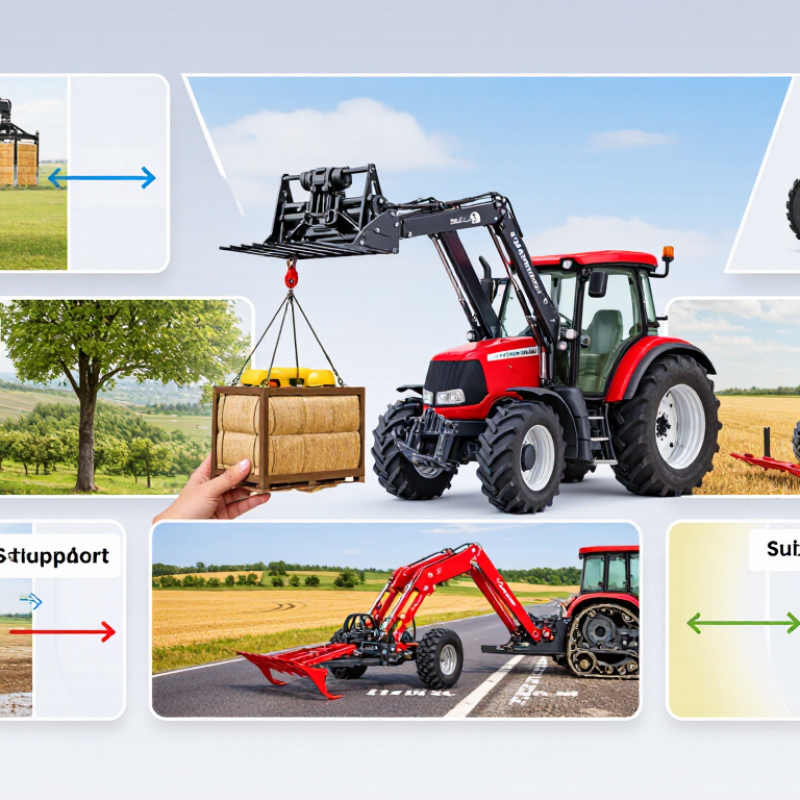
Tip 2: Match tractor size to daily loads. Check lifting capacity, three-point hitch limits, and hydraulic flow together. A loader may lift a heavy pallet, but the rear axle must remain stable. Consider the tractor’s width and transport weight. Rural roads, storage doors, and workshop space can quickly expose a poor size decision. Bigger is not always better.
Tip 3: Compare operating conditions, not just specifications. Hot climates may require careful cooling-system checks. Wet ground may need lower ground pressure and suitable tires. Steep land requires dependable braking and rollover protection. Local technicians and parts access also matter, especially far from major cities. Ask how routine servicing will work in your region.
Small details matter. Measure twice.
Buyers sometimes overestimate future needs. I have seen equipment selected for rare tasks, then used mostly for mowing and hauling. That choice can increase cost, fuel use, and soil compaction. Reconsider your busiest weekly jobs. The right compact tractor is usually the smallest machine that performs them safely, comfortably, and without constant strain.
Compare Engine Power, Attachments, and Operating Capabilities
A compact tractor is not defined by horsepower alone. The OECD-FAO Agricultural Outlook 2024–2033 projects global agricultural output to grow about 1.1% annually, increasing demand for flexible, productive machinery.
For a smallholding, compare engine power with PTO output, hydraulic flow, and lift capacity. A 25-horsepower engine may handle mowing well but struggle with a loaded rear implement on wet ground. Check the manufacturer’s rated PTO power, not only the headline engine figure.
Match attachments to your actual work. A front loader needs stable lifting capacity, responsive hydraulics, and enough rear ballast. A rotary cutter requires suitable PTO speed and a transmission designed for repeated field loads. Three-point hitch geometry matters, too. Measure your implements before buying. A narrow tractor may pass between orchard rows, yet its lift arms might not fit your existing tools.
Operating capability includes visibility, turning radius, ground clearance, tire choice, and service access. Reports from the Association of Equipment Manufacturers classify tractor sales by horsepower bands, showing why “compact” is an incomplete comparison. Test the seat, controls, and loader view in person. Small details matter.
Do not overbuy.
The perfect specification rarely exists. A stronger tractor can consume more fuel and remain idle for most tasks. Review your soil, slopes, annual hours, and attachment plans honestly. Keep a written comparison; memory is unreliable.
Check Comfort, Safety Features, and Ease of Maintenance
A compact tractor should feel safe before it feels powerful. Sit in it. Check whether your heels rest naturally and whether the seat adjusts without tools. The ISO 26322-1 tractor standard emphasizes operator ergonomics, visibility, and control access. Test every lever with work gloves. A comfortable seat also matters during long mowing or loading sessions, when small pressure points become serious fatigue.
Safety deserves seven checks. One, confirm a certified rollover protective structure. Two, test the seat belt for easy locking. Three, inspect mirrors, lights, and rear visibility. Four, check that guards cover rotating power-take-off parts. Five, verify neutral-start and PTO interlocks. Six, examine the step height and handrails. Seven, ask how the tractor behaves on slopes. NIOSH identifies tractor overturns as a leading cause of fatal agricultural injuries in the United States. The ILO also describes agriculture as one of the world’s most hazardous sectors. Do not guess.
Maintenance can decide ownership costs. Open the hood and locate filters, grease points, fluid checks, and battery terminals. Look underneath. Can you reach daily service points without removing panels? ISO 14269-2 highlights operator-environment requirements, including protection from heat, noise, and vibration. Ask for service intervals, maintenance diagrams, and local parts availability. A polished demonstration can hide awkward servicing. I would inspect cold-start performance, hydraulic leaks, and fastener access before buying. A clean machine is not always an easy machine.
Evaluate Dealer Support, Parts Access, and Local Service
7 Compact Tractor Buying Tips for Global Buyers
Evaluate Dealer Support, Parts Access, and Local Service
Dealer support is not a brochure promise; it is a measurable operating asset. Ask for the average service response time, technician coverage, and emergency contact process. Request a written parts availability list for filters, belts, hydraulic fittings, and electrical components. Paperwork is not uptime. A dealer should also explain warranty handling in your language and time zone.
The USDA’s 2022 Census of Agriculture counted about 1.9 million farms and 880 million acres in the United States. That scale shows why service distance matters, even in developed markets. AEM reported that U.S. farm tractor sales declined 8.2% in 2023, making dealers more dependent on efficient aftermarket support. Ask how many common parts are stocked locally, not merely stored in a distant warehouse. Also check shipping times during harvest or planting seasons.
Inspect the workshop before purchasing. Look for clean benches, diagnostic equipment, trained technicians, and visible parts records. Speak with two local customers, if possible. Ask how long a repair actually took, rather than accepting advertised promises. A low purchase price can look intelligent until one failed hydraulic hose stops work for ten days. I would still question every “same-day” claim. Rural logistics are rarely perfect. Evaluate local currency payment options, import procedures, and technical manuals before signing. The best compact tractor is not always the cheapest machine; it is the one that can return to work quickly.