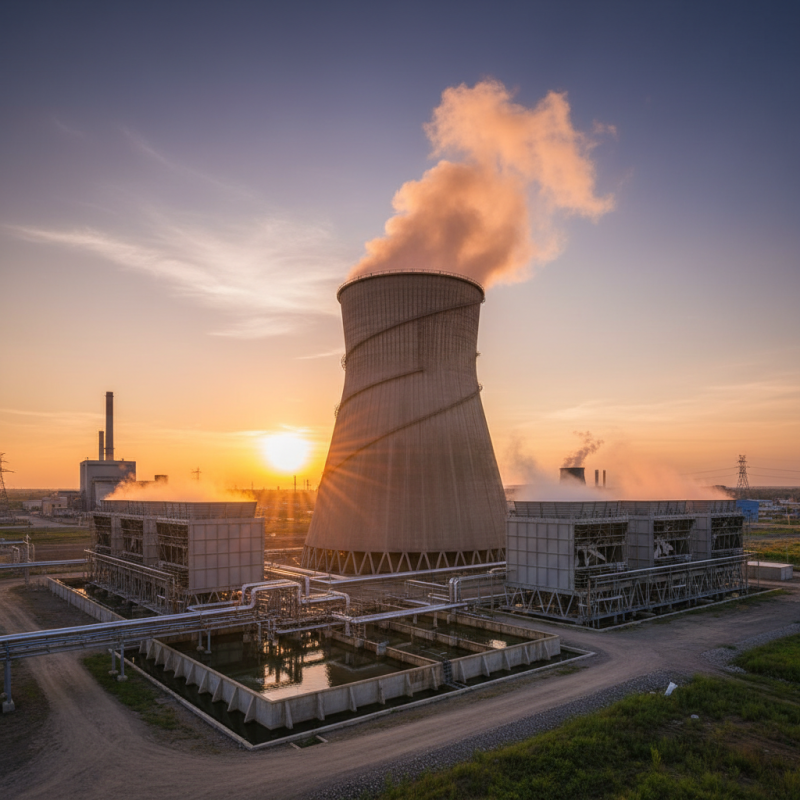
What is a cooling tower and how does it work?
cooling towers are a critical component in industrial systems, enhancing efficiency by dissipating heat. According to a report from the Energy Research Institute, cooling towers can reduce energy usage by up to 30% in various applications. This statistic highlights their importance in optimizing operational costs.
Expert Dr. Emily Carter, a renowned figure in HVAC technology, once stated, “cooling towers serve as the heartbeat of industrial processes.” This emphasizes their essential role in maintaining temperature regulation. However, not all cooling towers operate optimally. Issues like water quality and design flaws can hinder performance.
Reflecting on these challenges, industries must prioritize proper maintenance and innovative design. As we explore the function and significance of cooling towers, the need for continual improvement remains clear. Energy efficiency and environmental impact must guide future developments in this sector.
What is a Cooling Tower?
A cooling tower is an essential component in industrial and commercial settings. Its primary purpose is to dissipate excess heat from processes and equipment. By using water as a heat exchange medium, the cooling tower effectively lowers the temperature of heated water before it returns to the system. This process helps maintain optimal operational efficiency.
There are several types of cooling towers, including open and closed systems. Open cooling towers circulate water through the system, allowing some of it to evaporate. Closed systems, on the other hand, keep water contained and use heat exchangers to transfer heat. According to industry reports, over 90% of cooling towers in the market are of the open type. These figures highlight their prominence in applications like power plants and large HVAC systems.
However, cooling towers have their drawbacks. They can be susceptible to scaling and biological growth, leading to maintenance challenges. Approximately 20% of facilities report issues with efficiency related to scale buildup, which can significantly affect electricity consumption. Regular monitoring and maintenance are vital. Ensuring water quality is necessary to avoid these issues. While cooling towers are predominantly effective, continual assessment of performance levels is essential for long-term reliability.
What is a cooling tower and how does it work? - What is a Cooling Tower?
| Dimension | Description |
| Definition | A cooling tower is a heat removal device that extracts waste heat from a building or process and discharges it to the atmosphere. |
| Purpose | To provide cooling for HVAC systems and industrial processes, enhancing efficiency and maintaining temperature control. |
| Types | There are several types, including wet, dry, and hybrid cooling towers, each using different methods to cool water. |
| Mechanism | Warm water is circulated through the tower, where it is cooled by air, either through natural or mechanical means, allowing heat to dissipate. |
| Advantages | Improves energy efficiency, reduces operational costs, and is vital for processes that require temperature regulation. |
| Applications | Used in power plants, chemical processing, food production, and commercial HVAC systems. |
| Maintenance | Regular cleaning, inspections, and repairs are necessary to ensure efficient operation and extend lifespan. |
The Working Principle of Cooling Towers
Cooling towers play a crucial role in industrial processes. They help to transfer excess heat from systems to the atmosphere. Understanding how these towers work is essential for improving efficiency.
A cooling tower operates on a simple principle. Water circulates through a system, absorbing heat. This heated water then enters the cooling tower. Here, it spreads over fill material, maximizing surface area. Air is drawn in, facilitating heat exchange. As water trickles down, some evaporates, cooling the remaining water. This process can remove up to 2,000 BTUs of heat per gallon.
Tip: Regular maintenance is vital. Neglecting this can lead to corrosion and inefficiency. A report from the Cooling Technology Institute highlights that improper maintenance can reduce cooling efficiency by 30% or more.
The effectiveness of cooling towers can vary. Factors like humidity and temperature impact performance. In dry climates, evaporation is less effective, leading to higher operational costs. Operators must monitor environmental conditions closely. This awareness helps adjust systems for optimal performance.
Tip: Embrace technology. Digital monitoring systems can provide real-time data. This allows operators to make informed decisions and improve energy efficiency.
Types of Cooling Towers and Their Applications
Cooling towers are essential components in various industries. Their main function is to dissipate heat from water used in cooling processes. There are different types of cooling towers, each designed for specific applications.
For instance, open cooling towers are commonly used in power plants. They allow water to come into contact with air, promoting efficient heat exchange. These towers are simple and cost-effective but require regular maintenance.
Closed circuit cooling towers are another option. They recirculate water within a closed system, minimizing water loss and preventing contamination. These are often used in industrial refrigeration.
Tip: Regular cleaning of your cooling tower can improve efficiency and lifespan. Check for debris and scale buildup frequently.
Tip: Always monitor water levels and temperatures. Sudden changes can indicate issues that need immediate attention.
Even with the best designs, there’s always a chance for inefficiencies. Sometimes cooling towers may not operate as intended. This could be due to factors like poor design, improper sizing, or external environmental conditions. Reflecting on these factors can lead to better cooling solutions in the future.
Key Components of a Cooling Tower
A cooling tower is essential in many industries. It helps remove heat from machinery and processes. The main components of a cooling tower include the fill, water distribution system, and fan. Each element plays a critical role in the cooling process.
The fill increases the surface area for water. This allows more heat to dissipate into the air. The water distribution system ensures even water flow across the fill. This prevents dry spots and improves efficiency. The fan circulates air through the tower. This promotes heat exchange and cools the water effectively.
Tips: Regular maintenance is crucial. Check for debris in the fill and water system. Clean the fan blades to enhance airflow. If you notice unusual noises, investigate immediately. Addressing these issues can prevent larger problems down the line. Often, overlooked components can lead to inefficiency.
Consideration of water quality is important. Hard water can cause scale buildup. This negatively impacts performance. Routine water testing and treatment can help. It's better to address these issues early than to face costly repairs later. Keeping an eye on these details can ensure your cooling tower runs smoothly.
Common Maintenance Practices for Cooling Towers
Cooling towers play a vital role in many industrial processes. They help dissipate heat from water systems effectively. However, regular maintenance is essential for optimal performance. Neglecting this can lead to significant problems, such as reduced efficiency and costly repairs.
One common maintenance practice is to regularly inspect the water quality. Algae and other contaminants can build up over time. This not only affects cooling efficiency but can also cause corrosion. Regular cleaning and chemical treatment can mitigate these issues. It's crucial to monitor and adjust the chemical balance frequently.
Another important aspect is checking fans and motors. They should operate smoothly and efficiently. Dust and debris can obstruct airflow, so keeping components clean is necessary. Regular lubrication of moving parts also extends their lifespan. Sometimes, even minor adjustments can prevent bigger headaches later on. Regular upkeep can be a tedious task, but it’s necessary for reliability and efficiency.