10 Essential Tips for Choosing a Small Tractor with Loader?
Choosing the right small tractor with loader can be a daunting task. With so many options available, it’s crucial to consider various factors. The right equipment can enhance productivity and make tasks easier on your farm or property.
When evaluating a small tractor with loader, think about your specific needs. Are you using it for landscaping, farming, or construction? Knowing your primary use will guide your selection. Additionally, focus on engine size, loader capacity, and maneuverability, as these features can significantly impact performance.
Don’t overlook the importance of brand reputation and service support. Reliable manufacturers often provide better warranties and customer service. While cheaper options may seem appealing, they can lead to frustration in the long run. Reflect on your choices to ensure you make a well-informed decision that meets your requirements.
Understanding Your Needs: Assessing Your Property and Tasks
Choosing a small tractor with a loader starts with a clear understanding of your property and tasks. The size of your land, terrain type, and what you need the tractor for are all essential factors. A recent industry report noted that about 40% of small-scale farmers use tractors primarily for loading and transporting materials. This data highlights the need to assess your specific requirements before making a purchase.
Consider the tasks you plan to perform. Will you be moving soil, transporting heavy equipment, or handling materials like mulch and gravel? Understanding these needs can narrow your options significantly. For instance, a tractor with a high lifting capacity might be crucial for larger tasks, while a smaller model may suffice for light chores.
When evaluating options, think about horsepower, weight, and loader compatibility. A capable loader can make a huge difference. Proper research can save you time and ensure you purchase a suitable model for your tasks. Look for customer reviews and expert reports that highlight performance metrics. Always weigh the pros and cons of different models. This can help you to avoid potential regrets later on.
Evaluating Tractor Size: Choosing the Right Dimensions for Efficiency
When selecting a small tractor with a loader, evaluating the size is crucial. A well-sized tractor can optimize performance, reducing wear and tear. Industry reports suggest that a tractor's weight-to-horsepower ratio significantly influences its efficiency and productivity. An ideal ratio is around 20:1 for small tractors, providing adequate traction without compromising maneuverability.
It is essential to consider working dimensions. Compact tractors with loader attachments are often more versatile. The width of the tractor should match your operational space, ensuring you can navigate tight areas. For example, a width of 48 to 60 inches is suitable for most small farms, as reported by agricultural experts. This dimension allows efficient access to narrow paths while maintaining stability.
Beyond size, reflect on your intended use. Heavy lifting tasks require a loader with adequate lift capacity. According to the American Society of Agricultural and Biological Engineers, loaders should ideally lift at least 1,000 pounds for small-scale operations. Choosing the wrong size can lead to inefficiency or even equipment damage. Continually reassessing your needs can lead to better decisions and optimal productivity in the long run.
10 Essential Tips for Choosing a Small Tractor with Loader
The following chart illustrates key dimensions to consider when evaluating the size of a small tractor for efficiency, including horsepower, lifting capacity, and overall weight.
Load Capacity: Determining the Weight Limits for Your Loader
Choosing the right small tractor with a loader often hinges on load capacity. Understanding your loader's weight limits is essential for safe and effective operation. Each model varies, and exceeding these limits can lead to mechanical failure or accidents. Always check the manufacturer's specifications. This ensures you remain within the safe operational zone.
Consider your specific tasks. Different jobs will demand different load capacities. For instance, if you plan to move heavy materials like gravel or soil, a tractor with a higher load capacity is crucial. A loader might struggle with weights beyond its limit, impacting performance. Aim for a machine that offers a little more capacity than you think you need, allowing for future tasks that may require additional strength.
It's also vital to think about your terrain. If you work on uneven ground, a lower capacity loader may not perform well. Stability can be compromised, leading to tipping. Test the tractor in various conditions before making a decision. Always remember, a loader that feels powerful today might expose weaknesses tomorrow if not chosen wisely.
Key Features to Consider: Essential Specifications for Small Tractors
When selecting a small tractor with a loader, key specifications come into play. Engine power is crucial. Most small tractors range from 20 to 50 horsepower. This range is efficient for tasks like loading and towing. A tractor with a 25-horsepower engine can handle small landscaping jobs with ease. However, it may struggle with heavier loads.
Hydraulic capacity is another essential factor. Typically, small tractors feature loaders with hydraulic lift capacities between 800 to 1,500 pounds. This capacity directly impacts your ability to lift heavy materials. Low hydraulic capacity can limit a tractor's versatility. The loader's breakout force is pivotal too. A high breakout force allows for efficient digging in various soil types.
Tire size often influences traction and stability. In general, larger tires offer better ground clearance and can traverse rough terrain more effectively. Some users might overlook this aspect, leading to difficulties on uneven surfaces. Also, consider maneuverability. A compact turning radius can enhance efficiency during tight operations. Balancing these specifications with your specific needs is critical to making an informed choice. It ensures the equipment meets your operational requirements over the long term.
10 Essential Tips for Choosing a Small Tractor with Loader
| Feature |
Specifications to Consider |
Importance |
| Engine Power |
15-25 HP |
Determine ability to handle tasks |
| Loader Capacity |
500-1000 lbs |
Assess lifting capabilities for materials |
| Hydraulic System |
Open vs. Closed Center |
Affects performance and attachments |
| Transmission Type |
Gear vs. Hydrostatic |
Ease of use and efficiency |
| Weight |
1000-2000 lbs |
Stability and traction |
| Turning Radius |
Compact for small spaces |
Maneuverability in tight areas |
| Comfort Features |
Adjustable seat, armrests |
Operator comfort for prolonged use |
| Maintenance Ease |
Accessible engine components |
Reduces downtime and costs |
| Warranty |
3-5 years |
Protection against defects |
| Fuel Type |
Diesel vs. Gasoline |
Operational cost and efficiency |
Budgeting for Your Purchase: Balancing Cost with Features and Quality
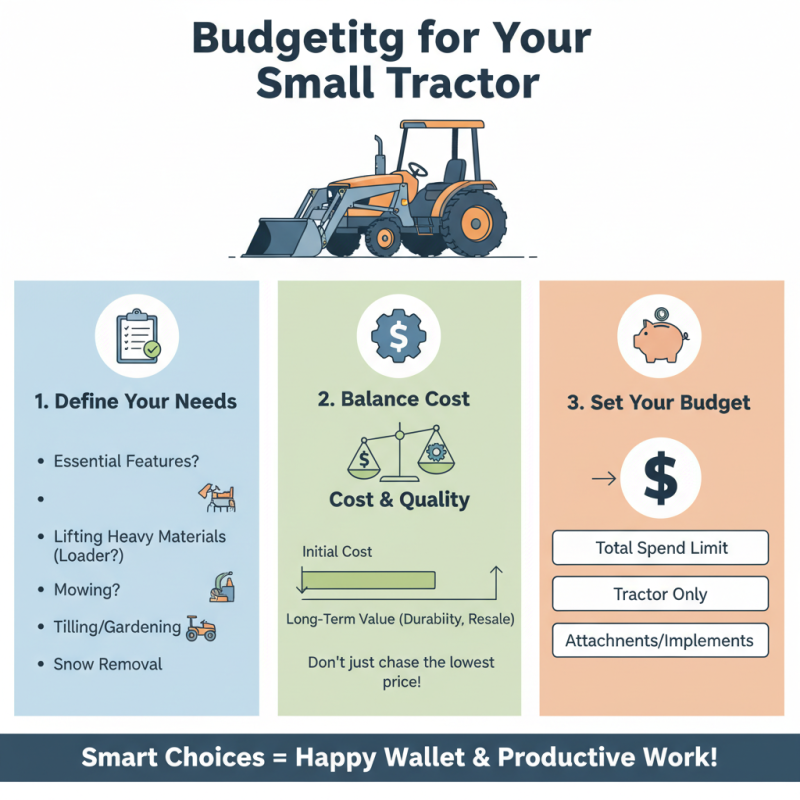
When budgeting for a small tractor with a loader, balancing cost with features and quality is crucial. Begin by listing essential features based on your needs. Consider what tasks you want the tractor to perform. Do you need a loader for lifting heavy materials? Or will you primarily use it for mowing?
Once you identify your requirements, compare options within your budget. Spending less may mean sacrificing quality. Look for tractors that offer durability without inflated prices. Inspect build quality and reliability. This deeper analysis can prevent costly repairs in the future, which often goes unnoticed until it’s too late.
Another tip is to think long-term. A higher initial investment might save money over time. Maintenance costs matter. Research user reviews to see common issues with specific models. Customers often share insights that could influence your decision. Don’t forget to factor in additional expenses, like insurance and maintenance plans. This holistic approach ensures a smart financial choice, enhancing both your productivity and satisfaction.