What Is Granular Seaweed Fertiliser and How Does It Work?

Granular Seaweed Fertiliser is a dry soil amendment made from processed marine algae. It usually contains seaweed extracts, organic matter, and small amounts of naturally occurring minerals. Manufacturers may produce it from kelp, bladderwrack, or other approved seaweed sources. Its exact composition depends on the species, harvesting area, and processing method. Read the product label carefully.

Unlike a conventional fertiliser, it may not supply large quantities of nitrogen, phosphorus, or potassium. Its value often comes from supporting soil structure, moisture retention, and root activity. When granules contact damp soil, they gradually soften and release soluble compounds. These compounds can interact with soil organisms around plant roots. Some gardeners notice stronger rooting, greener foliage, or improved recovery after transplanting. Results vary.

Field experience suggests that application timing and soil condition matter greatly. A soil test can reveal whether plants actually need additional nutrients. Applying more granules will not automatically produce healthier crops. That assumption deserves caution. Poor drainage, compacted soil, drought, or unsuitable pH may remain the real problem.

Professional growers should compare the guaranteed analysis, application rate, and independent trial data. Seaweed-based products can support a broader fertility programme, but they should not replace balanced nutrition when deficiencies exist. Use clean equipment and follow the manufacturer’s instructions. Environmental quality also matters, since responsible harvesting protects coastal ecosystems. The most reliable approach combines practical observation with measured soil and plant responses. Granular Seaweed Fertiliser can be useful, but it is not a miracle product.
What Is Granular Seaweed Fertiliser and How Does It Work?

What Granular Seaweed Fertiliser Is

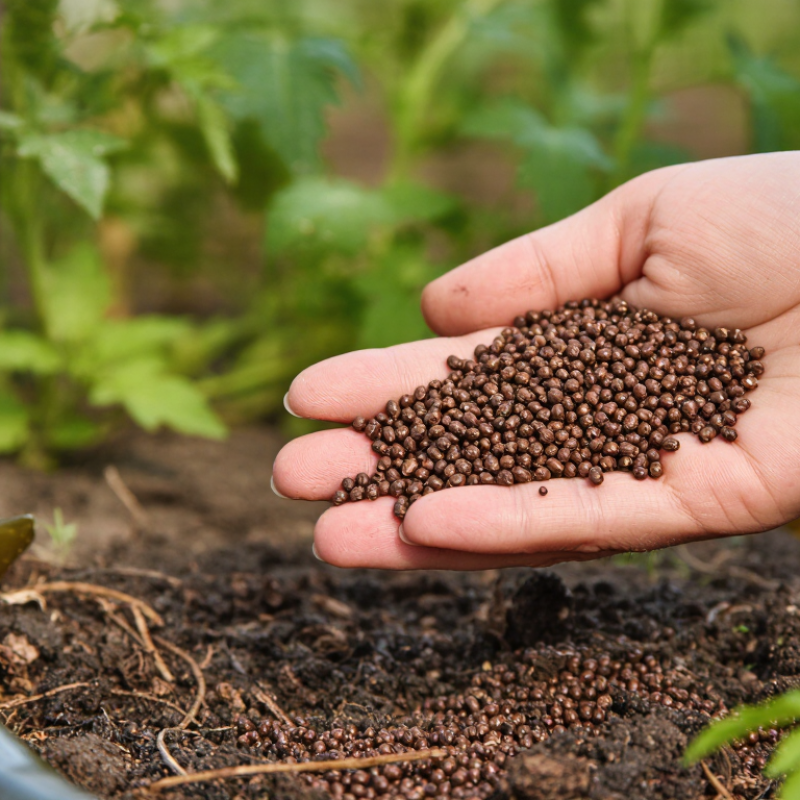
Granular seaweed fertiliser is dried seaweed processed into small, soil-friendly pellets. Manufacturers usually wash, dry, mill, and compress marine algae before packaging the granules. The final material may contain modest amounts of nitrogen, potassium, trace minerals, organic matter, and naturally occurring compounds. Its exact profile changes with seaweed species, harvest season, and processing temperature.

The scale of this resource is substantial. The FAO’s State of World Fisheries and Aquaculture 2024 reported roughly 37 million tonnes of algae production in 2022. However, production volume does not equal fertiliser quality. Seaweed granules are not automatically complete fertilisers. Many provide limited phosphorus and nitrogen, so a soil test remains useful before application.

In moist soil, granules slowly soften and release soluble minerals and organic compounds. These materials can support microbial activity and improve soil conditioning, while certain seaweed compounds may encourage root development and stress tolerance. Evidence is promising, but results vary between crops and products. The European Commission’s fertilising products framework also separates fertilisers from plant biostimulants, which is an important distinction. I would avoid calling every seaweed pellet a growth miracle. Too much can waste money, and poorly processed material may contain excess salt. Use the stated application rate, observe leaf colour and soil moisture, then adjust carefully.

What Is Granular Seaweed Fertiliser and How Does It Work? - What Granular Seaweed Fertiliser Is

Data dimension What it means Practical details
Definition A dry, free-flowing soil amendment or fertiliser made from processed seaweed. The material may be dried, milled, compressed, or granulated to make it easier to store, measure, and apply.
Main source material Marine macroalgae, commonly called seaweed. Nutrient content varies according to seaweed species, harvest location, processing method, and the product formulation.
Typical nutrient role Usually provides relatively small amounts of plant nutrients compared with concentrated mineral fertilisers. Some products contribute nitrogen, phosphorus, potassium, calcium, magnesium, sulfur, and trace elements, but the guaranteed analysis on the label is the reliable guide.
Organic matter Adds carbon-containing organic material to the soil as it decomposes. The quantity depends on the product; granular seaweed should not automatically be treated as a complete compost or soil conditioner.
How granules work Moisture gradually softens and breaks down the granules in the soil. The release speed is affected by granule size, temperature, moisture, microbial activity, and the binding materials used during manufacture.
Soil biological activity Decomposer microorganisms process the organic material and release some nutrients into the soil. Warm, adequately moist soil generally supports faster decomposition than cold or very dry soil.
Plant-growth support Seaweed-derived compounds may support root development, nutrient uptake, and tolerance to some environmental stresses. Results depend on the seaweed species, extraction or drying process, application rate, crop, soil, and growing conditions.
Soil structure Organic inputs can contribute to soil aggregation and water-holding capacity as they decompose. The effect is usually gradual and is influenced by soil type, application frequency, and the total amount of organic matter added.
Best application method Apply evenly to the soil surface or place it near the root zone, then incorporate or water it in when appropriate. Follow the product label because recommended rates differ by crop, soil condition, and nutrient analysis.
Suitable uses Vegetable beds, borders, containers, lawns, trees, shrubs, and other established plants when the label permits. Use extra care around seedlings and sensitive plants, and avoid placing concentrated granules directly against stems or foliage.
What it does not replace It may not supply enough of every essential nutrient for complete crop nutrition. Use soil testing and the fertiliser analysis to determine whether additional nitrogen, phosphorus, potassium, or micronutrients are needed.
Key safety considerations Excess application can contribute to nutrient imbalance or salt loading, depending on the formulation. Store the product dry, keep it away from children and pets, follow local regulations, and use the stated application rate.

Note: Granular seaweed fertiliser formulations differ substantially. Always use the product label and guaranteed nutrient analysis for accurate application decisions.

How Seaweed Fertiliser Is Made and Processed

Granular seaweed fertiliser begins with carefully collected marine algae. Producers wash the raw material to remove sand, shells, and excess salt. The cleaned seaweed is then dried at controlled temperatures. Excessive heat can damage sensitive organic compounds. This step needs care.

After drying, the seaweed is milled into a coarse powder. Some manufacturers use the powder directly, while others process it into a liquid extract first. The extract may be concentrated and blended with a mineral or plant-based carrier. Moisture is then added gradually, allowing small particles to bind into granules. Rotary drums or pan granulators commonly shape these particles. Screens remove dust and oversized pieces. Rejected granules can return to the process.

Quality control matters throughout production. Reliable processors check moisture, particle size, salt levels, and nutrient content. They may also test for unwanted metals or microbial contamination, depending on local regulations. Seaweed composition changes with species, season, water conditions, and harvesting location. Therefore, every batch is not identical. That is an important limitation.

Once applied to moist soil, the granules soften and release soluble compounds. They provide modest nutrients, but their wider value often comes from organic matter and seaweed-derived compounds. These materials may support root activity and soil microbial processes. Results depend on soil condition, crop type, weather, and application rate. Granules can be easier to store and spread than liquid products, although some dissolve more slowly than expected. Practical field testing remains essential.

Key Nutrients and Natural Compounds It Provides

What Is Granular Seaweed Fertiliser and How Does It Work?

Granular seaweed fertiliser is made from dried and milled marine algae. Its value comes from both nutrients and natural plant compounds. The FAO reported 35.1 million tonnes of aquatic algae production in 2019, showing the scale of this renewable agricultural resource. However, production volume does not guarantee identical fertiliser quality. Species, harvest season, drying temperature, and processing methods can change the final composition.

Key nutrients include small amounts of potassium, calcium, magnesium, iron, and trace minerals. Nitrogen and phosphorus are usually limited, so granular seaweed should not replace a complete fertiliser. Alginates and other polysaccharides can improve moisture retention around soil particles. Mannitol, betaines, amino acids, and phenolic compounds may support root activity and stress tolerance. Research reviews in the Journal of Applied Phycology describe these compounds as potential biostimulants, rather than direct nutrient sources.

The mechanism is gradual. After watering, granules soften and release soluble materials near the root zone. Microbial activity may help break down organic compounds. Results can appear as stronger roots, greener leaves, or improved recovery after heat. Not every field responds equally. Soil texture matters. So does the crop.

The European Biostimulant Industry Council notes that product performance depends heavily on formulation, application rate, and crop conditions. This is the weak point. Evidence remains uneven across species and farms. Growers should check the guaranteed analysis, salt content, moisture level, and independent trial data before application. A simple pot test can expose poor granule swelling or weak nutrient release before larger use.

How Granular Seaweed Fertiliser Works in Soil

What Is Granular Seaweed Fertiliser and How Does It Work?

Granular seaweed fertiliser is made from dried, processed seaweed. Manufacturers may blend it with composted materials, minerals, or other nutrients. Its exact analysis varies, so the product label matters. Unlike a high-nitrogen fertiliser, it often works as a gentle soil conditioner and biological support.

When watered into soil, the granules soften and release organic compounds gradually. These compounds can support microbial activity around plant roots. Active microbes help break down organic matter, making some nutrients more available. Seaweed also contains small amounts of minerals and natural plant compounds. However, it should not be treated as a complete fertiliser unless its analysis confirms this.

In heavy clay, the added organic material may improve crumb structure over time. In sandy soil, it can support moisture retention, though only modestly. Results depend on soil health, temperature, rainfall, and application rate. I would not expect dramatic growth after one use. That expectation is often the weak point. Soil responds slowly, and poor results may reflect low fertility rather than a seaweed problem.

Tips: Mix granules into the upper soil layer, then water thoroughly. Use a soil test before increasing the dose. Avoid placing concentrated granules directly against young stems or roots. Watch the bed for several weeks. Changes can be subtle.

How to Apply It Safely and Effectively

Granular seaweed fertiliser is made from dried, processed seaweed. It usually supplies small amounts of minerals and organic compounds. Its main value may be biostimulation, not high nitrogen delivery. The FAO reported about 35 million tonnes of farmed aquatic algae production in 2020, showing the industry’s substantial scale (FAO, The State of World Fisheries and Aquaculture 2022). However, raw material quality can vary widely.

Apply it only at the label rate. More is not better. Measure the granules with a clean scoop, then spread them evenly around moist soil. Keep them away from stems and leaves unless the label permits direct contact. Lightly mix the product into the topsoil, or water it in after application. Gloves and eye protection are sensible, especially when handling dusty material. Do not apply before heavy rain. Runoff can carry salts and nutrients into drains or ponds.

Check the guaranteed analysis before use. Some products contain very little nitrogen, phosphorus, or potassium, so they cannot replace a complete fertiliser. A soil test helps prevent unnecessary applications. The European Commission’s Fertilising Products Regulation (EU) 2019/1009 requires substantiated claims for plant biostimulant products, but field results still depend on soil, crop, weather, and dose. I would test a small area first. The response may be modest. That is worth admitting. Record plant growth, leaf colour, and soil moisture before repeating the treatment.