How to Control Downy Mildew Chemically?
Downy mildew can move quickly through a crop when leaves stay wet and nights remain cool. Yellow patches may appear on the upper leaf surface, while gray or violet growth develops underneath. These signs are useful clues, but they do not confirm the disease on their own. Similar symptoms can have other causes. Accurate identification matters before any spray is chosen.
Downy Mildew Chemical Control is most reliable when it supports good monitoring and cultural practices. Fungicides differ by crop, pathogen, and disease stage; a product used on one plant may not be suitable for another. Check the current label for approved crops, application rates, protective equipment, and harvest intervals. Follow it exactly. Local agricultural extension services can help confirm diagnosis and product fit.
Timing matters. Many treatments work better before infection becomes severe, so inspect lower leaves and dense, shaded areas regularly. Apply only under label-approved conditions, and avoid repeated use of products with the same mode of action. This helps reduce resistance risk. Spray coverage also matters: missed leaf undersides can leave vulnerable areas behind. Results may still vary with weather and disease pressure. A treatment is not a guarantee. It is tempting to expect one application to solve the problem, but that assumption deserves a second look. Combine careful chemical choices with airflow, sanitation, and sensible watering for a more dependable plan.
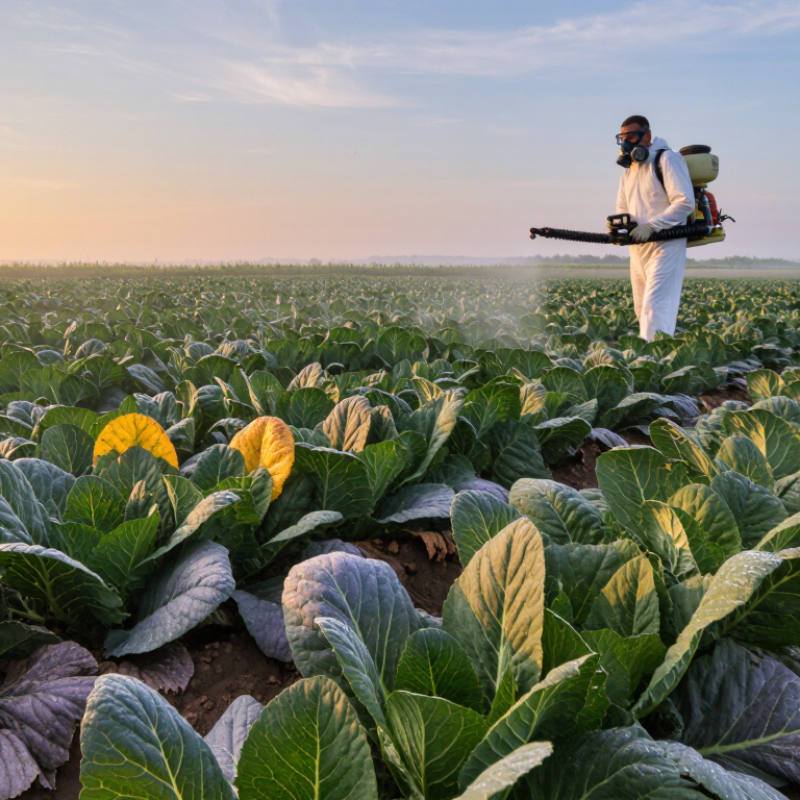
Diagnose the Crop-Specific Downy Mildew Before Choosing a Fungicide
How to Control Downy Mildew Chemically?
Diagnose the Crop-Specific Downy Mildew Before Choosing a Fungicide
Downy mildew is not one disease with one dependable spray solution. Grapes, cucumbers, lettuce, and onions can each be affected by different downy mildew pathogens. Check the crop and the pattern of damage before selecting a fungicide. On cucumbers, lesions often appear angular, stopping at leaf veins; humid mornings may reveal gray-purple growth beneath them. Similar symptoms can have other causes. Field diagnosis is rarely perfect. Compare affected leaves with healthy ones, inspect both leaf surfaces, and seek local extension or diagnostic-lab confirmation when symptoms are unclear.
Then match any treatment to the crop, pathogen, and local product label. The Fungicide Resistance Action Committee’s 2024 Code List groups fungicides by mode of action, including oomycete-active groups such as 4, 11, 21, 27, 40, 43, and 49. Rotate between effective, permitted modes of action rather than relying repeatedly on one group; check the label and current regional guidance for specific restrictions. Timing matters: protective sprays generally work best before infection, while rain, new growth, and dense leaf cover can reduce coverage. A wet lower canopy is easy to miss. Keep records of symptoms, spray timing, and weather; they may reveal a pattern, though one season’s notes are not proof.
How to Control Downy Mildew Chemically?
Diagnose the crop-specific downy mildew before choosing a fungicide. The chart lists example active ingredients by FRAC group. Bar length shows the number of examples listed—not product effectiveness, recommended dose, or crop registration.
Downy mildews are caused by oomycetes, and the pathogen and approved treatments vary by crop and location. Confirm the diagnosis, check that a product is labeled for the crop and disease in your area, and follow the label. Rotate between different FRAC groups to help manage resistance; FRAC groups do not guarantee that a fungicide will work on every downy mildew.
Check Local Registration, Label Rates, and FRAC Codes 4, 11, 27, 40, and 49
How to Control Downy Mildew Chemically?
Chemical control starts with the crop label, not the FRAC chart. Confirm that the active ingredient is registered for your crop and location. Then follow the label rate, interval, protective equipment, and preharvest restrictions exactly. Labels matter. A rate used on grapes may not be permitted on cucumbers, even when the disease looks similar.
FRAC’s 2024 Code List assigns distinct groups to codes 4, 11, 27, 40, and 49: phenylamides, QoI fungicides, cymoxanil, CAA fungicides, and OSBPI fungicides. These are different modes of action, but they are not interchangeable across crops or products. Rotate effective groups as the label allows, and avoid repeated applications from the same group. Mixtures only count as useful resistance management when both components are effective and permitted for that use. Do not guess.
Scouting gives treatment decisions context. Check leaf undersides after humid nights; downy mildew may appear as angular yellow patches above and growth below. The FRAC list is a resistance-management reference, not a field efficacy trial. I still find it easy to treat a code number as a guarantee. It is not. Review current local extension guidance and product labels, and record application dates and FRAC groups to catch repeat-use patterns.
Time Preventive Applications and Follow the Label’s Spray Interval
Downy mildew is easier to manage when protection is in place before infection takes hold. Check local forecasts, recent rainfall, humidity, and crop growth, then apply a fungicide labeled for the crop and disease when conditions favor infection. New leaves can outgrow earlier coverage, especially during rapid growth. Small details matter: aim for even coverage through the canopy and on leaf undersides, where moisture can linger.
Follow the spray interval on the product label. Do not stretch it because the crop looks healthy; symptoms may appear after infection has already occurred. Recheck the label after heavy rain, since rainfastness varies by product. If the label permits a shorter interval under high disease pressure, use that guidance rather than guessing. Forecasts miss sometimes. Keep simple notes on spray dates, rainfall, and crop stage; they make the next decision less hazy.
Rotate fungicide groups when the label and local resistance guidance recommend it, and observe all stated application limits, protective-equipment directions, and harvest restrictions. A tight schedule is not automatically a better one. I would still question any plan that treats every week alike: weather, plant growth, and disease pressure change. If symptoms are already present, confirm the diagnosis and consult a qualified local adviser before adjusting the program.
Rotate FRAC Groups and Limit Consecutive Uses as Resistance Guidance Requires
Downy mildew can spread quickly after warm, wet nights, so a spray plan needs more than a product rotation. Rotate by FRAC group, not by product name: different products may share the same mode of action and resistance risk. FRAC’s 2024 recommendations for carboxylic acid amide fungicides (Group 40), for example, generally limit use to two consecutive applications and no more than half of the season’s fungicide applications. Check the crop-specific guidance and product label before applying those limits.
Keep a field log with the date, FRAC group, crop stage, and rainfall after each treatment. When disease pressure is high, a different group should follow the permitted run; where guidance calls for a mixture, each partner must be effective against the pathogen at its labelled rate. A rotation only works if both modes of action contribute. That detail is easy to miss.
FRAC’s Code List classifies fungicides by mode of action, helping growers spot groups that may share cross-resistance concerns. Use it alongside local disease alerts and scouting: look beneath leaves for angular, pale-yellow patches, especially after humid nights. Do not stretch spray intervals just because the canopy looks clean. But I have to admit, field timing is never perfect; rain can arrive before a planned pass. Recheck the label and current FRAC guidance rather than repeating a group by habit.
Recheck Disease and Spray Coverage Within 7 Days of Treatment
How to Control Downy Mildew Chemically?
Recheck Disease and Spray Coverage Within 7 Days of Treatment
A fungicide application is only one part of downy mildew management. Choose a product registered for the crop and disease, and follow its label for rate, timing, protective equipment, and reapplication interval. Labels matter. Products may protect new growth, but they generally do not repair leaves already damaged by infection.
Within seven days, inspect the same area you treated and several nearby plants. Check leaf undersides for fresh, downy growth, especially after humid nights or rain. Mark a few plants during spraying; comparing them later can reveal whether symptoms are advancing. Old spots may remain visible even when treatment has slowed new infections, so look for new lesions and active growth rather than expecting damaged tissue to turn green.
Coverage deserves an honest check. Look for missed inner leaves, lower foliage, and the undersides where the crop’s disease commonly develops. If coverage was uneven, record why; dense growth or wind can make a careful spray less effective. New symptoms do not automatically mean the spray failed, but they call for a closer assessment of weather, timing, and diagnosis. Consult local crop guidance before repeating treatment, and rotate fungicide modes of action when the label and recommendations allow. Recheck promptly.
