
Top Industrial Seal Strip Manufacturers for Global Buyers

Selecting reliable Industrial Seal Strip manufacturers requires more than comparing prices or browsing polished websites. Global buyers must examine material quality, dimensional accuracy, production capacity, and technical support. A seal strip may look simple, yet a small profile error can create leakage, noise, vibration, or installation delays.

This guide introduces leading manufacturers serving international markets and explains how they differ. It considers EPDM, silicone, PVC, TPE, and other commonly specified materials. It also reviews extrusion capability, tooling control, adhesive options, surface finishes, packaging, and quality inspection practices. These details matter when a strip must fit a vehicle door, factory enclosure, glass panel, or refrigerated cabinet.

Real purchasing experience shows that strong manufacturers communicate clearly before production. They confirm drawings, tolerances, operating temperatures, chemical exposure, and expected service life. They should also provide samples, test data, batch records, and practical answers from experienced engineers. Certifications can support confidence, but documents alone do not guarantee consistent performance.

Small details matter.

Buyers should compare response times, sample accuracy, and after-sales handling, not only factory size. No supplier is perfect, and even experienced manufacturers may face tooling changes or material variation. That is why this review also considers transparency, corrective action, and the willingness to acknowledge limitations. The best Industrial Seal Strip partner is not always the cheapest or largest. It is the manufacturer that delivers stable quality, realistic claims, and dependable support across repeated orders.
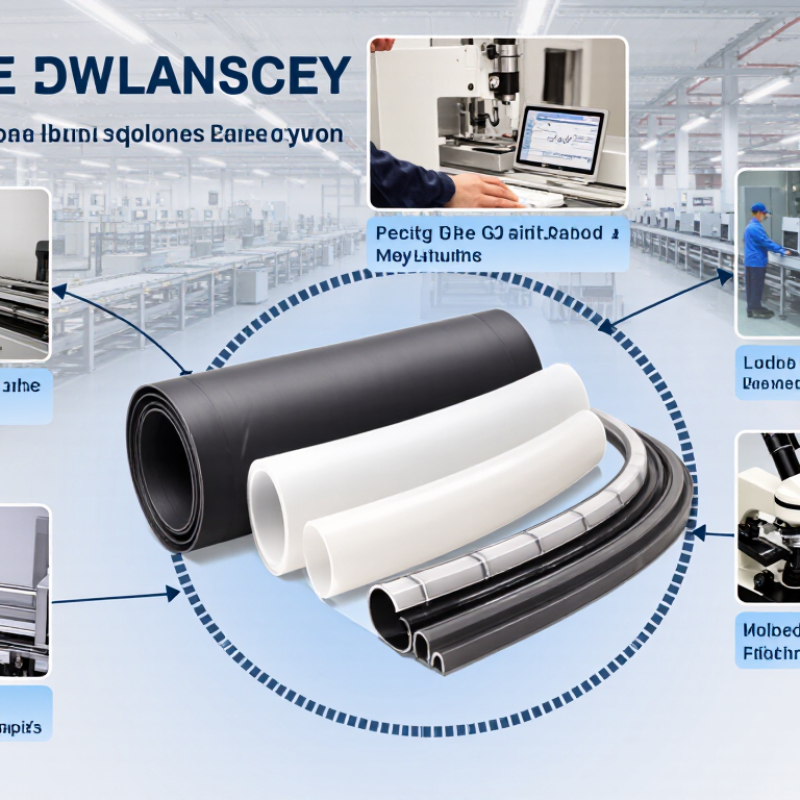
Top Industrial Seal Strip Manufacturers for Global Buyers

What Industrial Seal Strips Are and Where They Are Used

What Industrial Seal Strips Are and Where They Are Used

Industrial seal strips are flexible profiles that close gaps between two surfaces. They limit air, water, dust, noise, vibration, and heat transfer. Common materials include EPDM, silicone, neoprene, nitrile rubber, and PVC. Each material behaves differently under temperature, oil, sunlight, and repeated compression. A seal is not merely a soft spacer. Its profile, hardness, and recovery rate determine actual performance.

These strips appear around machine doors, electrical cabinets, windows, access panels, conveyors, and HVAC units. They also protect vehicle compartments, cold-storage doors, and clean manufacturing areas. For example, a hollow bulb seal may compress against a steel door frame. A U-channel profile can grip a sharp metal edge. In dusty factories, a reliable seal can reduce maintenance and protect sensitive components. Still, a neat drawing can mislead. Small installation gaps may create leakage, even when the material is technically suitable.

Tips: Check temperature, chemical exposure, compression range, and mounting space before ordering. Ask for test data, dimensional tolerances, and material identification. Measure the actual gap at several points, not just once. Avoid choosing by price alone. A harder strip may last longer, but it can require excessive closing force. A softer strip may seal quickly, yet lose shape under constant pressure. Selection sometimes needs revision after field testing.

How to Evaluate Industrial Seal Strip Manufacturers

Top Industrial Seal Strip Manufacturers for Global Buyers

How to Evaluate Industrial Seal Strip Manufacturers

Choosing an industrial seal strip manufacturer requires more than comparing prices. Start with the application: temperature, pressure, chemicals, movement, and exposure to weather. A supplier should recommend a suitable material, such as EPDM, silicone, or nitrile, based on measured conditions. Ask for technical data, compression set results, hardness tolerances, and operating temperature ranges. Vague answers are warning signs.

Request production samples before approving a large order. Inspect the strip’s surface, flexibility, dimensions, and bonding quality. Test it against the actual frame or channel, not only a laboratory fixture. Small gaps can cause noise, water entry, or vibration problems. They matter.

Reliable manufacturers should explain their quality process clearly. Look for incoming material checks, batch identification, dimensional inspection, and documented final testing. Traceability is important when a defect appears months later. Confirm whether the supplier can maintain consistent tooling and tolerances across repeat orders. A factory visit, video audit, or independent inspection can reveal more than polished brochures.

Communication also deserves careful evaluation. The manufacturer should provide realistic lead times, packaging details, replacement procedures, and technical support after delivery. Ask how they handle design changes and urgent production issues. I have found that fast replies do not always mean strong engineering. A slower answer with test evidence may be more valuable. Still, no supplier is perfect, and sample results can differ from full production. Build in inspection points and review the decision when field conditions change.

Top Industrial Seal Strip Manufacturers for Global Buyers - How to Evaluate Industrial Seal Strip Manufacturers

Evaluation Dimension Verifiable Requirement Relevant Standard or Reference Practical Buyer Benchmark Evidence to Request Suggested Weight
Quality Management Documented quality system covering incoming materials, production, inspection, nonconformance control, and corrective action. ISO 9001:2015 A valid, independently certified quality management system with a clearly defined certificate scope. Current certificate, certification body, audit scope, and latest corrective-action records. 15%
Material Selection Material must match temperature, fluid, weathering, compression, and installation requirements. ASTM D2000; ISO 1629; supplier technical datasheet A controlled compound specification with defined polymer type, hardness, density, and application limits. Compound datasheet, batch traceability, safety data sheet, and material-change notification procedure. 15%
Dimensional Accuracy Cross-section, length, hole position, splice area, and profile geometry remain within drawing tolerances. ISO 3302-1 for rubber product tolerances; approved engineering drawing Inspection data should demonstrate consistent compliance with the agreed drawing and tolerance class. First-article inspection report, dimensional control plan, calibrated measurement records, and sample approval. 12%
Mechanical Performance Tensile strength, elongation, hardness, tear resistance, and compression set meet the application specification. ASTM D412; ASTM D2240; ASTM D624; ASTM D395 Acceptance limits must be agreed by material, profile, and operating conditions rather than using a universal value. Independent or in-house laboratory reports, test method, specimen condition, lot number, and acceptance criteria. 15%
Temperature and Fluid Resistance The seal strip retains required sealing function after exposure to specified heat, cold, oils, fuels, water, chemicals, or cleaning agents. ASTM D471 for liquid resistance; ASTM D573 for heat aging; ISO 188 for accelerated aging Test conditions should reproduce the actual service environment, including exposure time and pressure or compression. Aging and immersion test results, volume or mass change data, hardness change, and post-test visual inspection. 15%
Compression and Recovery The profile provides stable contact pressure and acceptable recovery after repeated compression. ASTM D395; application-specific compression-deflection test Compression force, permanent set, and recovery must be tested at the intended installation gap and temperature. Compression-deflection curves, permanent-set results, fixture drawings, and test temperature records. 10%
Production Capability Capability to produce the required extrusion, co-extrusion, sponge, solid, flocked, metal-reinforced, molded, or bonded construction. Approved process specification; customer drawing; control plan The supplier should demonstrate equivalent profile complexity, tooling control, and repeatable production capacity. Process flow, equipment list, production samples, tooling-maintenance records, and capacity statement. 10%
Regulatory Compliance Materials and production processes comply with the regulations applicable to the destination market and end use. EU REACH; EU RoHS where applicable; customer-specific restricted-substance requirements Full substance declarations and documented control of restricted substances for every relevant compound. Declaration of conformity, restricted-substance test report, material declaration, and change-control policy. 8%
Traceability and Consistency Each shipment can be traced to raw-material batches, production dates, inspection results, and operators or equipment where applicable. ISO 9001 traceability and documented-information principles Lot identification should support rapid containment, root-cause analysis, and replacement of affected material. Lot labels, batch records, certificate of conformity, retention policy, and complaint-response procedure. 5%
Delivery and Supply Stability Reliable tooling, production, packaging, export documentation, and replenishment planning. Purchase agreement; agreed service-level requirements Evaluate quoted lead time, minimum order quantity, safety-stock options, packaging standard, and historical on-time delivery. Capacity plan, lead-time records, packaging specification, export documents, and business-continuity plan. 5%
Technical Support Supplier can support profile design, material selection, installation guidance, failure analysis, and engineering changes. Customer drawing; design-review and approval procedure A qualified technical contact should provide documented recommendations and respond to nonconformities with root-cause analysis. Engineering questionnaire, design-review records, installation instructions, and sample corrective-action report. 5%
Total Suggested Evaluation Weight 100%
Scoring guidance: Score each dimension from 0 to 5 using documented evidence. Multiply the score by the suggested weight, then compare suppliers only after confirming that the seal material, profile geometry, operating temperature, media exposure, and installation conditions are equivalent.

Key Materials and Production Technologies

Material selection defines whether an industrial seal strip survives heat, oil, weather, or repeated movement. EPDM suits outdoor exposure and hot water. NBR performs better around mineral oils. Silicone handles wide temperature swings, but it tears more easily. FKM resists aggressive chemicals, although its cost can challenge large projects. Thermoplastic elastomers offer recyclable processing and flexible hardness control. Smithers’ 2023 global rubber industry analysis places Asia-Pacific above half of worldwide rubber consumption, making regional material consistency important for global buyers.

Production technology matters just as much. Continuous extrusion controls profile geometry, while co-extrusion combines a rigid carrier with a soft sealing lip. Vulcanization stabilizes rubber performance. TPE profiles usually rely on controlled cooling and calibrated dies. Laser measurement can inspect dimensions during production, but it cannot replace physical compression testing. The U.S. Department of Energy’s Improving Compressed Air System Performance report states that leakage can waste 20–30% of compressor output. Poorly fitted seals create similar hidden costs. A perfect drawing can still fail after installation.

Tips: Ask for compound data, hardness tolerance, compression-set results, and aging tests. Request samples from the actual production line. Check corner joints, adhesive zones, and storage conditions. We sometimes over-specify chemical resistance and overlook assembly force. That is an expensive mistake. Also review batch traceability, because a small formulation change can alter sealing pressure. Test under real temperature cycles, not only at room temperature.

Quality Standards, Customization, and Global Supply Capabilities

Top Industrial Seal Strip Manufacturers for Global Buyers

For global buyers, a seal strip must survive pressure, temperature, moisture, and repeated movement. Quality begins with controlled compounds, accurate tooling, and documented testing. The ISO Survey 2022 recorded 1,265,216 ISO 9001 certificates worldwide. Yet certification alone does not prove consistent production. Ask for batch traceability, inspection records, and test results for compression set, hardness, and dimensional tolerance. ISO 3302-1 can guide rubber profile tolerances.

Customization should match the application, not only the drawing. Experienced manufacturers help select EPDM, silicone, or NBR materials according to heat, chemicals, and weather exposure. They should also support prototypes, adhesive options, corner joints, and low-volume trials. UNCTAD’s Review of Maritime Transport 2023 states that over 80% of global merchandise trade by volume moves by sea. This makes packaging, moisture protection, lead times, and export documentation essential. A supplier may offer attractive pricing, but weak continuity planning can create expensive delays.

Tips: Request a first-article sample. Test it in real conditions. Confirm minimum order quantities, tooling ownership, and replacement policies. Review production capacity before signing. Keep a second approved source when downtime would threaten operations. No checklist is perfect. Field feedback should update your specifications.

Comparing Leading Manufacturers for Different Industrial Needs

Global buyers need more than a low unit price when comparing industrial seal strip manufacturers.

The right supplier depends on temperature, chemicals, movement, and installation conditions.

For outdoor enclosures, experienced producers should offer EPDM profiles with weather resistance and stable compression. Silicone suits wide temperature ranges, while fluorocarbon compounds fit demanding chemical environments. Material choice needs test data, not sales language.

Manufacturers serving high-volume factories often provide automated extrusion, continuous inspection, and repeatable tolerances.

This matters when sealing strips must fit hundreds of identical doors. Custom-profile specialists may suit small batches, unusual corners, or reinforced metal carriers. Ask for drawing reviews, sample lengths, hardness readings, and compression-set results.

Not every supplier fits.

A reliable producer also explains tooling fees, minimum order quantities, packing methods, and realistic lead times. Very cheap tooling can create expensive revisions.

For regulated applications, buyers should check traceability, material declarations, and relevant quality-system records.

Request batch numbers and test reports matching the shipped compound. Field tests matter.

A perfect-looking sample can still fail after heat cycling or repeated washing.

Compare suppliers through pilot runs, not brochures alone. Review dimensional consistency, odor, surface defects, adhesive bonding, and installation effort on actual equipment. Some weaknesses only appear after repeated fitting, so record observations from operators and maintenance teams.