
How to Source Ceremonial Matcha in 2026
In 2026, sourcing Ceremonial Matcha means looking beyond a bright-green product photo. Buyers need to assess origin, harvest timing, milling, freshness, and the supplier’s ability to document each batch. Grand View Research’s 2024 Matcha Market report estimated the global market at USD 3.5 billion in 2023 and forecast an 8.9% compound annual growth rate through 2030. That growth signals opportunity, but it can also make careful supplier checks more important.
The word “ceremonial” is used inconsistently across the market, so it should not replace a clear product specification. Ask for the tea’s Japanese region, cultivar, harvest period, stone-milling details, lot date, storage conditions, and a sample for sensory review. Look for a vivid but natural green, a fine texture, and a fresh aroma; then taste it with water, not only in a sweetened latte. Request relevant quality and food-safety documents, and confirm that the paperwork matches the lot being offered. Details matter.
Tea master Sen no Rikyu is often associated with this translated maxim: “First you boil water, then you make tea and drink it.” It is a useful reminder that sourcing decisions must serve the cup, not just the sales sheet. A supplier may provide impressive specifications yet deliver uneven batches. That deserves scrutiny. This guide examines how to compare origins, verify claims, test samples, and build a reliable supply relationship. It also leaves room for an uncomfortable truth: the best-looking sample is not always the best long-term source.
Define Ceremonial Matcha and Its Standards in 2026
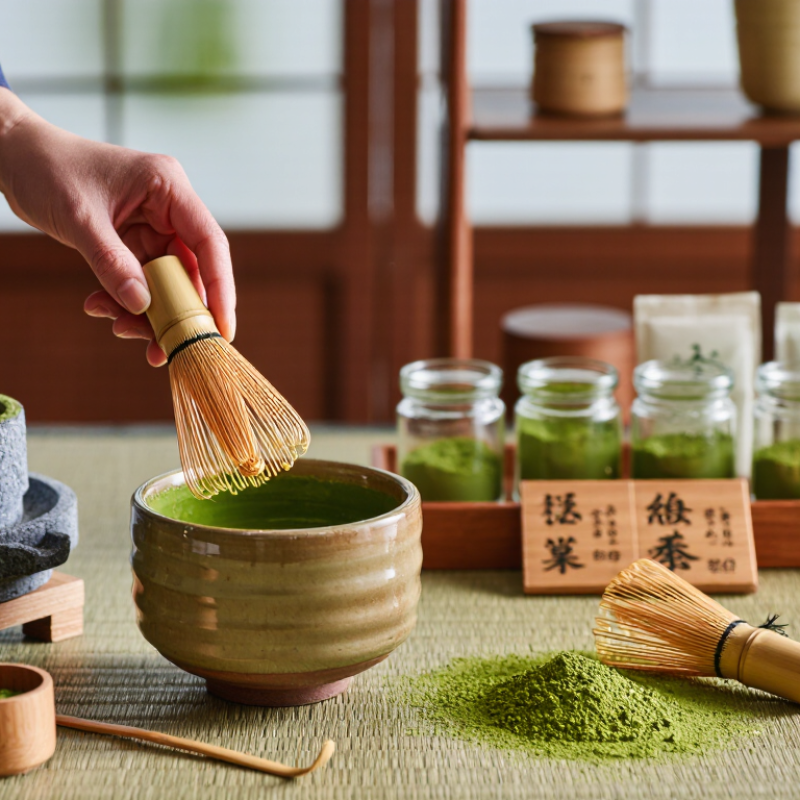
In 2026, “ceremonial matcha” is still a market description, not a universally enforced grade. There is no single global rulebook defining it. Matcha itself is finely milled green tea made from tencha, tea leaves processed without rolling. Ceremonial usually signals tea intended for drinking with water, rather than blending into milk or baking. The label alone proves little.
Look for clear details about origin, harvest period, cultivar when known, and processing. Quality leaves are typically shade-grown before harvest, then steamed, dried, and milled. These practices can influence color, aroma, and flavor, but none guarantees excellence on its own. A vivid green powder may be attractive; it should also smell fresh and taste balanced, with gentle bitterness rather than a harsh, lingering bite. Small clumps are normal. A stale, hay-like smell deserves a closer look.
Ask suppliers for lot-level traceability, harvest and milling dates, storage guidance, and relevant safety testing. A reliable seller should answer plainly, not rely on ceremonial language. For a practical check, sift a small amount into a warm bowl and whisk it with water. Notice how it smells before tasting. This test is imperfect, and personal preference matters. Still, transparent records and careful handling are stronger sourcing signals than a premium-sounding grade name.
| How to Source Ceremonial Matcha in 2026 — Define Ceremonial Matcha and Its Standards in 2026 | |||
|---|---|---|---|
| Sourcing Dimension | What to Verify | Practical Buyer Benchmark | Evidence to Request |
| Meaning of “ceremonial” | The term is commonly used as a market description for matcha intended to be whisked and served with water. It does not have one universally binding legal definition or grading system. | Assess the tea by origin, processing, freshness, sensory quality, and safety rather than relying on the word “ceremonial” alone. | Written product specification that explains the supplier’s use of the term and the product’s intended preparation. |
| Tea material and processing | Matcha is made from finely milled tencha. Tencha is typically shaded before harvest, steamed, dried without rolling, and separated from stems and veins before milling. | Confirm that the product is genuine matcha made from tencha, not powdered green tea made from rolled leaf material. | Processing description, production records, and a clear statement of the tea material used. |
| Origin and traceability | Identify the country and, where available, the growing region, producer or processor, harvest period, and lot. | Prefer a supply chain that can trace each shipment to a defined production lot. “Japanese matcha” should be supported by origin documentation. | Country-of-origin documentation, lot code, harvest or processing records, and traceability procedure. |
| Harvest and lot details | Harvest timing and processing can influence color, aroma, taste, and availability. Product characteristics may vary between lots. | Request the harvest year or season when available, and compare samples from the actual lot being offered rather than relying only on a general sample. | Lot-specific specification, harvest information where recorded, and a pre-shipment sample from the relevant lot. |
| Appearance and aroma | Quality matcha is generally finely milled, with a fresh, clean aroma. Color varies with cultivar, growing conditions, harvest, processing, and storage. | Look for a consistent, vivid green appearance and a fresh aroma; investigate dull color, stale or musty odors, or visible foreign material. Color alone does not prove quality. | Retained sample, recent product images under neutral lighting, and sensory assessment notes. |
| Taste and intended use | Matcha intended for drinking with water is usually evaluated for balance, freshness, texture, and a clean finish. Taste preferences differ. | Test a sample using a consistent preparation, such as about 2 g of powder with 60–70 ml of water at roughly 70–80°C. Treat these as tasting conditions, not a mandatory standard. | Blind tasting results, preparation details, and confirmation that the sample matches the commercial lot. |
| Food safety and compliance | Applicable pesticide-residue limits and other food requirements depend on the destination market. Contaminant risks should be assessed through appropriate controls and testing. | Check compliance with the import destination’s current requirements. Review test results for the relevant lot and analytes; no single test panel covers every market or risk. | Batch-specific certificate of analysis, testing laboratory details, test dates, methods, and applicable compliance documentation. |
| Freshness and packaging | Matcha can lose quality through exposure to oxygen, light, heat, moisture, and strong odors. | Choose sealed, food-grade packaging with an effective light and oxygen barrier. Confirm packing date, storage conditions, and unopened shelf-life guidance. | Packaging specification, packing date or lot information, storage instructions, and shelf-life basis. |
| Consistency and purchasing terms | Natural variation between harvests and lots is possible. A supplier’s ability to maintain a consistent specification matters for repeat orders. | Agree on measurable acceptance criteria and a process for approving samples, handling out-of-specification lots, and notifying buyers of changes. | Product specification, sample-approval record, change-control procedure, and written quality or rejection terms. |
| Buyer note: The benchmarks above are practical sourcing checks, not a universal official definition of ceremonial matcha. Confirm all legal and import requirements against the rules in force in the destination market in 2026. | |||