
Mesh Bags serve far more purposes than carrying groceries. Buyers use them for produce, laundry, beach gear, sports equipment, storage, and retail packaging. Each task calls for different mesh, dimensions, closures, and load capacity. A fine weave can hold small items, while a wider opening helps wet towels dry faster. Small details matter.
The OECD’s Global Plastics Outlook reports that the world generated 353 million tonnes of plastic waste in 2019, with packaging accounting for 40% of that waste. This figure covers plastic waste broadly; it does not measure mesh bags alone. Still, it helps explain why buyers increasingly examine material use, product life, and reuse potential. A bag is not automatically a better choice simply because it can be reused. Durability, washing needs, and how often it replaces another product also count. That part is easy to overlook.
The following guide compares ten common types of Mesh Bags by intended use, construction, and practical buying considerations. It looks at details buyers can inspect, including mesh density, seam strength, handle comfort, and drawstring quality. A produce bag should breathe and fit comfortably in a shopping basket; a laundry bag needs seams that withstand repeated movement. Some bags suit several tasks, but one design rarely excels at everything. Use these distinctions to narrow options, compare specifications, and choose a bag suited to the work it will actually do.
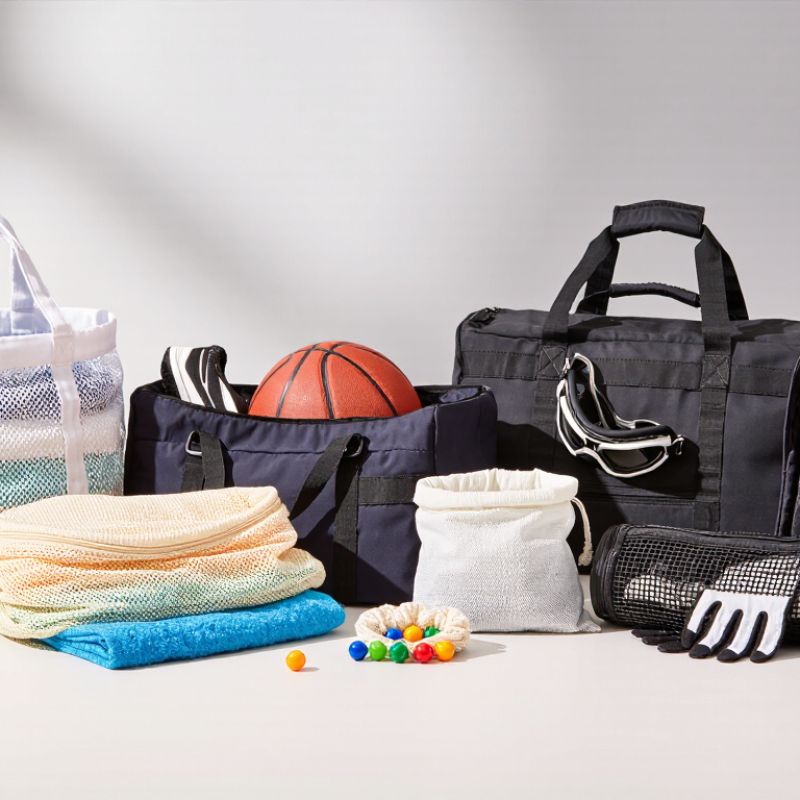
A mesh bag is a flexible container made from intersecting yarns, leaving openings for airflow, drainage, or visibility. Its performance depends on more than the fiber. Yarn thickness, opening size, stitching, and edge finishing all affect load capacity and service life.
The weave matters. A wide, open mesh drains quickly but may let small items escape; tighter mesh offers better containment and can dry more slowly.
Nylon mesh is often selected for abrasion resistance and flexibility, while polyester generally handles moisture and sunlight better than many untreated natural fibers. Polyethylene and polypropylene meshes are lightweight and resist water, though heat and repeated folding can affect their shape. Cotton feels soft and breathes well, but it absorbs water and may take longer to dry.
These are tendencies, not guarantees. Textile Exchange’s Materials Market Report 2023 estimated global fiber production at 116 million tonnes in 2022, with polyester making up about 54 percent. That scale helps explain polyester’s availability, but it does not prove a particular bag is durable or sustainable.
Buyers should check mesh opening, seam strength, wet-load performance, and UV exposure against the actual use. A missed detail matters. A bag that carries dry produce may not suit damp gear or repeated heavy loads. Testing a sample with the real contents is more reliable than choosing by material name alone.
Mesh bags differ by weave, shape, and the weight they are built to carry. Produce bags use light, open mesh, so shoppers can see apples or onions without opening them. Laundry bags usually have finer mesh and a zipper to help keep small garments together. Drawstring backpacks close quickly and sit close to the body, though thin cords can dig into shoulders when heavily loaded. Simple, but useful.
Mesh totes suit groceries or daily errands, with wider handles for carrying. Beach bags often use larger openings that let sand fall through, while sports bags may include separate pockets for damp clothing. Shoe bags keep footwear apart from clean items; a reinforced base can help prevent scuffs from spreading. The details matter.
For home organization, storage mesh bags make contents visible in closets or travel cases. Tool bags typically need denser fabric and stronger seams to handle heavier objects. Swim-gear bags use quick-drying mesh and sometimes a water-resistant panel, but they should not be treated as fully waterproof. A tighter weave can hold small items better, yet may dry more slowly. Check seam strength, closures, and stated load limits before buying; mesh looks sturdy until a weak stitch gives way.
Mesh bags are useful when airflow, visibility, or quick drying matters. Reusable produce bags hold apples, onions, and leafy greens, while their open weave lets moisture escape. For delicate clothing, zippered laundry mesh bags reduce tangling and snagging in a wash, though they cannot prevent every kind of damage. A roomy mesh tote suits beach towels and damp swimwear. Sand falls through. Wet fabric dries faster.
Different designs serve more specific tasks. Drawstring sports bags keep shoes and training clothes separate from clean items, but sharp cleats may wear through fine mesh. Larger bulk-storage bags can hold toys, camping gear, or washable produce in a pantry; check the stitching before carrying heavy loads. Small mesh pouches help organize chargers, craft supplies, or travel toiletries, with clear contents easy to spot. For aquatic or workshop tasks, purpose-made filter bags catch particles in water or process systems. Their mesh size must match the intended filtration, so a general-purpose bag is not a reliable substitute.
Choose the weave and closure for the actual load. Fine mesh contains small items better, while coarser mesh drains and airs out faster. Check seams, handles, and washing instructions. A bag that looks sturdy may stretch when wet. It happens. Also consider whether the material can be cleaned fully; trapped sand or food residue can shorten its useful life.
A comparison of mesh bag types by the number of common use examples listed. The counts describe examples, not sales or market popularity.
Top 10 Types of Mesh Bags for Buyers
Compare mesh bags by usable dimensions, load rating, and closure—not appearance alone. Measure the item at its widest point, then leave room for airflow and easy removal. A bag for several onions needs larger openings and more capacity than one for small hardware. Check mesh aperture, too: fine mesh may hold tiny items but can slow rinsing or drying. Details matter.
Strength claims need context. Ask for fabric tensile results, seam strength, and the test method; fabric weight alone does not prove a bag will carry more. ASTM D5034 provides a grab-test method for textile breaking strength and elongation. For a practical check, load a sample with the intended contents and inspect the seams and drawstring under steady use. A wet, heavy load can behave differently. Test it.
Closure choice depends on use. Drawstrings are quick for produce; zippers can help contain small pieces, but may snag mesh. Fold-over tops are simple, though less secure during frequent handling. Textile Exchange’s Materials Market Report 2024 estimated global fiber production at 124 million tonnes in 2023. That figure gives sourcing context, not a durability rating. The comparison is imperfect. Ask suppliers for material details, dimensions, and repeatable test results, then compare like with like.
| Mesh Bag Type | Typical Material | Common Size Range | Typical Strength | Common Closure | Best Suited For |
|---|---|---|---|---|---|
| Reusable Produce Drawstring Bag | Polyester or nylon mesh | 25 × 30 to 30 × 40 cm | Light; typically suited to a few kilograms of produce | Drawstring | Shopping and storing fruit or vegetables |
| Heavy-Duty Produce Mesh Bag | Thicker polyester or nylon mesh, often with reinforced seams | 30 × 40 to 40 × 50 cm | Medium; designed for heavier grocery loads than lightweight produce bags | Drawstring or toggle cord | Frequent shopping and bulkier produce |
| Onion or Potato Net Sack | Knitted polypropylene or polyethylene netting | 30 × 50 to 45 × 75 cm | Medium to heavy; depends on net gauge and seam construction | Tied neck, drawstring, or sewn closure | Ventilated storage and transport of root vegetables |
| Agricultural Mesh Sack | Woven or knitted polypropylene | 45 × 75 to 60 × 100 cm | Heavy-duty options are available; confirm the rated load with the supplier | Sewn top, tie, or drawstring | Farm, garden, and ventilated bulk handling |
| Laundry Wash Bag | Fine polyester mesh | 30 × 40 to 50 × 70 cm | Light to medium; intended for garments, not heavy loads | Zipper, sometimes with a zipper guard | Protecting delicate clothing during machine washing |
| Mesh Beach Tote | Polyester or nylon mesh with fabric handles | 35 × 40 to 45 × 55 cm | Medium; handle stitching is a key strength point | Open top, snap, or zipper | Carrying towels, toys, and beach accessories |
| Mesh Drawstring Backpack | Polyester or nylon mesh with cord straps | 35 × 45 to 45 × 55 cm | Light to medium; check strap anchors and bottom seams | Drawstring straps | Light sports gear, swimwear, or day-trip essentials |
| Sports Equipment Mesh Bag | Heavy polyester or nylon mesh | 40 × 60 to 50 × 75 cm | Medium to heavy; reinforced seams and webbing improve durability | Drawstring, zipper, or flap | Balls, training gear, and team equipment |
| Fishing Catch or Keepnet Bag | Knotless nylon or polyester netting | 30 × 50 to 40 × 80 cm, or longer for keepnets | Varies by net gauge, frame, and intended catch; check product rating | Drawstring, zip, or reinforced opening | Temporary storage or transport of fishing gear or catch |
| Mesh Shoe Bag | Polyester mesh with fabric trim | 25 × 35 to 30 × 40 cm | Light to medium; reinforcement matters around the zipper and corners | Zipper | Separating footwear in luggage or storing sports shoes |
Buyer note: Dimensions and strength descriptions are typical examples, not universal specifications. Actual load capacity depends on mesh material and gauge, seam construction, handles, and closure. Confirm tested capacity and care requirements for the specific product before purchase.
Top 10 Types of Mesh Bags for Buyers
How Buyers Can Choose and Verify the Right Mesh Bag
Choosing a mesh bag starts with the product, not the catalogue photo. For onions, coarse openings improve airflow; for small fruit, tighter mesh helps prevent items slipping through. Compare material, opening size, seam construction, closure, and rated load. Ask suppliers for material specifications and test samples with the actual product. Check for sharp cut edges, loose stitching, and drawstrings that snag when bags are stacked. Small details matter.
Data helps frame the decision, but it needs careful interpretation. FAO’s 2023 State of Food and Agriculture estimated that 13.2% of food was lost globally between harvest and retail in 2021. That is not a mesh-bag performance figure. UNEP’s Food Waste Index Report 2024 estimated 1.05 billion tonnes of food waste across retail, food service, and households in 2022. These figures show why handling matters, but a bag alone cannot prevent losses. It is tempting to overread them. Buyers should run simple checks: fill samples to the intended weight, lift them repeatedly, inspect seams, and test ventilation under real storage conditions. Record results, including failures; a sample that looks sturdy when empty can behave differently when damp or heavily loaded.