Top 10 Automated Storage Systems at 2026 Canton Fair?
The rapid advancement in Automated Storage Systems is revolutionizing supply chain management. According to a recent report by ResearchAndMarkets, the global automated storage market is expected to grow at a CAGR of 12.5% from 2023 to 2028. This trend is evident at the upcoming 2026 Canton Fair, where the spotlight will be on innovative storage solutions.
In a vast exhibition space of 1.55 million square meters, attendees can utilize AI-powered features for efficient navigation. This advancement allows buyers to find suppliers meeting specific certifications, such as ISO and CE, easily. However, while automation enhances efficiency, it also raises concerns about job displacement and the need for workforce retraining. Balancing technology and human expertise is crucial as the industry evolves.
Automated Storage Systems are not just about efficiency; they can sometimes lead to unexpected challenges. Integration into existing operations may present obstacles. Companies must reflect on their adaptability and the implications of these technologies. Exploring these aspects at the Canton Fair will provide valuable insights into the future of automated systems.
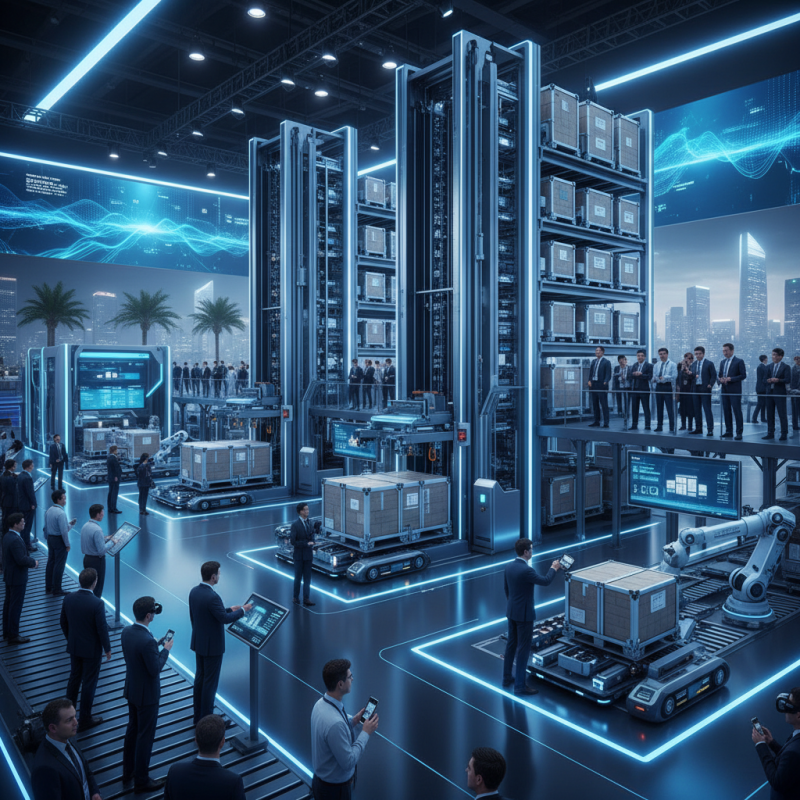
Overview of Automated Storage Systems at the 2026 Canton Fair
The 2026 Canton Fair showcased remarkable trends in automated storage systems. Many exhibitors highlighted efficiency and innovation. Advanced robotics took center stage, focusing on speed and accuracy in sorting. Vendors displayed systems that can streamline inventory management significantly. The integration of AI also caught attention, enhancing decision-making processes.
Some systems had impressive features, but not all were practical. There were questions about their scalability. Many attendees noted issues with user interface simplicity. Complex operations often required extensive training, which may deter potential users. Still, the trend towards automation is undeniable, reflecting a transformative phase in the logistics industry.
Among the various systems, modular designs emerged as a popular choice. They offer flexibility and adaptability, changing the way businesses view storage space. However, the cost factor loomed large. Smaller companies may struggle to keep up. The fair provided an excellent platform for discussion, but not every solution is perfect. There remains a gap between innovation and usability that needs addressing.
Key Features of Top Automated Storage Solutions Exhibited
The 2026 Canton Fair showcased a range of automated storage systems. These systems highlight innovation and efficiency, capturing attention from visitors worldwide. Key features include advanced robotics, which streamline the retrieval and storage processes. These robots are equipped with sensors to navigate obstacles, ensuring smooth operations within tight spaces.
Energy efficiency is another focal point. Many systems use less electricity, reducing operational costs. Some designs feature modular components, allowing for easy upgrades. However, maintaining these systems can be challenging. Regular maintenance is crucial to avoid downtime, and not all users are prepared for this commitment.
User interface design also varies across different solutions. While some systems offer intuitive screens, others can be complex. Training staff is essential, yet often neglected. Balancing technology and human factors remains a point of reflection in automation. As industries adopt these solutions, finding the right fit becomes increasingly important.
Top 10 Automated Storage Systems at 2026 Canton Fair
| System Model | Max Storage Capacity | Speed (items/hour) | Technology Used | Key Feature |
| Model A1 | 5000 units | 300 | AI-powered | Energy efficient |
| Model B2 | 7000 units | 250 | Robotic | Flexible layout |
| Model C3 | 8000 units | 400 | IoT-based | Real-time tracking |
| Model D4 | 6000 units | 320 | Hybrid | Multi-user support |
| Model E5 | 9000 units | 450 | Automated retrieval | Scalability |
| Model F6 | 5500 units | 290 | Self-learning | User-friendly interface |
| Model G7 | 9500 units | 500 | Blockchain | Enhanced security |
| Model H8 | 6500 units | 260 | Laser-guided | High precision |
| Model I9 | 5000 units | 220 | VR-based monitoring | Immersive experience |
| Model J10 | 7000 units | 350 | Cloud-integrated | Remote access |
Comparative Analysis of Leading Brands in Automated Storage
The 2026 Canton Fair showcased a variety of automated storage systems. These systems differ in design, efficiency, and technology. Many attendees noted that while some brands excelled in speed, others were lagging in adaptability. Efficiency in space utilization was a common theme, but not all systems delivered on their promises. Several brands had systems that were difficult to integrate with existing workflows.
Sustainability emerged as a key consideration. Some systems prioritized eco-friendly materials while others ignored this aspect. Users expressed concern over long-term reliability. A few systems demonstrated innovative features but struggled with user interface design. This caused frustration during demonstrations, impacting user experience negatively.
Customization remains a challenge. Flexibility to adapt to varying storage needs is essential. Some brands clearly understand this need, while others seemed rigid in their offerings. The disparity between advanced technology and practical usability was evident. It raised questions about the future direction of automated storage systems.
Innovations and Trends in Automated Storage Technology
The 2026 Canton Fair showcases cutting-edge innovations in automated storage technology. As per recent industry reports, the global automated storage systems market is expected to reach $10 billion by 2027. This growth is driven by the increasing demand for efficient logistics and inventory management. The integration of Artificial Intelligence (AI) and the Internet of Things (IoT) into these systems has transformed traditional warehousing.
One notable trend is the shift toward modular systems. These systems are adaptable and can grow with business needs. They utilize vertical space effectively, which is crucial as urban sites shrink. Another innovation involves autonomous Mobile Robots (AMRs). These robots navigate warehouses without human intervention, streamlining operations. However, challenges remain. Issues such as high initial costs and integration difficulties hinder some organizations from adopting these technologies.
The focus on sustainability also influences automated storage solutions. Systems designed for energy efficiency are gaining traction. They reduce operational costs and minimize carbon footprints. Despite these advancements, companies still struggle with balancing cost and efficiency. They often face dilemmas on investment versus immediate returns. This complexity reflects an industry in transition, where potential remains, but uncertainty persists.
Top 10 Automated Storage Systems Innovations at 2026 Canton Fair
Future Implications of Automated Storage Systems for Industry
The future of automated storage systems is promising yet complex. Industry reports indicate that the global market is expected to reach $30 billion by 2026, driven by increasing demand for efficiency. However, implementation can be daunting for many businesses. They face hurdles related to integration with existing infrastructure. These challenges can slow down the adoption rate of new technologies.
Automated systems are not just about speed. They also improve accuracy in inventory management. Data shows that companies using these systems see a 20% reduction in errors. Yet, many firms still struggle with human resistance to change. Culturally, embracing automation requires a significant shift. Training employees can be a time-consuming process that may affect short-term productivity.
As we anticipate the impact of these systems, flexibility remains crucial. The ability to adapt to evolving needs could define success or failure in this space. An adaptive strategy allows businesses to pivot with market demands. Many organizations will need to rethink their operational structures to fully benefit from automation. Balancing technological advancement with workforce readiness will be key to unlocking true potential.
