China Top Seaweed Extract Fertilizer Manufacturers
China’s seaweed industry has grown alongside rising interest in crop nutrition and soil care. Seaweed Extract Fertilizer is now offered in liquid concentrates, powders, and blended formulations. Yet a product label alone cannot show how consistently it performs. Buyers need to examine raw-material sourcing, extraction methods, nutrient analysis, batch documentation, and crop-specific trial data.
Dr. Charles Yarish, a marine phycologist at the University of Connecticut, is a recognized researcher in seaweed science. The following is an editorial paraphrase of a practical lesson consistent with his field: “Seaweed products should be judged by their composition, intended use, and evidence from real growing conditions.” It is not presented as a verbatim quotation. That distinction matters. Supplier pages often emphasize benefits, while independent field results may be harder to find.
This overview of China’s leading manufacturers will compare more than product claims. It will consider manufacturing capabilities, quality-control practices, export experience, and the transparency of technical information. Look for clear species identification and usable application guidance. Ask whether reported results come from controlled trials or customer testimonials. Small details count. A readable certificate of analysis can be more useful than a glossy photograph of green crops.
No single supplier suits every farm. Crop, climate, soil, and application method all influence results. Even careful comparisons have limits when public data are incomplete. That is worth acknowledging. The aim here is a practical shortlist, not a promise of uniform performance.
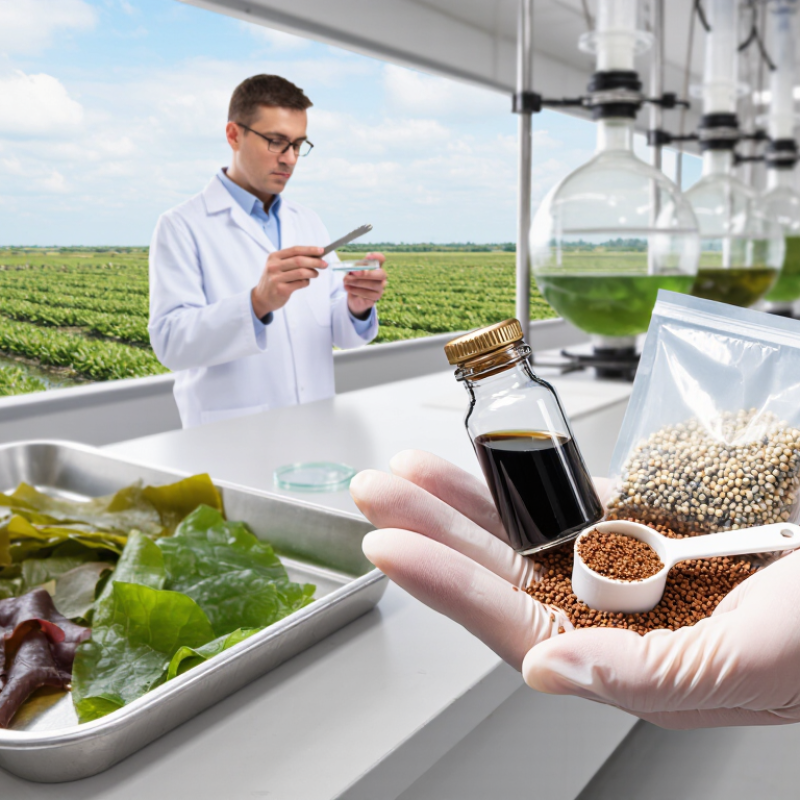
China’s Seaweed Extract Fertilizer Industry: Scope and Development
China’s seaweed extract fertilizer industry covers more than extraction alone. It includes seaweed sourcing, drying, processing, formulation, and quality checks. Coastal regions provide access to marine biomass, while manufacturers turn it into liquid concentrates, soluble powders, and blended agricultural products. The details matter. Different extraction temperatures and methods can change the final product’s composition, so a label alone may not reveal how consistently batches perform.
Development increasingly depends on reliable raw-material supply and clearer product specifications. Farmers may apply extracts through drip irrigation, foliar spraying, or seed treatment, depending on the crop and formulation. In practice, results can vary with soil conditions, weather, dose, and timing. That is a real limitation. Seaweed extracts are generally used to support plant growth, not to replace balanced nutrition or sound field management. Some product claims may also be difficult to compare when testing methods differ. A more mature industry would benefit from transparent composition data, repeatable trials, and guidance tied to specific crops. Even then, field results deserve careful review.
Raw Materials and Production Processes
Seaweed extract fertilizer starts with the quality of its raw material. Chinese producers may process kelp and other brown seaweeds, with species and harvest conditions shaping the final extract. Freshness matters. Seaweed stored while wet can spoil, so suppliers typically rinse it to remove sand, salt, and surface debris before drying or processing. Careful sourcing also means recording species, harvest area, and delivery conditions.
Production methods vary. Some facilities use hot water; others use controlled alkaline extraction to release soluble compounds. The mixture is then filtered, concentrated, and made into liquid or dried products. Temperature and extraction time affect color, odor, and nutrient composition. Quality checks may measure moisture, pH, soluble solids, and selected minerals. These checks help buyers compare batches, but a label alone cannot describe every detail.
Ask how raw seaweed is identified and how batches are tested. Small details matter. A dark, thick liquid may look concentrated, yet appearance does not prove consistency or field performance. Storage can change product quality, too. Even careful processing has limits: seaweed composition shifts with season and growing conditions, and manufacturers cannot make every batch identical. That variability deserves honest attention.
Leading Seaweed Extract Fertilizer Manufacturers in China
Leading Seaweed Extract Fertilizer Manufacturers in China
China’s seaweed extract fertilizer sector includes manufacturers serving farms, distributors, and agricultural input companies. The strongest suppliers explain their raw material sources and processing steps clearly. Ask whether the extract comes from brown seaweed and how production manages heat, moisture, and soluble nutrients. These details can affect product consistency. A dark liquid sample may look convincing, but appearance alone proves little. Request a recent certificate of analysis and compare key specifications across batches. Check solubility, pH, and nutrient declarations. Also ask how the product is packaged for storage and transport. Small details matter.
Tips: Request a sample from a current production batch. Test it in water and check for sediment. Compare the label with the analysis report. Keep your questions specific.
Supplier claims deserve careful review. A manufacturer may describe its fertilizer as suitable for many crops, yet local soil and application methods still matter. Start with a small field trial and record dilution, timing, and crop response. Results can vary. I would not judge a supplier from one successful plot; weather and irrigation can distort the picture. Clear documentation, responsive technical support, and consistent batches offer better grounds for a purchasing decision. Even then, confirm performance under your own growing conditions.
Product Types, Applications, and Agricultural Benefits
Seaweed extract fertilizers are sold as liquids, soluble powders, and granules. Manufacturers commonly use brown seaweeds, processing them into extracts for foliar spraying, fertigation, seed coating, or soil application. Each format suits different equipment: liquids pass through drip systems, while powders are easier to store and ship. Check solubility before use.
The FAO’s The State of World Fisheries and Aquaculture 2024 reports 37.8 million tonnes of global algae production in 2022, with about 97% farmed. This large cultivated supply supports ingredient availability, but does not guarantee consistent extract quality.
Processing methods and seaweed species affect the final composition. In crops, extracts may support root growth, nutrient uptake, and tolerance to heat or drought; they are biostimulants, not complete replacements for balanced fertilizer.
Timing matters. Apply according to crop stage and label directions, then compare treated rows with untreated ones. Results vary with soil, weather, and formulation.
The evidence is promising, but field performance is not uniform; that limitation deserves attention.
