Top Stainless Steel Chains for Global Buyers in 2026?
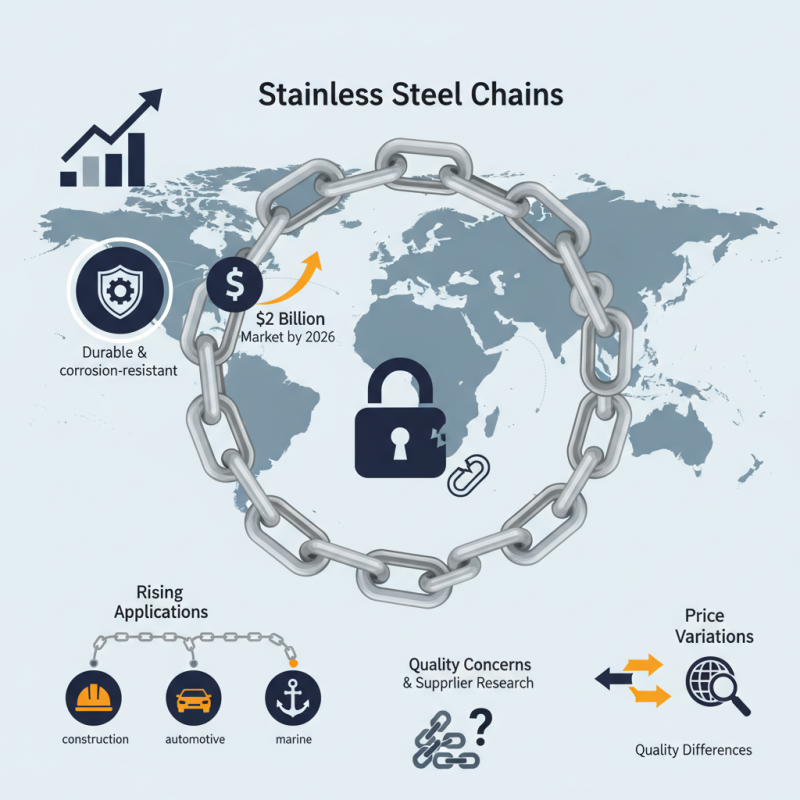
The demand for Stainless steel chains is projected to grow significantly by 2026. This growth parallels the increasing focus on durable and corrosion-resistant materials in various industries. According to a recent industry report by Market Research Future, the global stainless steel chain market is expected to reach approximately $2 billion by 2026. This trend reflects rising applications in sectors such as construction, automotive, and marine.
Stainless steel chains offer unique advantages. They provide high tensile strength and resistance to rust, making them ideal for outdoor and industrial use. Manufacturers are innovating with different grades of stainless steel to enhance performance. However, buyers must be cautious about quality. Some lower-grade chains may not meet safety standards and can lead to failures.
Furthermore, the competitive landscape is evolving. Emerging markets are increasingly sourcing stainless steel chains from global suppliers. Price variations and quality differences can be significant. Buyers need to conduct thorough research to identify reputable suppliers. Understanding these dynamics will be crucial for making informed purchasing decisions in the future.
Top Stainless Steel Chains: Overview of Leading Global Manufacturers
The stainless steel chain market has evolved significantly over the past few years. Leading manufacturers have adapted to meet the growing global demand. These manufacturers focus on sustainability, innovation, and technology. Their production processes are designed to ensure both quality and durability. Key factors include high corrosion resistance and aesthetic appeal.
Innovative designs play a crucial role in the success of these chains. Many producers now employ advanced manufacturing techniques. This creates a range of applications from fashion accessories to industrial uses. The versatility of stainless steel chains has attracted diverse sectors. Companies often experiment with different finishes and coatings to enhance visual appeal.
While there are many key players in the market, it’s important to consider regional variations in production standards. Not all manufacturers meet the same quality benchmarks. Some might struggle with environmental regulations or ethical labor practices. It’s essential for buyers to assess these aspects carefully. Quality should not be compromised for price. Engaging with responsible manufacturers can lead to better choices in the long run.
Key Factors Influencing the Stainless Steel Chain Market in 2026
As the stainless steel chain market develops, several key factors will shape its trajectory in 2026. Demand for durability and corrosion resistance continues to rise. Industries such as construction, automotive, and marine applications greatly value these attributes. The growing focus on sustainable practices also plays a role. Eco-friendly production methods influence buying decisions. Consumers increasingly favor products made from recyclable materials.
Technological advancements bring innovation to the forefront. New manufacturing techniques enhance quality. Companies invest in research to improve the strength and flexibility of chains. However, the market faces challenges. Fluctuating raw material prices may impact production costs. Additionally, competition from alternative materials poses a significant threat. Buyers want reliable solutions but must also consider budget constraints.
Market trends indicate a shift toward customization. Buyers often seek specific lengths, sizes, and finishes. This demand for personalization can complicate logistics and production timelines. Companies must balance efficiency with customer desires. Quality assurance remains paramount. Ensuring every chain meets rigorous standards is essential for maintaining trust in the market.
Top Stainless Steel Chains for Global Buyers in 2026
| Chain Type | Market Share (%) | Growth Rate (%) | Key Applications | Material Quality |
| Round Link Chains | 25 | 5.1 | Construction, Marine | 304 Grade |
| Welded Chains | 20 | 4.8 | Agriculture, Mining | 316 Grade |
| Transport Chains | 15 | 6.0 | Logistics, Automation | 420 Grade |
| Transport Chains | 25 | 5.5 | Aerospace, Automotive | 304 Grade |
| Specialty Chains | 15 | 7.0 | Food Processing, Pharmaceutical | Alloy Stainless Steel |
Best Applications for Stainless Steel Chains in Various Industries
Stainless steel chains are robust and versatile tools employed across a range of industries. They are particularly beneficial in construction, where strength and durability are paramount. These chains can withstand heavy loads and harsh conditions, ensuring safety and reliability on job sites. Equipment in high-stress environments, such as cranes and hoists, often relies on stainless steel chains for secure lifting.
In the food processing sector, stainless steel chains excel due to their resistance to corrosion and hygiene standards. They are suitable for conveyor systems handling perishable goods. However, consistent maintenance is necessary to ensure these chains perform optimally. Neglect can lead to rust or malfunction, undermining operational efficiency.
The automotive industry also greatly benefits from stainless steel chains. These chains facilitate power transmission in machinery and vehicles. Their ability to endure high temperatures and chemical exposure is crucial. Yet, manufacturers should periodically review their chain systems. Over time, wear and tear can impact performance. Regular inspections will help identify any potential issues before they escalate, preserving chain integrity and functionality.
Top Stainless Steel Chains Applications in 2026
Innovative Trends in Stainless Steel Chain Design and Production
As the global market for stainless steel chains continues to evolve, innovative trends are shaping design and production. One notable trend is the integration of advanced manufacturing techniques. 3D printing is revolutionizing how chains are crafted, allowing for intricate designs that were previously impossible. This method reduces waste and increases efficiency in production.
New designs focus on functionality and aesthetics. Lightweight chains with enhanced durability are becoming popular. Buyers seek chains that combine strength with visual appeal. Customization options are more accessible now, with manufacturers offering unique patterns and finishes. Some chains feature mixed materials, combining stainless steel with other elements for added flair.
Sustainability is another crucial factor influencing chain production. Companies are adopting eco-friendly practices, using recycled materials wherever possible. However, challenges remain in sourcing these materials responsibly. There is an ongoing need to balance innovative designs with environmental impact. Consumers are becoming more aware of these issues, driving brands to make better choices.
Sustainable Practices in Stainless Steel Chain Manufacturing for 2026
Sustainable practices in stainless steel chain manufacturing are key for 2026. As demand increases, manufacturers must embrace eco-friendly methods. This shift not only meets consumer expectations but also reduces environmental impact.
One effective approach is recycling scrap metal. By utilizing reclaimed materials, companies can minimize waste and lower energy consumption. Using local suppliers also cuts down on transportation emissions. It’s a win-win strategy.
Consider these tips: Always ask manufacturers about their sustainability efforts. Transparency shows commitment. Look for certifications that prove eco-friendly practices. Small brands can have significant impacts too. Their strategies can inspire larger companies.
There’s room for improvement in many areas. Some manufacturers still overlook sustainable sourcing. The path to a greener future requires collective effort. Industry players must collaborate and innovate.
