
Why Buy Frozen Chicken Gizzard in Bulk?
Why Buy Frozen Chicken Gizzard in Bulk?
Frozen Chicken Gizzard can help restaurants, caterers, and home cooks manage costs without sacrificing menu flexibility. The USDA Foreign Agricultural Service’s 2024 Livestock and Poultry: World Markets and Trade report estimated global chicken-meat production at about 103 million metric tons. That figure covers chicken meat overall, not gizzards specifically. Still, it signals the scale of the poultry supply behind many edible parts. Gizzards remain a smaller, less predictable category, so local availability and pricing deserve a separate check.
Bulk buying can make sense when demand is steady. A kitchen can portion a case into meal-sized packs, reducing repeated orders and limiting unnecessary handling. Picture labeled bags stacked in a well-run freezer, ready for stews, skewers, or fried dishes. But a low case price is not automatically a saving. Buyers should compare drained weight, trim, packaging, delivery fees, and freezer space. These details are easy to overlook.
Cold storage matters. USDA Food Safety and Inspection Service guidance explains that freezing keeps food safe by slowing microbial growth; it does not replace careful handling. Food-safety specialist Meredith Carothers has described freezing as slowing molecular movement and putting microbes into a dormant state. That is useful, but it is not a reason to ignore temperature control or thawing practices. A reliable supplier should provide clear storage instructions and consistent packaging. Ask for them.
Bulk purchasing works best when turnover is predictable and stock can stay frozen. Otherwise, smaller orders may be wiser. The trade-off is real: lower unit costs can come with more storage pressure. A little planning helps buyers judge whether Frozen Chicken Gizzard truly fits their operation.
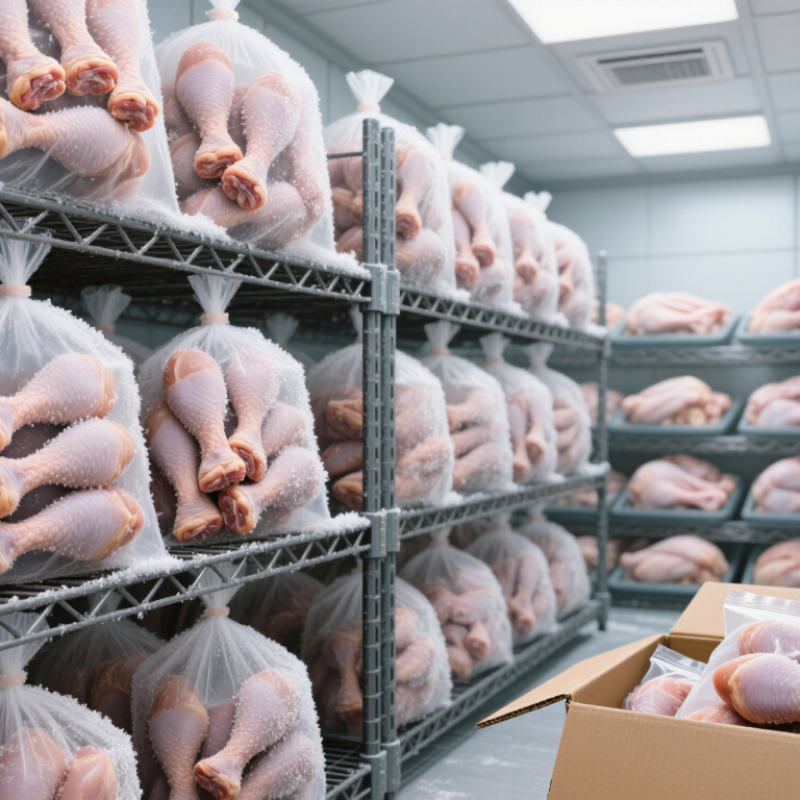
What Frozen Chicken Gizzards Are and How They Are Processed
Frozen chicken gizzards are the bird’s muscular stomach, not an organ with a soft, delicate texture. They help grind food, so their muscle is dense and firm. After slaughter, processors remove the gizzards, open them, and clean away their contents and tough inner lining. The exact steps can vary by facility. Clean handling matters at every stage.
The cleaned pieces are rinsed, chilled, inspected, and frozen to help preserve quality. Some processors freeze individual gizzards separately, while others pack them together in a block. Check the package for handling instructions and whether the product is raw or cooked. Frozen does not mean ready to eat.
A practical detail: gizzards may still need trimming at home. Look for remaining membranes or unusually hard pieces, and thaw them safely in the refrigerator before cooking. They often need slow simmering to become tender; a quick pan-fry can leave them chewy. I used to expect a softer bite. That was a poor assumption. Texture depends on preparation, and even well-cleaned gizzards need careful cooking. Bulk packs can be useful for planned meals, but portioning them before freezing again can make handling easier.
Why Buy Frozen Chicken Gizzard in Bulk? — What Frozen Chicken Gizzards Are and How They Are Processed
| Topic | What It Means | Why It Matters When Buying in Bulk |
|---|---|---|
| What chicken gizzards are | The gizzard is a muscular part of a chicken’s digestive system that helps grind food. It is an edible organ meat with a firm texture. | Knowing the cut helps buyers choose suitable preparation methods, such as simmering, braising, or pressure-cooking until tender. |
| Initial preparation | During processing, gizzards are separated from the birds and inspected. Remaining contents and inedible material are removed. | Check the product description and packaging to confirm whether the gizzards are cleaned, trimmed, or supplied with any additional preparation required. |
| Cleaning and trimming | Gizzards are cleaned and may be trimmed to remove tough connective tissue or other unwanted parts. Preparation details can vary by processor and product. | Consistent trimming can reduce preparation work, but buyers should verify the specification before ordering a large quantity. |
| Freezing | After processing, the product is frozen to keep it frozen during storage and distribution. Freezing slows microbial growth but does not sterilize food. | Bulk packs can help maintain a ready supply. Choose packaging that suits freezer capacity and makes it practical to use the quantity needed. |
| Potential bulk advantages | Larger orders may reduce the number of purchases and deliveries. The price per unit may also be lower, depending on the supplier, pack size, and order terms. | Compare the total delivered cost, usable quantity, storage requirements, and expected use rate rather than assuming every bulk order is cheaper. |
| Portion planning | Frozen gizzards may be packed together or divided into smaller portions, depending on the product format. | Portion-sized packs can make stock rotation and meal planning easier. If the product is in one large block, plan how it can be safely portioned after thawing. |
| Frozen storage | Keep frozen poultry at 0°F (−18°C) or below and follow the storage instructions on the package. Prevent thawing during transport and storage. | Before buying, confirm that there is enough freezer space and a reliable cold chain for the full order. |
| Thawing and cooking | Thaw safely in the refrigerator or by another food-safe method. Cook poultry to an internal temperature of 165°F (74°C), measured with a food thermometer. | Plan thawing time and cooking capacity in advance, especially when preparing large quantities. Avoid leaving raw poultry at room temperature. |
| Best fit for bulk purchasing | Bulk buying is most practical when the product can be stored correctly and used steadily before quality declines. | Estimate weekly use, check package dates and storage guidance, and rotate inventory so older stock is used first. |
Food-safety reminder: Keep raw poultry separate from ready-to-eat foods, wash hands and contact surfaces after handling, and follow the package directions and local food-safety guidance.