
Why Are CNC Devices in High Demand Worldwide?
Why Are Cnc Devices in High Demand Worldwide? The answer begins on the factory floor, where a cutting tool follows a programmed path across metal, wood, or plastic. Cnc Devices help manufacturers produce consistent parts, from compact pump housings to aircraft brackets with closely controlled dimensions. Once a design is tested, the same program can guide repeated production runs. That matters when customers expect reliable fit and predictable delivery.
Demand also reflects flexibility. A modern CNC machine can handle detailed contours, drilled holes, and multiple operations with less manual repositioning. Connected controls and sensors can help operators monitor tool wear and spot process changes. Manufacturing scholar Dr. David Dornfeld’s work emphasizes sustainability and efficient production. In paraphrase, that perspective can be put this way: “Precision matters most when it is repeatable and resource-aware.” Small chips. Less scrap. Better use of materials.
Yet the picture is not perfect. CNC equipment can require substantial investment, skilled setup, maintenance, and careful programming. A machine does not remove human judgment; it shifts where that judgment is needed. Shops must still choose suitable tools, verify measurements, and respond when a cut sounds rough or a part drifts out of tolerance. Not every operation needs automation. The strongest case for CNC comes when accuracy, repeatability, and production volume justify the added complexity. Its worldwide appeal is real, but each buyer still has to match the machine to the work.
What CNC Devices Are and How They Work
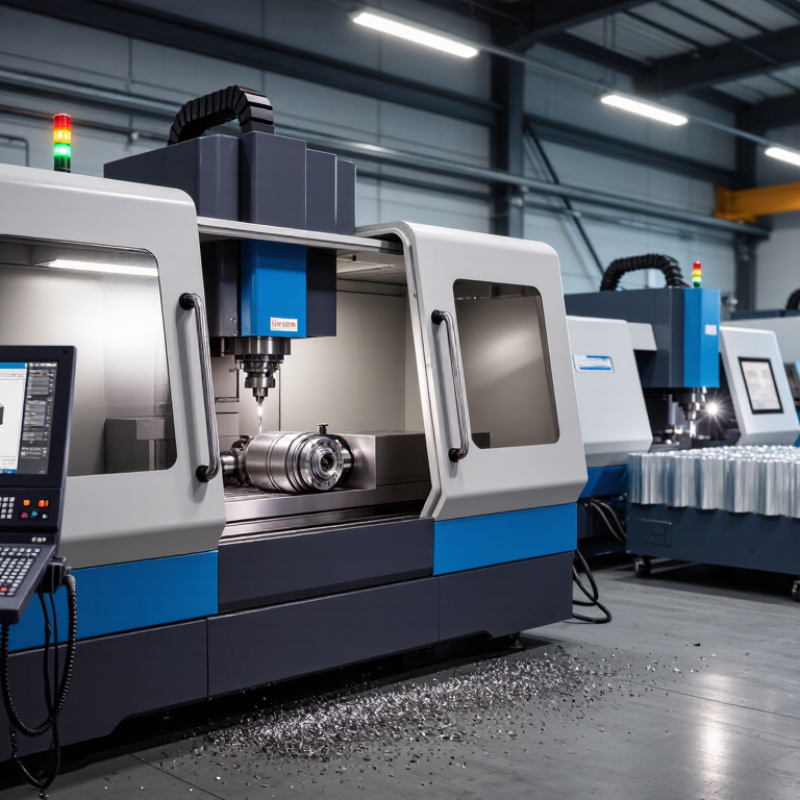
A CNC device is a machine tool guided by numerical instructions, rather than by an operator’s hands alone. The instructions tell it where to move, how fast to cut, and when to change direction. Think of a metal block fixed to a table while a cutting tool traces a programmed path. The machine’s controller converts that path into signals for motors, which move the axes; a spindle turns the tool or workpiece. Precise, but not magic.
The workflow starts with a digital part design, which is translated into toolpaths and machine code. An operator loads the material, selects tooling, sets the work zero, and checks the program. During cutting, sensors and control systems help maintain planned movement, though they cannot rescue every bad setup. A wrong tool offset can ruin a part. That matters.
Grand View Research’s CNC machine market report estimated a global market value of USD 83.99 billion in 2023 and projected 5.3% annual growth through 2030. That scale reflects use across sectors such as automotive, aerospace, and medical manufacturing, where repeatable parts matter. Yet real accuracy still depends on calibration, tool wear, material behavior, and a person willing to inspect the first cut. The machine follows instructions; it does not judge whether the design makes sense.
| Dimension | What It Means | How It Works or Real-World Detail | Why It Matters |
|---|---|---|---|
| Definition | CNC means computer numerical control. A CNC device uses programmed instructions to control the movement of a machine tool or other equipment. | The controller interprets programmed commands and coordinates machine movements, such as moving a cutting tool along a planned path. | Automation makes it possible to repeat programmed operations with less dependence on continuous manual control. |
| Typical machine types | CNC equipment includes milling machines, lathes, routers, grinders, laser cutters, and plasma cutters. | Different machines perform different tasks. For example, a mill removes material with a rotating cutter, while a lathe rotates the workpiece against a cutting tool. | A wide range of processes lets manufacturers use computer-controlled equipment for many part shapes and production needs. |
| Programmed instructions | A CNC program describes movements and operations using machine-readable commands, commonly including G-code and machine-specific functions. | Commands may specify coordinates, tool movement, spindle operation, feed rate, and other settings. The controller interprets them according to the machine’s configuration. | Programs can be saved, checked, and reused, helping standardize repeat jobs. |
| From design to machining | Many CNC workflows begin with a digital part design and a planned toolpath. | CAD software is used to create or revise a design; CAM software can generate toolpaths and output machine instructions. The resulting program must suit the specific machine, tools, and setup. | Connecting digital design with production can make design changes and repeat manufacturing more manageable. |
| Axes and coordinates | Axes describe the directions in which a machine or tool can move. | On a common three-axis milling machine, X and Y describe movement across a plane, while Z describes movement up and down relative to that plane. Some machines add rotary axes. | Axis configuration affects which surfaces and shapes a machine can reach without repositioning the workpiece. |
| Motion control | Motors and drive systems move machine components in response to controller commands. | Depending on the machine, motion systems may use stepper or servo motors. Some systems use feedback devices to monitor position and help the controller correct motion. | Controlled movement is essential for following programmed paths and producing consistent parts. |
| Cutting parameters | Machining programs and setups use parameters such as spindle speed, feed rate, cutting depth, and tool selection. | Appropriate settings depend on factors including the material, tool geometry, machine capability, and operation. A qualified operator or process engineer may need to adjust them. | Suitable parameters help balance production time, surface finish, tool life, and process reliability. |
| Materials and processes | CNC equipment is used to process materials such as metals, plastics, wood, and composites, depending on the machine and tooling. | Material choice influences tool selection, cutting conditions, workholding, and sometimes the type of CNC process used. | Manufacturers can select equipment and methods for varied products, from machined metal components to routed panels. |
| Repeatability and quality | A stored program can repeat a sequence of machine movements, but the final result also depends on setup and process control. | Tool condition, workholding, calibration, material variation, and operator practices can all affect part dimensions and finish. | Repeatable automation supports consistent production when the process is properly set up and monitored. |
| Production flexibility | CNC machines can often be reprogrammed for a different part or operation. | A change may require a revised program, tools, fixtures, and setup checks; the amount of change depends on the machine and the new job. | Reprogrammability can help manufacturers handle product updates and varied production runs without relying solely on dedicated mechanical tooling. |
| Applications | CNC processes are used in industries such as aerospace, automotive, medical-device manufacturing, electronics, furniture, and general engineering. | Applications range from milling precision components and turning shafts to cutting sheet materials and engraving or routing panels. | Broad applicability across industries contributes to demand for CNC equipment, skills, software, and related services. |
| Why demand is high | Demand is supported by the need for automated production, repeatable operations, complex part manufacturing, and adaptable workflows. | Manufacturers may adopt CNC equipment to improve process consistency, reduce some manual machine operations, or connect production with digital design and planning tools. | These capabilities are valuable across many regions and sectors, although the benefits depend on the application, investment, training, and production setup. |
| Important limitations | CNC automation does not eliminate the need for people, maintenance, or careful process planning. | Operators and programmers must select tools, set up workpieces, verify programs, manage safety, and respond to wear or machine issues. | Training and maintenance are important for safe operation, reliable output, and effective use of the equipment. |