
How to Choose a Small Tractor Mower in 2026?
Choosing a small tractor mower in 2026 is not simply a horsepower decision. It is a property-management decision. Your land size, slope, grass density, storage space, and attachment needs all matter.
A narrow machine may fit between trees, gates, and garden beds. A heavier model may handle wet grass better, but it can leave deeper tire marks. Think about your real working conditions. Measure the shed door. Check the turning radius. Imagine clearing leaves beside a fence on a damp Saturday morning.
Kris Kiser, president and CEO of the Outdoor Power Equipment Institute, offers a practical reminder: “Read the owner’s manual before operating outdoor power equipment.” That advice sounds basic. It is often ignored. A reliable small tractor mower should match your experience, maintenance habits, and local terrain, not just its advertised engine size.
This guide examines cutting width, transmission types, deck design, fuel use, comfort, safety features, and long-term service support. It also considers ordinary frustrations, including clogged decks, awkward controls, and limited parts availability. Those details can matter more than a polished showroom display.
There is no perfect choice. Every machine involves compromise. A compact mower may save space but require more passes. A powerful model may finish sooner but cost more to maintain. Use this guide to compare measurable needs with daily reality, then question your first impression before buying.
Understand Small Tractor Mower Types and Their Main Uses
How to Choose a Small Tractor Mower in 2026?
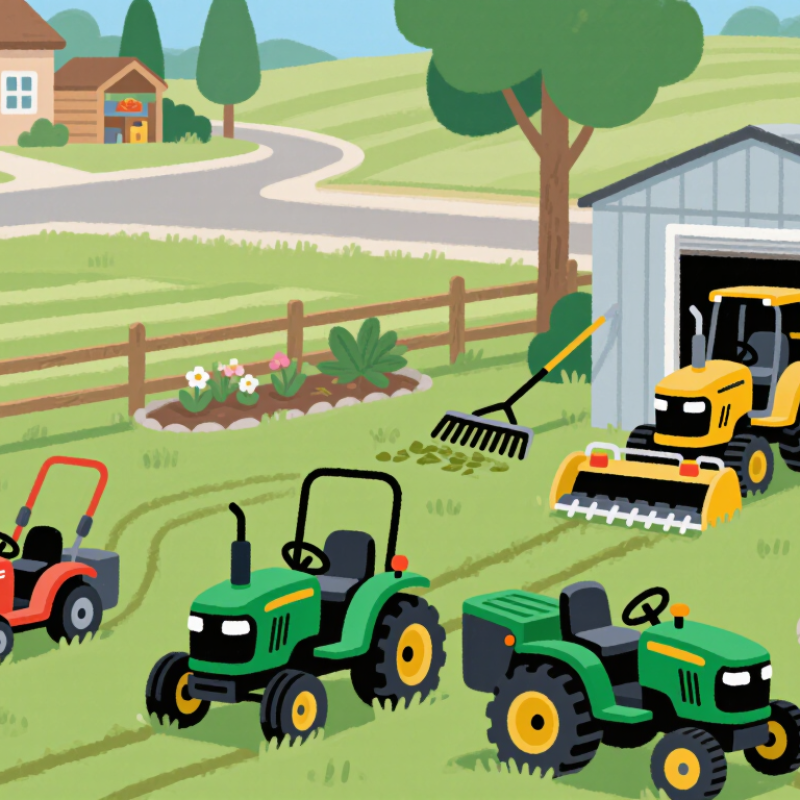
Small tractor mowers usually fall into three practical groups. Lawn tractors suit flat lawns, light towing, and regular grass cutting. Subcompact tractors add three-point hitches, loaders, and stronger mower decks. Compact utility tractors handle rougher ground, drainage work, snow removal, and heavier attachments. Zero-turn machines are not true tractors, but they excel around trees and tight garden edges.
Scale matters more than appearance. The 2022 USDA Census counted about 1.9 million U.S. farms, many operating on modest acreage. Meanwhile, the Association of Equipment Manufacturers reported roughly 244,000 U.S. farm tractor sales in 2024. These figures show a large market, but they do not tell you which machine fits your soil. A 20-horsepower model may manage two acres of maintained grass. Wet clay, slopes, and frequent towing can demand more traction and stability.
Measure the access path first. Check deck width, turning space, storage height, and attachment clearance. For weekly mowing, a mid-mounted deck can save time. For firewood or gravel, choose a rear hitch and hydraulic capacity instead. Ask about real fuel use, not brochure claims. Test the seat, pedals, visibility, and reversing control. My own mistake would be choosing maximum horsepower too early; unused capacity still costs money, maintenance, and storage space. Small details matter.
| Small Tractor Mower Type | Typical Engine Power | Typical Cutting Width | Best-Suited Property Size | Main Uses | Terrain and Lawn Conditions | Common Features or Attachments | Key Advantages | Important Limitations |
|---|---|---|---|---|---|---|---|---|
| Rear-Engine Riding Mower | 11–18 hp | 26–38 in | Up to about 1 acre | Routine mowing of small residential lawns, narrow passages, and areas with garden obstacles. | Best on relatively flat, maintained lawns with limited rough ground. | Rear-mounted engine, side or rear discharge, optional bagger, mulching kit, and small tow cart. | Compact dimensions, simple operation, low storage requirements, and good visibility around the cutting deck. | Less comfortable and slower on large properties; limited towing and attachment capability. |
| Lawn Tractor | 14–25 hp | 38–54 in | About 0.5–2 acres | General-purpose lawn mowing, leaf collection, light material hauling, and seasonal yard maintenance. | Suitable for mostly flat or gently sloping lawns with regularly maintained grass. | Mid-mounted mower deck, bagger, mulching system, tow hitch, front blade, and lawn sweeper. | Good balance of cutting capacity, operating comfort, purchase cost, and ease of use. | Usually not designed for heavy ground work, deep brush, steep slopes, or agricultural implements. |
| Garden Tractor | 20–30 hp | 42–60 in | About 1–4 acres | Frequent mowing, snow clearing, hauling, dethatching, aerating, and other demanding residential tasks. | Handles larger lawns and moderate slopes better than a basic lawn tractor, but still needs safe slope practices. | Heavier frame, stronger transaxle, front blade or snowblower, tow equipment, and more robust mower deck. | Higher durability, better traction, and greater towing capability than standard lawn tractors. | Higher purchase and maintenance costs; less maneuverable in tight landscaping areas. |
| Zero-Turn Mower | 15–35 hp | 34–72 in | About 1–5 acres of lawn | Fast mowing around trees, flower beds, fences, buildings, and other frequent obstacles. | Best on maintained lawns with firm ground; residential models are generally not intended for steep or slippery slopes. | Independent drive wheels, lap-bar or steering-wheel controls, commercial-style deck options, and bagging systems. | Very tight turning ability, high mowing speed, and a clean finish around obstacles. | Limited versatility for towing and ground-engaging work; requires operator practice and careful slope management. |
| Subcompact Utility Tractor with Mid-Mount Mower | 18–25 hp | 48–72 in | About 1–5 acres | Mowing combined with light snow removal, landscaping, material handling, gardening, and property upkeep. | Suitable for lawns, gravel drives, light slopes, and mixed residential or smallholding terrain. | Three-point hitch, rear PTO, mid-mount mower, front loader compatibility, ballast options, and four-wheel drive on many models. | More versatile than a riding mower and capable of using multiple seasonal implements. | Higher cost, larger turning radius, more setup time, and possible turf damage from heavy tires. |
| Compact Utility Tractor with Mower Deck | 25–45 hp | 60–84 in | About 3–10 acres | Large-property mowing, pasture maintenance, driveway work, hauling, snow removal, and light agricultural tasks. | Works well on mixed terrain and moderate slopes when equipped with suitable tires, ballast, and safety equipment. | Three-point hitch, rear or mid PTO, front loader, rotary cutter, box blade, rear blade, and larger mower options. | Strongest versatility and productivity among small tractor categories. | More expensive to buy and operate; less suitable for delicate lawns and confined residential spaces. |
| Walk-Behind Brush Mower | 5–15 hp | 20–30 in | Small areas and isolated rough patches | Cutting tall grass, weeds, light brush, field edges, orchard strips, and overgrown paths. | Designed for uneven or rough ground where a conventional lawn mower may clog or become damaged. | High-clearance deck, heavy-duty blade, adjustable cutting height, differential drive, and variable-speed transmission. | More maneuverable than a tractor in tight or irregular areas and effective in rough vegetation. | Slower for large lawns; requires walking and is not a replacement for a tractor on extensive acreage. |
Related Posts
-
7 Compact Tractor Buying Tips for Global Buyers
-

Top 10 Small Tractors with Loaders for Global Buyers?
-
How to Choose the Right Small Tractor Mower for Your Lawn Care Needs
-
China Top 10 Utility Tractor Manufacturers for Global Buyers
-

The Ultimate Guide to Finding the Most Affordable Compact Tractor for Your Needs
-

What Are the Advantages of Using Small Utility Tractors for Your Farm